Get Full Government Meeting Transcripts, Videos, & Alerts Forever!
Get email alerts on the School Nutrition topic
No spam. Unsubscribe anytime.
Arizona advocates back bill to remove artificial dyes from school lunches, push SNAP soda restriction
Summary
State lawmakers and health advocates urged passage of HB 2164, a bill to prohibit specific artificial dyes and additives in school meals, and discussed a separate proposal to restrict soda purchases with SNAP benefits. Sponsors said HB 2164 cleared a committee vote 7-0; no final legislative outcome for the SNAP measure was recorded at the event.
State lawmakers and public-health advocates on a Phoenix panel pressed for state-level limits on ultra-processed ingredients in school meals and for restricting soda purchases with federal food benefits, sponsors and witnesses said.
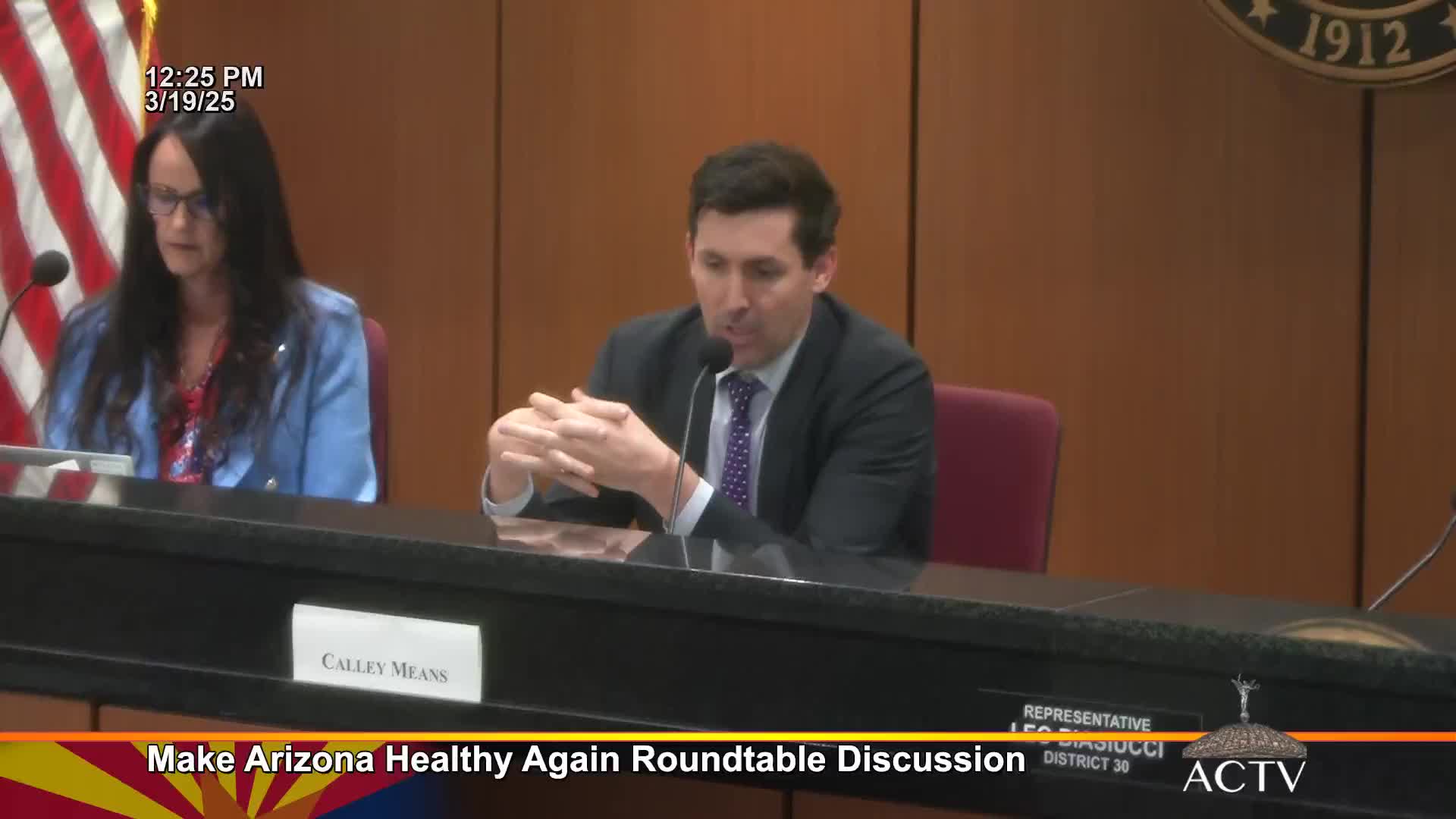
"The bill passed for school lunches. Just passed committee here 7-0 today," said State Representative Leo Biasucci, sponsor of HB 2164, identifying the measure as the school ultra-processed food bill and linking it to a companion SNAP proposal.
The panel brought chefs, doctors, students and movement organizers to argue that certain artificial dyes and additives common in U.S. food products harm children’s health and that state action is needed. "There's absolutely no need for the food dyes," said Chef Andrew Gruel, who described working with food-service suppliers and urged removing synthetic colorings from school menus. Alex Clark, a Scottsdale resident and podcast host, said parents worry their children are "being poisoned at school" and that families may move to states that restrict such ingredients.
Why it matters: supporters framed the bills as public-health measures aimed at reducing rates of childhood chronic conditions that they said are rising in the United States. Panelists said state action also serves as a model for other states; one speaker said 24 states have adopted similar measures or are considering them. Advocates called for clearer labeling, expanded access to local foods and supply-chain changes to make whole foods available to schools and institutions.
What the bills aim to do: HB 2164, as described at the event, would remove or restrict specified artificial dyes and other additives from school lunch programs; speakers named Red 40 and other commonly cited colorants as examples. A separate SNAP-related proposal discussed would use federal waivers to limit purchases of soda with Supplemental Nutrition Assistance Program benefits.
Supporters and technical points: advocates described differences between U.S. and European products and cited examples such as a U.S. and European version of cereal produced by the same company with different ingredient lists. "Here it's red 40, yellow 5, blue 1, yellow 6," one panelist said in contrast to natural colorings used overseas. Chef Gruel and other food-service witnesses urged easing procurement rules so schools and restaurants can buy directly from local producers, while maintaining food-safety requirements.
Opposition noted at the event: witnesses said lobbyists for beverage and food manufacturers oppose some changes; Grace Price, a college student testifying for the bills, recounted hearing industry representatives argue there was "0 correlation between obesity and soda consumption" during testimony in other states. Panelists also described resistance from industry-aligned groups in some state legislatures.
Formal action reported: at the panel Representative Biasucci said HB 2164 had cleared a committee by a 7-0 vote. No mover, seconder or roll-call names for that committee vote were provided at the event, and no final floor passage or governor action was reported. The SNAP proposal was discussed but no committee or floor vote for that measure was recorded at the panel.
Context and next steps: speakers said the proposals are part of a broader movement that they called "Maha," which the panel described as bipartisan and active in multiple states. Panelists urged further research, federal post-market ingredient review, and local supply-chain changes; they said federal agencies such as the FDA and the Department of Education had roles to play but did not provide an explicit federal timetable. Representative Biasucci and other organizers said they plan continued outreach and public events to build support.
Panel voices: advocates at the event included chefs who handle institutional procurement, physicians who described clinical observations, students and movement organizers. Several witnesses called for transparency in food labels and for state-level policy as a practical route to quicker change than federal legislation.
Ending: Sponsors said they expect continued legislative action and public pressure. "None of this happens unless people stand up and demand change," Representative Biasucci said during closing remarks.