Get Full Government Meeting Transcripts, Videos, & Alerts Forever!
Get email alerts on the Ems Services topic
No spam. Unsubscribe anytime.
Consultant says city EMS underperforming; steering committee, contract talks and subsidy options proposed
Summary
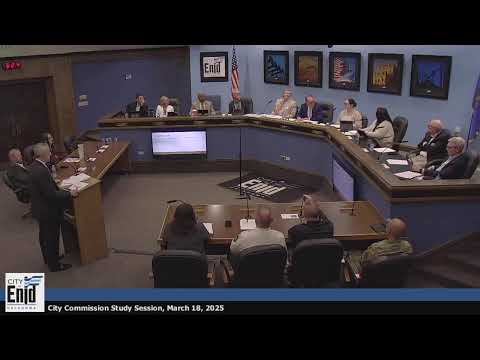
Mayor Mason convened a study session to review an independent EMS study and hear recommendations for addressing local ambulance response and staffing shortfalls.
Mayor Mason convened a study session to review an independent EMS study and hear recommendations for addressing local ambulance response and staffing shortfalls. Healthcare Visions LLC consultant Steve Athey, who conducted the six-month review, told the Mayor and commissioners the system is "underperforming, primarily in response times, and in staffing." Athey said those shortfalls are tied to national trends in EMS staffing and declining revenue per transport.
The study matters because the city has historically relied on user-fee revenue and private providers rather than direct city subsidy. Athey recommended the city form and chair a steering committee that includes medical leadership, negotiate a detailed contract with the EMS provider to define performance metrics and remedies, and evaluate funding options if the city decides to add resources.
At the presentation, Athey summarized his research and on-site review, saying the city's EMS system had been built by accretion rather than design and that COVID-era workforce and payment changes worsened preexisting trends. He said cash-per-transport is declining nationwide while provider costs and paramedic wages have risen sharply; as a result additional revenue will likely be required to add staffed ambulances. Athey recommended keeping the city's ordinance that limits permitted providers in place while the redesign proceeds and urged against allowing more 911 providers before the city decides its system boundaries.
Commissioners and staff discussed specific options Athey described. Those included: negotiating a contract that defines when the response-time clock starts and establishes penalties or remediation steps for noncompliance; including the medical director in system-design decisions; exploring an assessment or a 5-22 ambulance district to raise dedicated revenue; and considering a rate increase for transports, recognizing that higher billed rates do not return the same share of cash to providers as in the past. Athey gave an illustrative cost of about $900,000 to add a fully staffed 24-hour ambulance and said a 12-hour unit would be roughly half that cost.
Life EMS owner Jimmy Johnson and representatives from other area providers attended and described operational realities: long-distance interfacility trips consume hours of crew time, and Johnson has chosen in some months to decline long transports so units remain available in town. Athey said Life EMS ran the equivalent of about 106 long-distance transports in a recent 12-month period, and that such trips materially affect available in-town coverage.
The Mayor and the City Manager said they will form a stakeholder committee, limit its size to keep it productive, set a timeline for its work, and return recommendations to the commission. City staff indicated committee membership will include the fire chief, provider representatives, medical direction and other stakeholders. No formal vote or subsidy decision was taken at the study session; commissioners directed staff to form the committee and to bring options back for further discussion.
The consultant and staff also urged caution on moving dispatch functions without preserving emergency medical dispatch (EMD) capabilities. Athey specifically recommended not losing Life EMS's emergency medical dispatch protocols if any dispatch changes are considered.
Questions the commission flagged for the committee included: how to allocate costs and benefits if a city-funded subsidy covers only city calls while county areas remain unsubsidized; whether an assessment should be voluntary or mandatory; how a negotiated contract should define response-time measurements; and how to quantify the benefit of any additional unit for compliance with local response-time expectations.
Next steps the Mayor described were forming the steering committee, defining its charge and timeline, and returning with contract and funding options for the commission to consider. No ordinance change, contract award or appropriation was approved at the meeting.