Get Full Government Meeting Transcripts, Videos, & Alerts Forever!
Get email alerts on the Transportation topic
No spam. Unsubscribe anytime.
School committee sends draft $13.1M transportation budget to public hearing after heated debate over $750,000 gap
Summary
After members and staff warned the transportation total underestimates likely costs from recent routing guidance, the school committee approved the draft transportation budget for public release but rejected a motion to add $750,000 immediately.
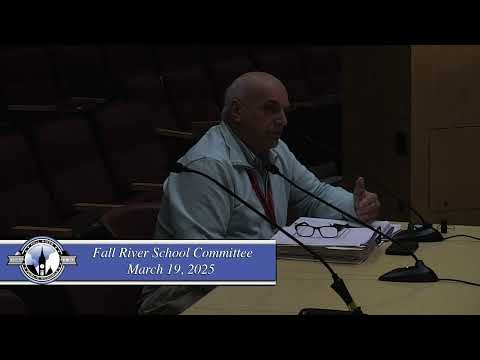
The Fall River School Committee voted Thursday to release a draft fiscal-year transportation budget of $13,118,324 for public hearing despite objections from several members who said the number did not reflect known risks from a pending routing change.
Transportation staff and district finance officials told the committee that the $13.1 million figure represents the portion of the department’s needs that must be covered by the district after $1,409,507 from circuit-breaker special-education funding and $1,348,169 from McKinney-Vento (homeless student services) funds are applied, yielding a total transportation program cost presented to the committee of about $15.876 million.
Committee members pushed back that the figure on the agenda does not account for a policy change commonly called the “as-the-crow-flies” mileage guidance and other routing work still in progress. “This number is not real,” School Committee member Aguiar said during the meeting, arguing staff and the committee had known for months that changing the distance standard could increase costs substantially.
Transportation coordinator Deb told the committee the $13.118 million total is the district’s best estimate if the district continues to transport the same number of students. Deb and other staff said the district is also pursuing nonrouting options — for example, reducing under-capacity runs and adjusting pick-up patterns — to reduce costs.
District finance staff said earlier projections that the mileage change could raise costs by as much as $2 million were an early estimate; more recent analysis places the maximum near $750,000 in net additional cost if mileage rules do not change. Transportation staff estimated that avoiding a mileage change would otherwise require roughly seven additional buses.
School Committee member Aguiar moved to add $750,000 to the transportation line to “tell the public what we know,” saying the committee should post a number closer to what staff expect will be needed. Another member seconded the motion. After debate, the motion failed on a roll call: Agnew — yes; Dias — yes; Corey — no; Larabee — no; Pereira — yes; Mayor Coogan — no. Members who abstained or were not recorded on the roll were not counted in the final majority.
Despite the failed motion, the committee voted to approve the draft transportation budget for public release and to move it to the public hearing scheduled for April 14. Supporters of sending the figure to public hearing said the number is the best estimate available now and that the district will return to the city council if supplemental funds are required after routing decisions are finalized.
The committee and staff agreed to continue work on routing, special-education-related transportation, and strategies to reduce runs with low ridership; staff said further adjustments to the number could be made before the budget is finalized.
Ending
The transportation vote sends the $13.118 million draft to public release and the April 14 hearing with the committee divided about whether the number shown to the public should already include a contingency for the anticipated mileage change. Staff said additional adjustments, and potential requests to the city council, remain possible once routing decisions and final counts are available.