Get Full Government Meeting Transcripts, Videos, & Alerts Forever!
Get email alerts on the Special Education topic
No spam. Unsubscribe anytime.
North Penn proposes $75.2 million special-education budget for 2025-26; officials note personnel, out-of-district costs
Summary
District special-education staff presented a proposed $75,196,991.70 budget for 2025–26, highlighting personnel costs, contracted providers and rising early-intervention needs; board members and a public commenter pressed for contract renegotiations and clarity on billing and recoupment.
North Penn School District special-education staff presented a proposed $75,196,991.70 budget for the 2025–26 school year, saying the bulk of that funding supports personnel and out-of-district placements.
The proposal, delivered during the district’s Special Finance Committee meeting, focused on salaries for administrators and professional staff, contracted service providers and costs tied to educating students in more restrictive settings outside district schools.
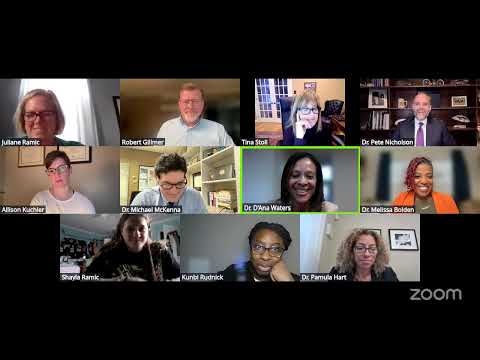
District presenter Dr. Waters said, "we are thrilled to be here to give a brief overview of our budget proposal for the 2526 school year," and outlined line items that include contracted providers such as Lakeside, Lincoln Center, Springfield Psychology, Pediatric Therapeutic Supports, the Montgomery County Intermediate Unit (MCIU), Abington Speech and Soliant.
Why it matters: special-education spending is a major driver of district budgets. Committee members were pointed in follow-up questions about contractor pricing, Medicaid billing and the district’s ability to recoup funds through federal and state programs.
Details from the presentation - Personnel: staff salaries — administrators, support staff, professional staff — were identified as the largest share of the budget. The district also plans to add registered behavior technicians to support specialized classrooms. - Contracted services: the presenters said they will maintain the same set of contracted providers and are in some cases scheduling follow-up meetings with vendors to confirm costs for the coming year. Board member Rudnick asked specifically whether Lakeside Counseling’s pricing has changed and was told negotiations are underway and current figures are estimates. - Out-of-district placements: staff highlighted that educating students in approved private schools and licensed private academic schools usually raises costs. The presentation broke out expenditures for providers used by the district and listed the Montgomery County Intermediate Unit separately. Staff emphasized these placements are used when they represent the student’s least restrictive environment. - Counts and programs: the district reported 34 specialized classrooms across elementary, middle and high schools for students who spend less than 40% of the day in general education settings and noted a rising number of children coming into the district after early-intervention services. - Billing and recoupment: presenters said the district recoups some expenditures through IDEA (the federal Individuals with Disabilities Education Act) funds and Medicaid access billing. They noted a contingency recoupment cap of $150,000 and referenced the district’s use of approved-private-school slots (referred to in the presentation as "4010 slots") to access additional billing revenue. The presentation cautioned that access-billing revenue can fluctuate year to year.
Public comment and board reaction Resident Jason Lanier of Lansdale used his public-comment time to question whether increased district spending has produced commensurate performance gains and to ask why special-education spending has risen sharply in recent years. He said the district’s overall spending has increased while student outcomes “doesn't seem to be going up commensurate with the amount we're spending.”
Board member Ramich disputed a figure cited by the commenter about an equity allocation, saying, "I had a hundred and $35,430 out of a $10,465,164 budget. That is 1.2%." The board encouraged Mr. Lanier to follow up with staff to get detailed answers.
What the district will do next Staff said they will continue vendor discussions (for example with Lakeside) and that some line items are estimates pending final contract negotiations. Presenters also offered to provide additional data on early-intervention trends and recoupment amounts if committee members or members of the public requested it.
Ending No formal votes were taken on the special-education budget during the meeting; the presentation was part of a multi-department overview of proposed 2025–26 budgets and will feed into later budget deliberations.