Get Full Government Meeting Transcripts, Videos, & Alerts Forever!
Get email alerts on the Behavioral Health Response topic
No spam. Unsubscribe anytime.
Fountain police describe Beacon behavioral-health response, limited overnight coverage
Summary
Fountain Police presented details of the Beacon behavioral-health unit, described services and transport destinations, and clarified hours, reporting and referral practices.
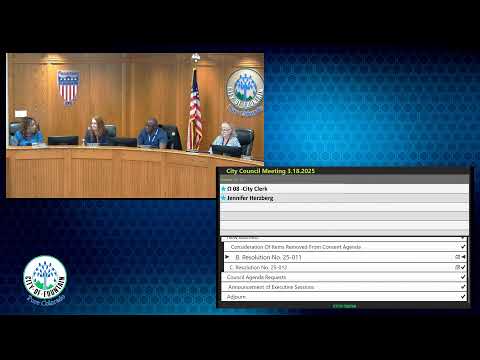
Officer Echo Demarukat, the Fountain Police Department officer assigned to the Beacon unit, told the Fountain City Council on March 18 that Beacon — she said stands for Behavioral Health Connection — pairs an officer with a clinician to respond to mental-health and substance-use crisis calls across the city.
Beacon teams in Fountain combine an on-duty officer and a clinician to “stabilize in place if we can,” Demarukat said, and to transport people to local behavioral-health facilities when needed. "Beacon is Behavioral Health Connection," she said. The teams can transport to Diversus (the local walk-in center), Cedar Springs, Peak View and local hospitals, and can complete evaluations that allow direct admissions, she said.
The program in Fountain currently operates four teams shared regionally with El Paso County and Palmer Lake, Demarukat said. Clinicians and an officer-led team are supported by a case manager who does follow-up and referrals; officers may also submit referrals to the case manager for later outreach. The Beacon unit carries gun-lock devices and medication safes to temporarily secure lethal means if necessary during a crisis, Demarukat said.
Council members pressed staff on hours, documentation and regional cost-sharing. Council member Duncan asked whether Beacon covers evening and overnight hours; Demarukat said Fountain does not have Beacon coverage past about 4 a.m. but El Paso County and Palmer Lake sometimes provide later coverage. Council member Henson asked whether residents can call a nonemergency number instead of 911; Demarukat said residents should call the Fountain Police Department nonemergency line at (719) 382-8555 and request a mental-health or Beacon unit.
A department official clarified that not all follow-up work is reported to the state: only encounters that include a clinician evaluation are included in the state statistics. That means phone follow-ups and some other follow-up contacts handled by officers or the city’s case manager may not appear in the state-reported encounter totals, even though the department retains an independent tracking system, the presenters said. Commander Racine (first referenced as the department official overseeing billing and hours) was identified as the staff member who reviews billable hours.
Council members asked whether Beacon responds with code enforcement on homelessness calls; Demarukat said the unit does respond with code enforcement at times and that officers carry blankets and other immediate supplies for unsheltered people. Councilmember Herzberg asked what happens when a crisis occurs outside Beacon hours; the department said most officers have Crisis Intervention Team training and can place mental-health holds and generate referrals for day crews to follow up.
The council did not take any formal action on Beacon at the meeting. Staff said they can provide separate Beacon unit tracking data to council so members have both the state-reported numbers and the department’s internal follow-up counts.
The presentation closed with the department emphasizing the availability of the nonemergency dispatch line for pre-crisis safety planning and scheduling in-person follow-ups when medically appropriate.