Get Full Government Meeting Transcripts, Videos, & Alerts Forever!
Get email alerts on the Cannabis Tax Reinvestment topic
No spam. Unsubscribe anytime.
Commissioners introduce code to assign local management board to administer cannabis 'community reinvestment' fund
Summary
Kent County commissioners voted to introduce Code Home Rule 2‑2025, assigning the existing Local Management Board (LMB) to administer Community Reinvestment and Repair Special Revenue Fund created by state cannabis tax revenue, and set a public hearing.
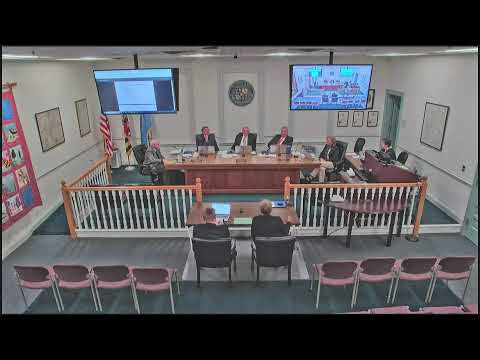
Kent County commissioners on March 18 introduced Code Home Rule 2‑2025, a local ordinance that designates the county’s existing Local Management Board (LMB) to receive and recommend disbursement of the county’s portion of state cannabis tax revenue into a Community Reinvestment and Repair Special Revenue Fund.
Shelly Heller, who prepared the legislation for the county, told the board the state law requires jurisdictions to form a mechanism to distribute cannabis tax receipts and that the statute specifies permitted uses. Heller said the county’s proposal mirrors state language and would avoid creating a separate body by assigning responsibility to the LMB, which would accept grant applications and recommend awards to the commission.
Heller described permissible uses under the Alcoholic Beverages and Cannabis Article and the Annotated Code of Maryland, saying money “may only be used to fund community‑based initiatives intended to benefit low‑income communities” and “may not be used for law enforcement agencies or activities or to supplant existing appropriations.” She also said the county has already received one‑time conversion fees and small quarterly disbursements, and that the fund currently holds about $220,000–$230,000 set aside for those purposes.
Commissioners discussed timelines and next steps. The board member moving the motion said the county should act promptly so the money would not remain unused; after a second, the measure was introduced and the clerk was directed to schedule a public hearing for the ordinance.
The introduction requires a public hearing before the board will take a final vote; if approved after the hearing and final readings, the board will direct the LMB to issue notices of funding availability and recommend projects that fit the statute’s permitted uses. Heller emphasized that the local language intentionally mirrors state code so the county can adapt funding priorities over time without conflicting with state law.