Get Full Government Meeting Transcripts, Videos, & Alerts Forever!
Get email alerts on the Complete Streets Definitions topic
No spam. Unsubscribe anytime.
Committee sends bill defining 'primary benefit of motor vehicles' to amendment stage after safety groups object
Summary
Senate Bill 11‑40, which would add definitions that emphasize highway projects primarily for motor-vehicle benefit and limit where bicycle and pedestrian improvements can be included, was sent to the amending order after extensive public testimony and questions from senators.
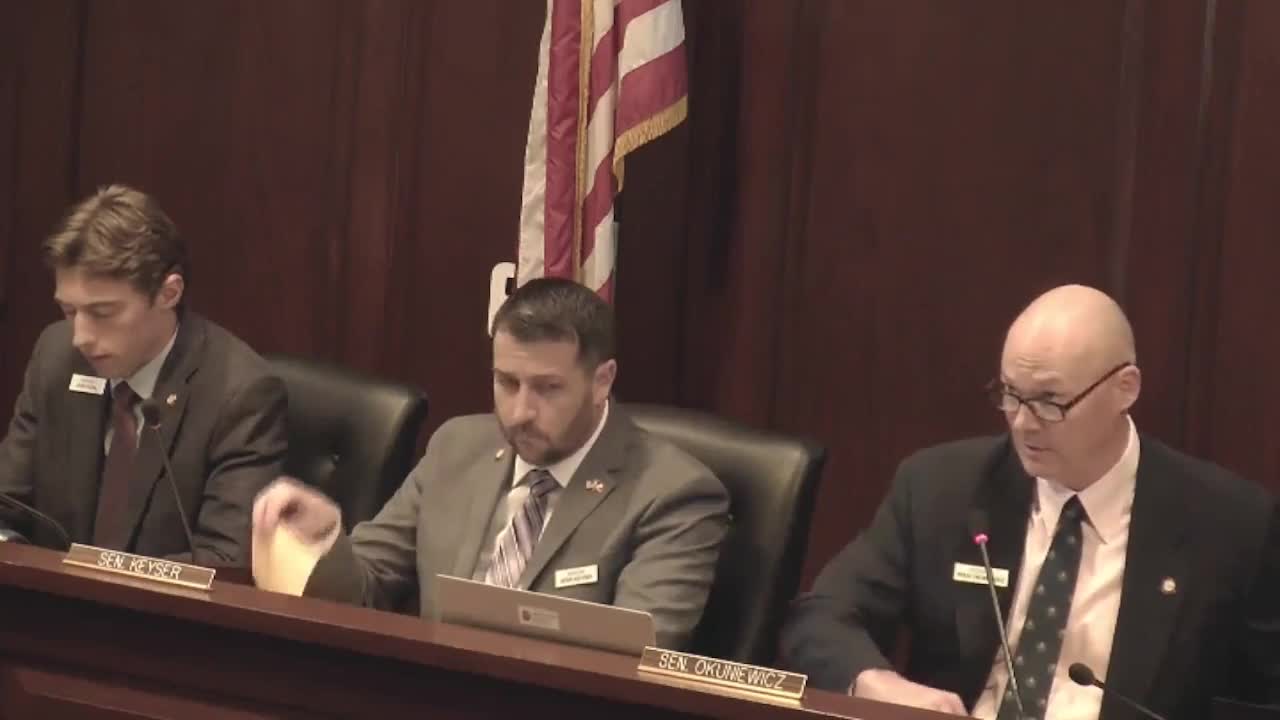
The Senate Transportation Committee voted to send Senate Bill 11‑40 to the amending order after the bill’s sponsor described proposed new definitions and members heard extensive testimony from safety advocates, community members and transportation groups.
Senator Mark Harris, Idaho State Senator representing Legislative District 35, told the panel the bill would add definitions — including ‘‘primary benefit of motor vehicles’’ and related language — that align with existing provisions in Idaho Code governing congestion mitigation and highway spending. He said the definitions would clarify that some projects are intended primarily to improve motor-vehicle traffic flow and that bicycle and pedestrian improvements could be included only as collateral or secondary benefits under those projects.
Committee members asked whether the language would prohibit bicycle lanes or later safety fixes; Harris said the bill is meant to clarify emphasis for state highway funds and does not categorically forbid pedestrian or bicycle infrastructure, but he also said the proposed definitions would prioritize motor-vehicle benefits when state highway funds are used.
Testimony included a mix of technical and personal accounts. David Cuyoto, identifying himself as Safe Routes to School program director for the Idaho Walk Bike Alliance, told the committee he works with many small towns where the main street is a state highway and warned the bill could ‘‘tie the hands’’ of highway districts and lead to administrative obstacles or litigation. Several parents and survivors gave emotional testimony: Courtney Madigan and her son Max described a 2015 crash in which Max was hit while biking and the long process (Madigan said about eight years) to get traffic‑calming improvements on Kootenai Street. Other witnesses — including Jillian Horn with the Boise Bicycle Project and Jonathan Oppenheimer for the Idaho Conservation League — said the bills would undermine local control and evidence‑based multimodal planning.
Concerns voiced in the hearing included the bill’s use of the phrase ‘‘collateral or secondary benefit’’ (several testifiers said it is vague and could invite legal challenges), uncertainty about whether ‘‘designated pedestrian or bicycle areas’’ is defined in code, and whether most highway funding flows through state programs — a point made by Jonathan Oppenheimer, who noted that a large share of highway dollars reach local projects via state and federal channels.
Senator Cole moved to send the bill to the amending order for a possible amendment; Senator Galloway seconded. The motion passed, sending Senate Bill 11‑40 to the fourteenth order of business for amendment and further consideration.