Get Full Government Meeting Transcripts, Videos, & Alerts Forever!
Get email alerts on the Commercial Advertising topic
No spam. Unsubscribe anytime.
Committee advances bill banning commercial advertising for out‑of‑state illegal products; sponsors cite cross‑border spillover
Summary
House Bill 271, advanced by the Senate Judiciary and Rules Committee, would make it a misdemeanor to publish commercial advertisements in Idaho for products that are illegal where they are produced or offered; sponsors focused on marijuana advertising from nearby states and law‑enforcement witnesses described cross‑border crime spillover.
The Senate Judiciary and Rules Committee voted to send House Bill 271 to the Senate floor with a due-pass recommendation after testimony from law-enforcement officials who said advertising for out-of-state illegal products has produced cross‑border problems for Idaho communities.
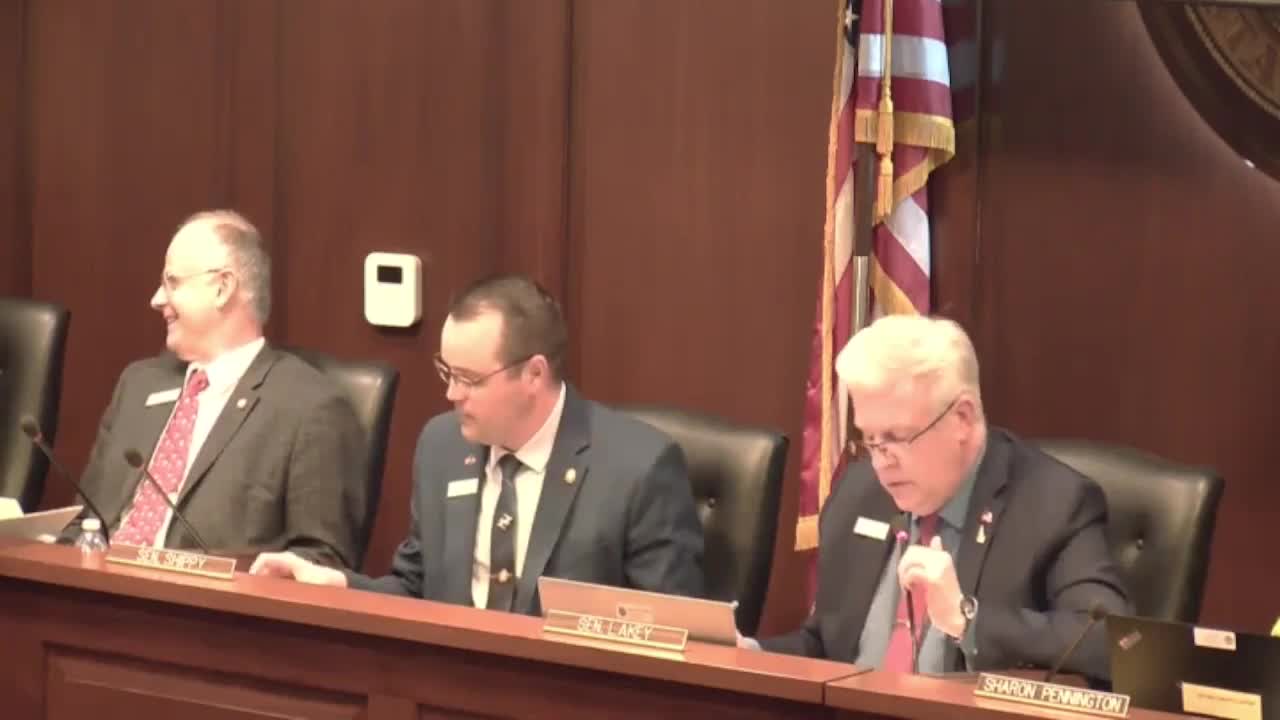
Senator Todd Lakey, sponsor of the bill, said the measure makes it a misdemeanor to commercially advertise products in Idaho that are illegal in the jurisdiction where they are produced or offered. “Oregon and Washington dealers should not be supported in their effort to profit from an illegal product and send their problems back to Idaho at our cost,” Lakey told the committee, citing marijuana dispensaries near the Idaho border.
Sheriff Andy Creech of the (as stated to committee) Peay County Sheriff's Office said violent crime in Ontario, Oregon, has increased since the opening of dispensaries and that some incidents have spilled over into Idaho. “The things that are happening in Ontario, Oregon are affecting my county and my citizens,” Creech said, describing a recent carjacking that resulted in an arrest in Idaho after a pursuit.
Rex Ingram, president of the Idaho Chiefs of Police Association, also supported the bill and urged the committee to send it forward as a deterrent to businesses that advertise illegal products to Idaho residents. Ingram noted practical enforcement examples raised in the House, including editions of some newspapers that exclude out‑of‑state advertisements for Idaho readers.
Committee members raised constitutional and enforcement questions: several senators asked whether the measure could sweep in federally illegal items or create collateral effects on unrelated industries, how to treat digital and social‑media advertising, and who would be the target for prosecution. Senator Keiser asked whether a digital advertisement shared on social media would expose the sharer or the original publisher to the misdemeanor; Senator Lakey and law‑enforcement witnesses said enforcement would focus on the entity that willfully published the advertisement in Idaho and noted practical limits on investigating widely shared online posts.
Senators also debated the statutory scope. Lakey said the bill as drafted reaches advertising of products illegal either in the producing jurisdiction or at the federal level, but he said he was willing to amend the bill on the Senate floor to require illegality under Idaho law as an additional element if the committee requested it.
Senator Keiser offered a substitute motion to hold the bill in committee subject to the call of the chair; the substitute failed and the original motion to advance HB 271 passed on a roll-call. Committee discussion included concerns about the bill’s breadth and potential unintended consequences for other regulated goods if federal or other states’ rules change.
The sponsor and multiple law‑enforcement witnesses framed HB 271 as a targeted, practical deterrent aimed at billboard and print advertising and other straightforward commercial publications that recruit Idaho customers to illegal markets across the border. The measure would create a state misdemeanor for willfully publishing such advertising within Idaho, and sponsors indicated they could pursue narrower drafting in amendment if requested by the Senate.