Get Full Government Meeting Transcripts, Videos, & Alerts Forever!
Get email alerts on the Minor Work Hours topic
No spam. Unsubscribe anytime.
Groups back extending daily work-hour cutoff for 14‑ and 15‑year‑olds to 9 p.m. year‑round with parental consent
Summary
Representatives of the Ohio Restaurant and Hospitality Alliance and the NFIB supported Senate Bill 50, which would let 14‑ and 15‑year‑olds work until 9 p.m. year‑round with parental consent and a signed minor work‑hour notification; supporters said it helps small businesses meet hiring needs while preserving existing hour and occupation limits.
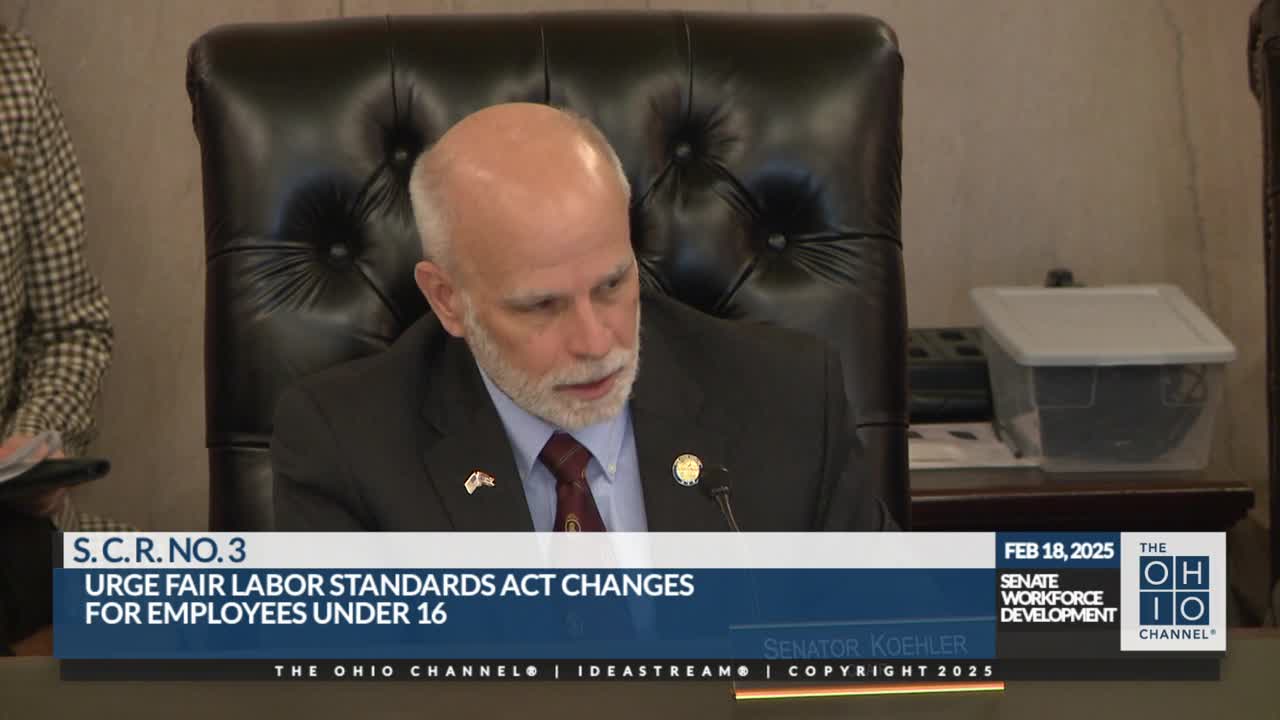
Todd Bowen of the Ohio Restaurant and Hospitality Alliance and Chris Verusso of the National Federation of Independent Business told the Senate Workforce Development Committee they support Senate Bill 50, which would allow 14‑ and 15‑year‑olds to work until 9 p.m. year‑round with parental consent and subject to existing hour and occupation limits.
Bowen said the later cutoff gives young workers more opportunity to learn workplace skills such as customer service and time management and would be valuable in customer-facing sectors like food service and retail. "While limiting how late younger workers can work is appropriate, we believe that 9PM is a more reasonable limit," Bowen said, adding that the bill requires parental consent for minors who want the extended hours.
Verusso said NFIB members face significant hiring challenges and that the bill would not increase the total number of hours minors can work in a week; it would only extend the daily cutoff that currently varies by season. "This bill most importantly however will allow individuals who are aged 14 or 15 to hone and enhance valuable employment skills that will set them up for continued success and do so with more flexibility to fit their schedules," Verusso said.
Committee members asked about oversight and enforcement: who checks that minors are not exceeding permitted weekly hours, who verifies parental consent and whether agencies have sufficient inspectors. Witnesses and committee members noted that the bill preserves existing federal and state prohibitions on the types of work minors may perform and that parental consent must appear on a form required for school-issued age and schooling certificates or work permits. No committee amendments or votes were recorded during the hearing.