Get Full Government Meeting Transcripts, Videos, & Alerts Forever!
Get email alerts on the Use Buffers topic
No spam. Unsubscribe anytime.
Stow committee weighs buffer zones for vape shops, cannabis, car washes and gas stations
Summary
The panel discussed separation distances and buffers for tobacco/vape retailers, cannabis facilities, car washes and gas stations, balancing market considerations with community concerns about saturation and nearby schools and parks.
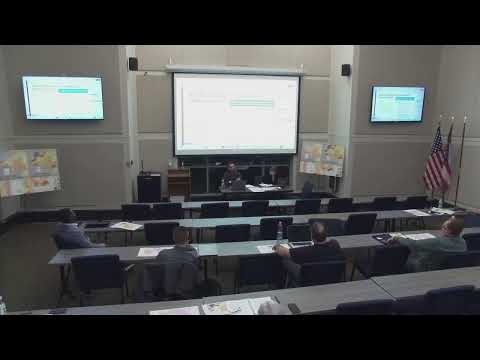
Planning staff showed draft buffer maps and recommended using separation distances to limit certain commercial uses such as tobacco retailers (including vape shops), cannabis dispensaries, car washes and gas stations.
Staff explained that the proposed 500‑foot separation for tobacco retailers is a Stow local requirement, not a state mandate, while state requirements apply to adult‑use cannabis. "That is made up by STOW requirement," staff said regarding the 500‑foot tobacco restriction; staff also noted state rules apply to cannabis setbacks.
Public and committee comments reflected mixed views. Kyle, who identified himself as working in the car wash industry, argued new, modern car washes are well run and provide jobs and said blanket limits are a mistake. "A car wash to me falls into the same category as restaurant. It's a service business and you don't have to go there," he said, urging regulation over prohibition.
Other committee members expressed concern about concentration near schools and parks. Staff clarified the cannabis draft would require 500 feet from schools, parks, playgrounds and churches (property line to property line); the current draft had a 1,000‑foot buffer that limited locations primarily to an industrial area. "Right now, it's a thousand feet, and that limits it to only a small area up in the industrial section," staff said, and offered to prepare maps showing different buffer options.
Staff recommended mapping 1‑mile buffer demonstrations to illustrate saturation and separation options. Members suggested alternatives such as stronger conditional‑use standards and performance conditions (lighting, signage, hours) to mitigate local impacts while allowing market activity.
Next steps: staff will prepare buffer maps for committee review and present alternate separation distances and conditional‑use approaches.