Get Full Government Meeting Transcripts, Videos, & Alerts Forever!
Get email alerts on the Labor Policy topic
No spam. Unsubscribe anytime.
JFAC adjusts Labor Department FY2026 funding and debates two required reports; budget motion advances, reporting language fails in House
Summary
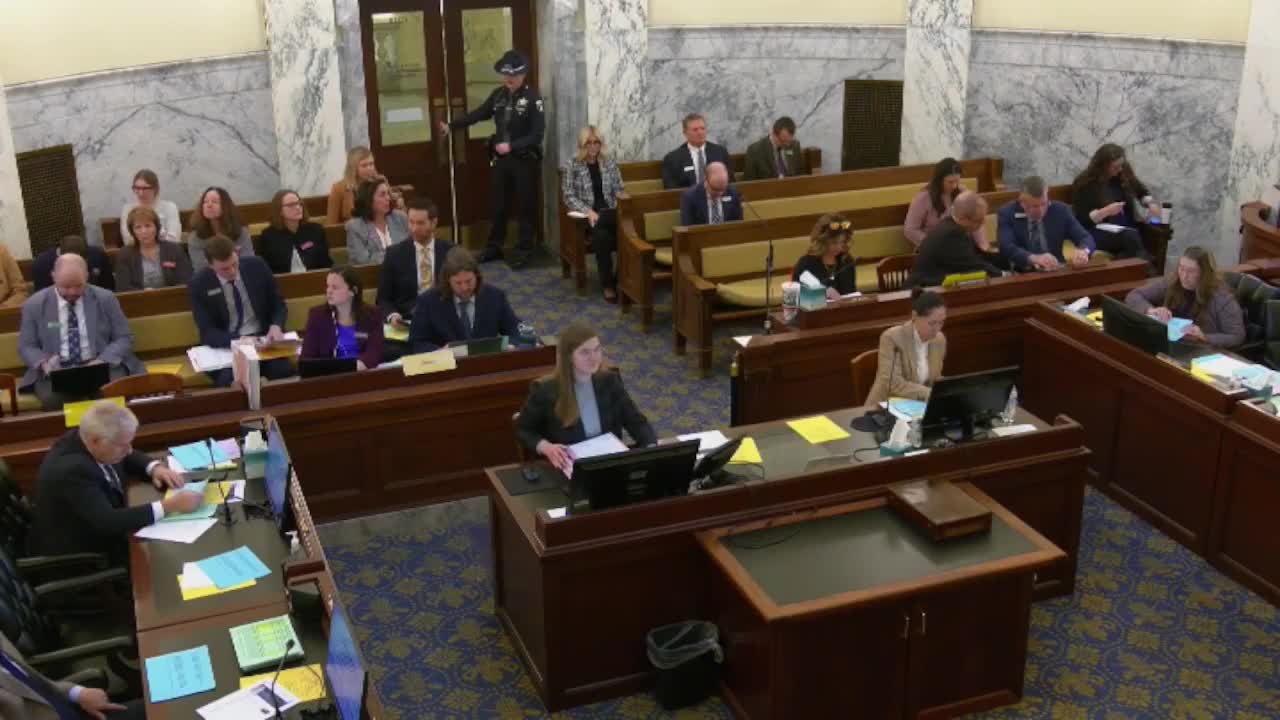
The Joint Finance-Appropriations Committee on Wednesday approved adjustments to the Idaho Department of Labor’s FY2026 budget that produce a net $161,000 increase while debating two non-appropriations reports that failed to clear the full committee.
The Joint Finance-Appropriations Committee on Wednesday approved adjustments to the Idaho Department of Labor’s Fiscal Year 2026 budget that shift funding between federal and dedicated sources and reduce federal-funded positions, producing a net $161,000 increase from the Employment Security Special Administration Fund.
Brooke Dupree, a budget and policy analyst with the Legislative Services Office, told the committee the $161,000 net change stems from a $5,000,000 increase from the Employment Security Special Administration Fund and a $4,839,000 reduction in federal grant funds, along with a reduction of 15.58 full-time positions in federal-funded programs. The mover, Senator Cook, said the department’s director proposed the adjustment after the committee’s earlier consideration; the change aligns department operations with expected federal grant levels.
Senators and representatives questioned how quickly federal grant awards track unemployment numbers. Committee staff agreed to follow up with the committee about federal grant timing; an analyst said federal grant levels are in part determined by unemployment statistics and Idaho’s recent low unemployment outlooked a reduced federal award.
The committee voted to advance the budget motion. The chair announced a combined committee tally of 14 ayes, 5 nays and absent/excused members; the motion will go forward with a due-pass recommendation.
Separately, committee members debated two non‑appropriations language items offered as unanimous-consent language. One asked the Department of Labor to report on the effects of illegal immigration on Idaho’s labor market; the second requested a cost review of administering disability determinations at the state level versus the federal level.
Supporters said the reports would provide data to inform future policy. Opponents cautioned that such intent language can intrude on executive-branch duties and that disability determinations are governed by federal law and statutory requirements that may limit state action; committee members urged consultation with disability stakeholders before pursuing state-level changes. The committee held a roll-call on the language package; the senate recorded an affirmative majority but the House did not, so the language failed to pass the committee. The chair said the language will be referred to the House for further consideration.
No additional appropriations were tied to the two language items. Committee members noted the director of the Department of Labor proposed the fund-shift approach to stabilize operations and prepare for potential future downturns.