Get Full Government Meeting Transcripts, Videos, & Alerts Forever!
Get email alerts on the Child Welfare topic
No spam. Unsubscribe anytime.
JFAC approves $14.1 million child-welfare supplemental and large FY2026 staffing increase for youth services
Summary
The Joint Finance-Appropriations Committee approved a $14,126,900 supplemental for foster-care trustee and benefit payments for FY2025 and authorized an FY2026 package that adds 63 full-time positions and about $21.2 million total to the Division of Youth Safety and Permanency.
The Joint Finance-Appropriations Committee on March 14 approved a supplemental appropriation totaling $14,126,900 for the Division of Youth Safety and Permanency (child welfare) to cover trustee and benefit payment shortfalls tied to congregate-care costs in FY2025, and approved a FY2026 enhancement package that adds staffing intended to move toward prevention and reduce reliance on high-cost congregate placements.
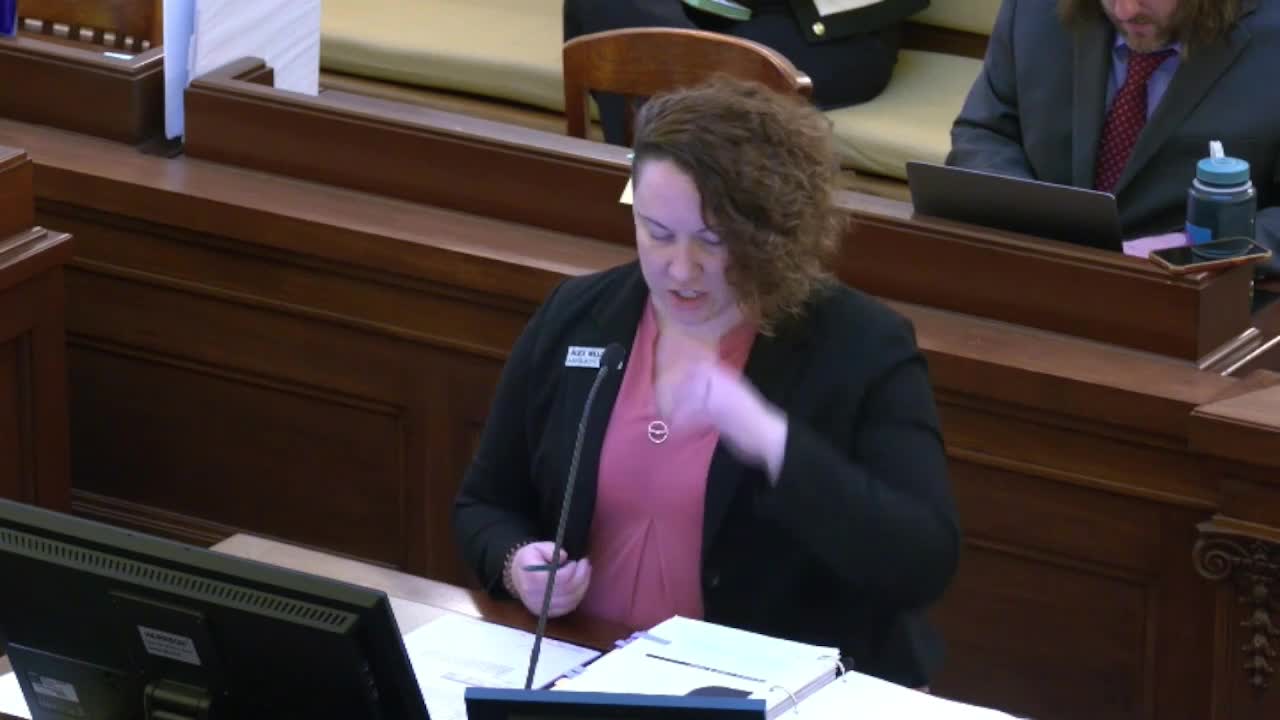
Alex Williamson, budget and policy analyst for Legislative Services, told the committee the FY2025 supplemental would address a forecasted trustee and benefit payment shortage and would be funded by $8,868,200 from the General Fund and $5,258,700 from federal funds. Senator Wintrow moved the supplemental; Representative Furness seconded. The supplemental passed on a combined committee vote of 18 ayes, 1 nay, 1 absent (Senate 9–1; House 9–0 with one absent) and will carry a due-pass recommendation to the floor.
On the FY2026 side, committee members considered multiple enhancements that together add prevention specialists, foster program clinical staff, foster licensing staff and operating support for assessment and care capacity. Representative Tanner moved a multi-line FY2026 package that included a 63 full-time equivalent increase and a combined funding request of $21,245,700 (about $13,774,600 General Fund and $7,471,100 federal funds). The packet singled out prevention specialists (original agency request 36 positions), staffing for foster-clinic supports and licensing staff; the governor had recommended fewer positions in some lines. The committee debated scale and oversight; members stressed a focus on prevention, in-home services and measurement of outcomes to reduce expensive congregate care. The FY2026 motion passed (total committee tally 18 ayes, 1 nay, 1 absent) and will be forwarded to the floor with a due-pass recommendation.
Committee members also approved language to exempt the Division of Youth Safety and Permanency from certain Health and Welfare transfer limitations for FY2025 and FY2026, permitting transfers between expenditure categories consistent with the cited statutory provision on the screen. The committee adopted performance-based language tying eight foster-program licensing positions to a target outcome: achieving a one-to-one ratio of foster families to foster children by Jan. 1, 2026, with preliminary status updates (committees requested a September 15 status update and a later follow-up report).
Committee discussion highlighted cost differences between prevention and congregate placements (committee members cited figures discussed in hearings: prevention at about $1.80 per day, foster care $16 per day, congregate care about $380 per day) and emphasized both the human and budget rationale for shifting resources upstream. Several members said the committee will monitor implementation and outcomes and that language includes reporting expectations.
Both the supplemental and the FY2026 package were approved and will advance to the Legislature for final consideration.