Get Full Government Meeting Transcripts, Videos, & Alerts Forever!
Get email alerts on the School Facilities Funding topic
No spam. Unsubscribe anytime.
Committee advances bill to revive and expand public school facilities program for rural districts
Summary
Lawmakers advanced House Bill 338 to make roughly $50.5 million available to help rural Idaho school districts address facility needs; the bill consolidates eligibility rules, adjusts repayment priorities and exempts the first $5 million of assistance from appointment of a district supervisor.
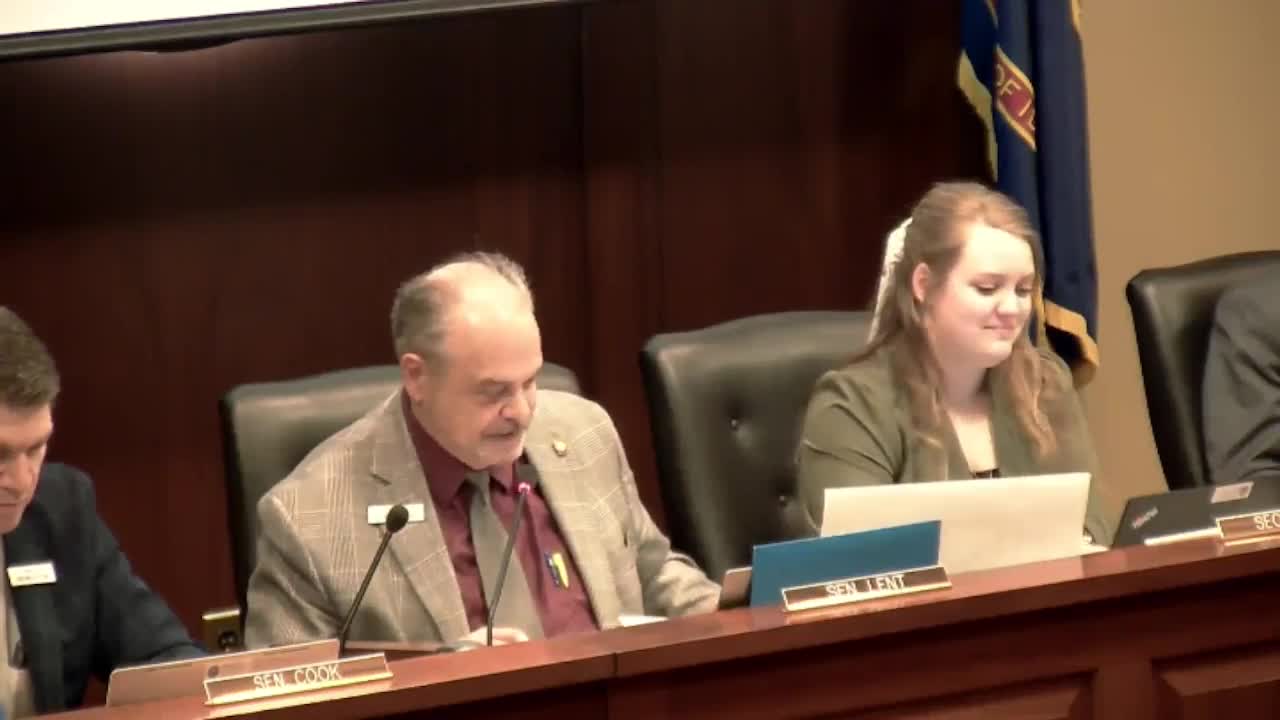
The Senate Education Committee voted to advance House Bill 338, a measure to make state facility funds available for rural school districts that cannot meet building needs through local bonds.
Representative Doug Pickett, a House member representing District 27, outlined the bill’s purpose and history. He said the proposal would free up $25 million that has been unused since a 2006 law created the Public School Facilities Cooperative Fund, and add $25 million more from the bond levy equalization fund for a combined $50.5 million available primarily to rural districts. “This legislation is intended to free up those funds that have essentially been laying there dormant for 20 years and also to add an additional 25 million from the bond levy equalization fund for a total of $50,500,000 to be made available primarily to rural public school facilities,” Pickett said.
Pickett described several program mechanics the panel would follow if the bill becomes law: districts that have failed bond attempts could apply with a plan to a review panel; the panel could approve, reject or modify applications; and the bill would allow districts that passed insufficient bonds to also apply. The bill retains a repayment mechanism that is neither a traditional grant nor a standard loan, and uses a bond levy equalization value index (which factors property value, unemployment and average income) to set repayment responsibility and amortizes payments over a 20-year window. Pickett said the plan preserves the bond-priority repayment structure but removes the panel’s authority to impose a plant facilities levy, allowing districts to use funds from House Bill 292 arrangements to make payments instead.
Representative Sonia Galaviz, who compiled statewide facility-assessment data, told the committee the program targets districts with urgent needs. She described a statewide assessment created after a 2024 requirement that districts perform condition assessments; the top five-year needs alone total roughly $2.7 billion according to her spreadsheet. “This gives us the estimated dollar amount needed to upgrade school facilities across our state,” Galaviz said. She said the bill should be considered a step in a longer conversation about financing school facilities statewide.
Three witnesses from Salmon and other rural districts testified in favor. Brianne Green, a member of the Salmon Schools Needs Assessment Committee, described how her district passed a $20 million bond in 2023 after years of failed attempts and still faces a roughly $9 million gap that community donations cannot fully close. “We do very much appreciate you all and Rod and Sonia working on this, to close the gap for our school,” Green said. Wendy Scobie, another Salmon committee member, urged the committee to ensure the fund is accessible to districts that lack local fundraising networks and to revisit the program’s effectiveness after implementation.
Committee members asked technical questions about funding sources, repayment priority and how plans would calculate expected revenue. The chair and Pickett responded that the review panel would assess bond expiration, current debt and the district’s projected revenues when developing a repayment plan.
The committee accepted a motion to move House Bill 338 to the floor with a due-pass recommendation. The motion was moved and seconded; the chair announced the motion carries by voice vote. No roll-call tally with member names was recorded in the hearing transcript.