Get Full Government Meeting Transcripts, Videos, & Alerts Forever!
Get email alerts on the Workforce Trade Professions topic
No spam. Unsubscribe anytime.
Committee holds bill that would loosen on-site supervision requirements for electrician apprentices
Summary
The Senate Commerce Committee voted to hold House Bill 214 in committee after extensive testimony about safety, training and licensing reciprocity related to proposals to loosen on-site supervision of electrician apprentices.
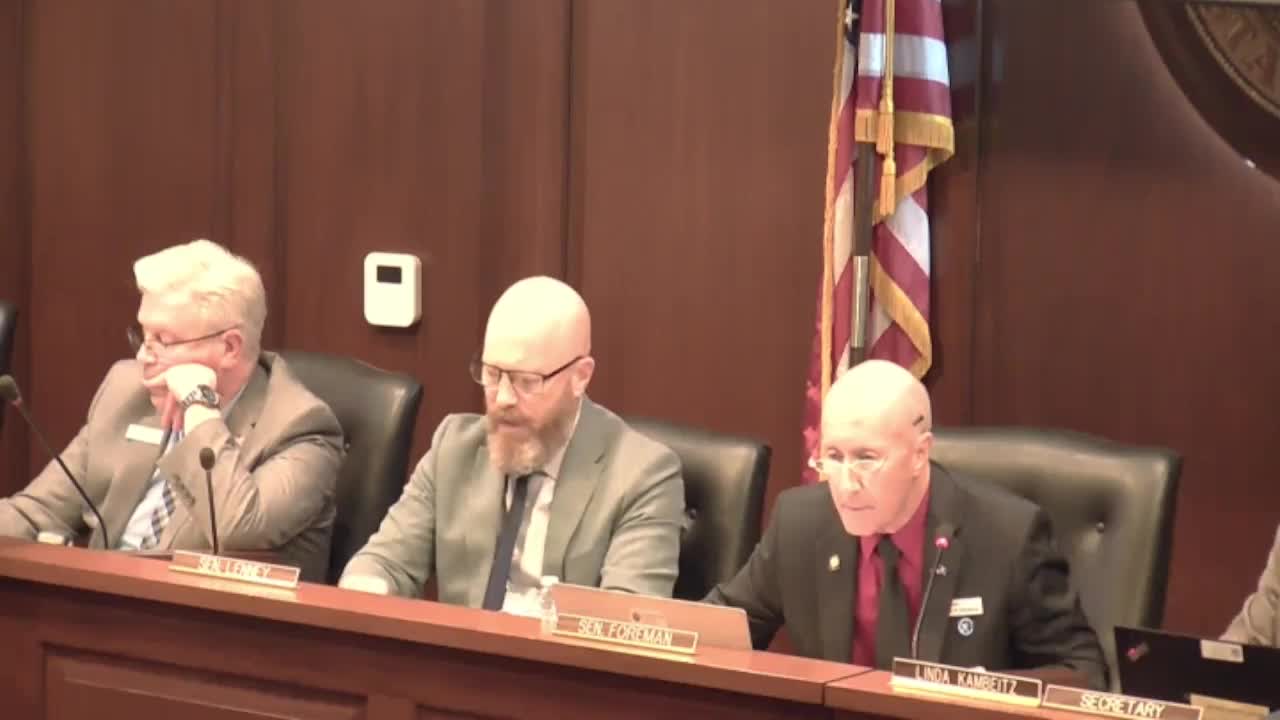
The Idaho Senate Commerce Committee voted to hold House Bill 214 in committee after hearing more than an hour of testimony for and against changes to apprentice supervision rules for electricians.
Representative Kyle Harrison, the bill sponsor, described the proposal as a deregulatory measure that would allow journeymen and contractors to determine whether an apprentice is qualified to continue work onsite without direct supervision. "If I gotta run and get parts, I can leave him there to keep wiring that house," Harrison said, arguing the change would reduce project delays and foster apprentice development.
Opponents, including trade groups, union representatives and multiple electricians, said the change would create safety risks and could imperil reciprocity with other states. "This is a terrible bill. Apprentices need supervision on the job," said Joe Maloney, president of the AFL-CIO of Idaho and a journeyman electrician, who recounted a near-fatal electrocution of an apprentice to highlight on-the-job hazards.
Kelly Lampp of the Idaho chapter of the Electrical Contractors Association and multiple contractor witnesses recounted electric-shock and fire hazards and urged the committee to oppose the bill. "I would ask that you oppose House Bill 214," Lampp said, describing industry cases in which direct supervision has prevented serious injury.
Amy Lorenzo, bureau chief for building construction and real estate at the Division of Occupational and Professional Licenses (DOPL), told the committee the change could affect Idaho's ability to provide reciprocal licensing. "Not requiring on-site supervision of our apprentices would compromise our ability to reciprocate with those states," Lorenzo said, reporting outreach to other states and a reciprocal alliance.
Supporters said the industry already uses rule language similar to the bill and that journeymen routinely supervise experienced apprentices; sponsors argued liability and market discipline would deter unsafe practices. Representative Harrison said the statutory change simply mirrors supervisory language the trades use in rules and would rely on contractors' financial and legal incentives to supervise appropriately.
Committee members raised questions about safety, insurance and long-term workforce training. Several contractors and apprenticeship-education representatives emphasized classroom and on-the-job training hours and expressed concern that loosening supervision could degrade training quality or increase workplace injuries. One witness said his company typically sends apprentices off-site to get parts while journeymen remain on the job to maintain supervision; others said removing the "direct supervision" standard would allow a single journeyman to be responsible for multiple unsupervised apprentices on separate job sites.
Senator Guthrie moved to hold House Bill 214 in committee; the motion was seconded and carried. The transcript records the motion and the committee vote to hold the bill, but it does not include a full roll-call tally in the recorded excerpt.
The bill raised additional technical and policy issues including: whether the change would apply to residential versus commercial or industrial settings (sponsor said drafting could be interpreted either way), the state's statutory minimum liability-insurance requirement and whether workers' compensation or liability premiums would be affected by changed supervision practice. DOPL reported that most reciprocal partner states indicated a loss of on-site supervision would jeopardize reciprocity agreements.
The committee's action leaves the bill in committee for further work and possible amendments before any floor consideration.