Get Full Government Meeting Transcripts, Videos, & Alerts Forever!
Get email alerts on the Healthcare Drug Pricing topic
No spam. Unsubscribe anytime.
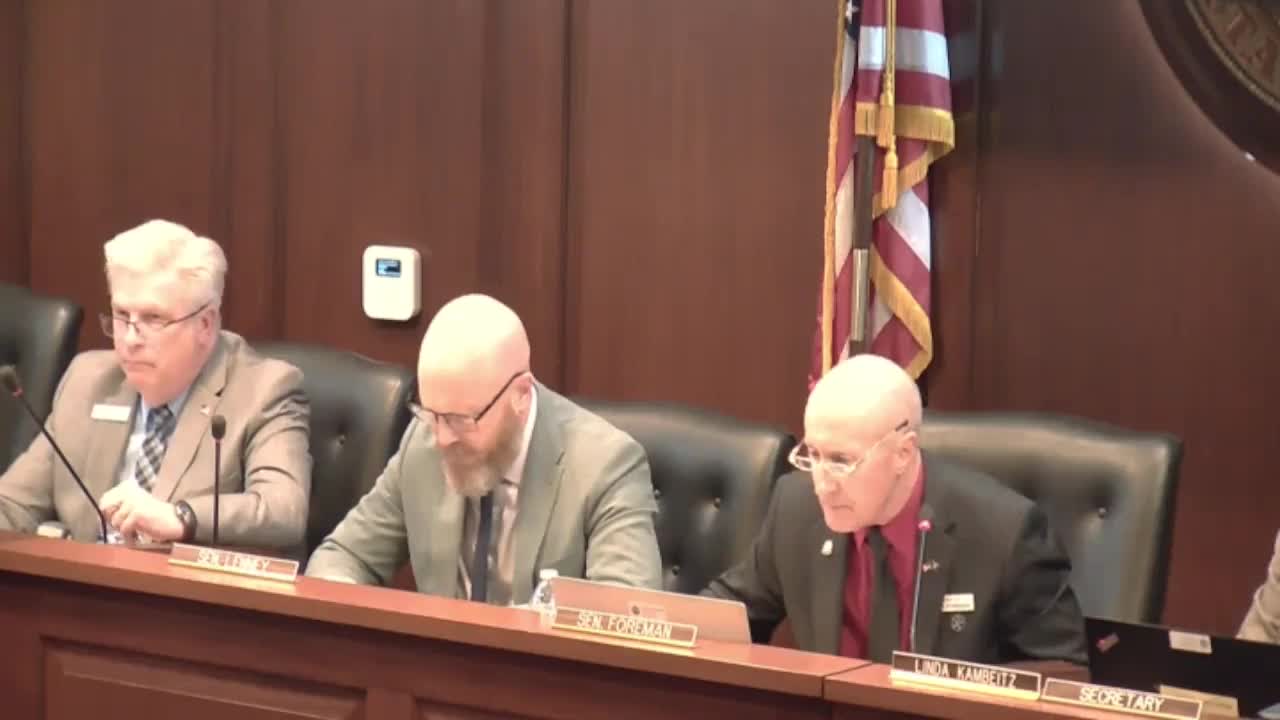
Senate Commerce committee advances bill requiring state reporting on 340B drug discounts
Summary
The Senate Commerce Committee voted to send House Bill 136 to the Senate floor with a due-pass recommendation after testimony for and against a state reporting requirement for hospitals and contract pharmacies participating in the federal 340B drug-pricing program.
The Idaho Senate Commerce Committee voted to send House Bill 136 to the Senate floor with a due-pass recommendation after a hearing that centered on transparency in the federal 340B drug-pricing program.
The bill would require 340B covered entities doing business in Idaho to report acquisition costs, payments received for 340B drugs and how any savings are used to the Idaho attorney general, the state controller and the Department of Health and Welfare. Proponents said the measure would give state officials data needed to assess whether hospitals and contract pharmacies are passing savings to patients or retaining revenue.
"This bill enhances transparency and accountability in this program," said Senator Carl Bjerke, the Senate sponsor, describing 340B as a federal program that allows certain hospitals to buy outpatient drugs at discounts and saying the state currently lacks visibility into how savings are spent. Bjerke cited a North Carolina State Treasury report alleging some 340B hospitals charged state health plans multiple times the discounted acquisition cost for oncology drugs.
Supporters included Steve Thomas of the Health Plan Association, who told the committee the bill represents "transparency light," and that the reports would be confidential and accessible only to the attorney general, the controller and the director of health and welfare. "What's wrong with that?" Thomas asked, adding the House passed the bill by a wide margin.
Opponents and cautious observers raised practical and legal concerns. Pam Eaton of the Idaho State Pharmacy Association and Idaho Retailers Association warned that contract pharmacies may not have the full data necessary to comply and that separate reporting by pharmacies could duplicate information the covered entity already provides. "We don't even know if it's a 340B prescription until months, months, months down the road when we get the reports," Eaton said.
Toni Lawson of the Idaho Hospital Association described the program's existing oversight, including manufacturer-initiated audits and program integrity requirements, and said technical problems in the bill would make compliance difficult for hospitals without amendments. "There are a number of technical problems with the bill that need fixed," Lawson said.
Committee members debated the bill's costs and scope. Senator Guthrie asked why the controller's office should bear aggregation costs; Bjerke and Thomas said the reporting burden rests on the covered entities, not the state, and that aggregation should be a minimal administrative task. Some senators said they supported the bill in principle but reserved the right to change their vote on the floor if further information emerged.
After discussion, Senator Laney moved to send House Bill 136 to the Senate floor with a due-pass recommendation; the motion was seconded and carried. The transcript does not include a complete tally of ayes and nays. Several senators expressed reservations during debate; one senator stated expressly he would vote against the motion on the floor, and at least one senator said they would reserve the right to change their vote when the bill reaches the floor.
The bill text, as read to the committee, quotes federal law describing the 340B program as part of the Public Health Service Act and states the reporting requirement covers "any pharmacy under contract with the entity to dispense drugs on behalf of the entity." The sponsor and witnesses discussed the goal of revealing acquisition costs, payments received and whether savings are reinvested in charity care or community benefits.
The committee hearing included detailed examples offered by the sponsor from out-of-state reports, which he said highlight why state oversight is needed. Senator Bjerke noted the bill would give the Idaho attorney general the authority to investigate improper billing or misuse of Medicaid funds tied to 340B discounts.
The bill was sent to the floor with a due-pass recommendation. Committee members and witnesses said they expect technical amendments to address pharmacy reporting, confidentiality and administrative procedures if the bill proceeds.
Votes at a glance: House Bill 136 — motion to send to floor with due-pass recommendation; mover: Senator Laney; second: not specified in transcript; outcome: motion carried (final roll-call tally not specified).