Get Full Government Meeting Transcripts, Videos, & Alerts Forever!
Get email alerts on the Pbm Market Structure And Transparency topic
No spam. Unsubscribe anytime.
South Carolina hearing exposes wide disagreement over PBMs, rebates and vertical integration
Summary
A Medical, Military, Public and Municipal Affairs ad hoc committee heard competing testimony on pharmacy benefit managers’ role in drug pricing, vertical integration among insurers/PBMs/pharmacies, and whether transparency and new rules could lower costs and protect patients and community pharmacies.
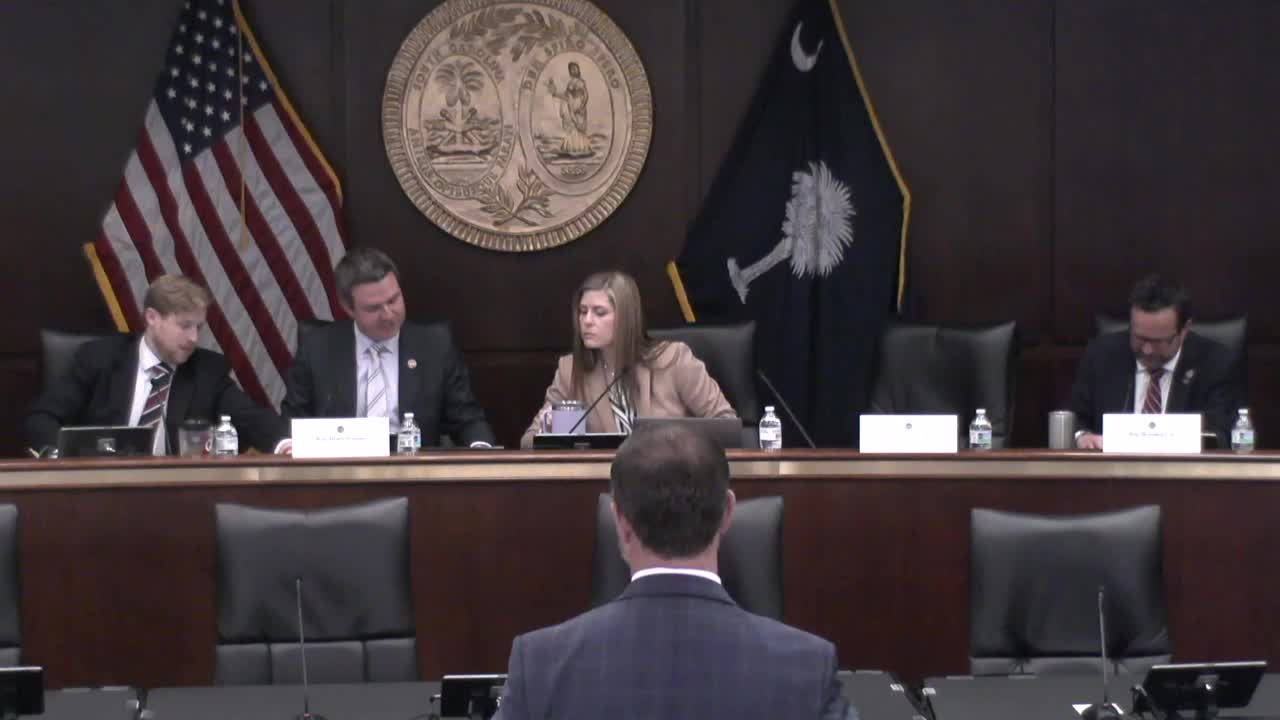
Heath Sessions, chair of the ad hoc Medical subcommittee, opened a daylong session on pharmacy benefit managers (PBMs) that brought PBM trade representatives, health-plan officials, drugmakers, community pharmacists and patient advocates to the State House to describe a complex prescription-drug market struggling with rising list prices, opaque rebate flows and concerns about access and competition.
The hearing centered on whether PBMs, now tightly linked to insurers, specialty pharmacies and wholesalers, bring net savings for plan sponsors and patients or instead extract value from the supply chain. Jim Ritchie, executive director of the South Carolina Alliance of Health Plans, said the industry’s aim is to protect consumers and plan sponsors, arguing PBMs are “the countervailing negotiating arm for the consumer as relates to the manufacturer's pricing.” Michael Powell of the Pharmaceutical Care Management Association (PCMA) argued PBMs favor generics when clinically appropriate and perform claims processing, utilization review and drug-management functions.
Why it matters: committee members pressed witnesses about two linked problems: (1) how rebates negotiated between manufacturers and PBMs flow through plans and whether patients see any of that value at the pharmacy counter; and (2) how vertical integration — insurers owning PBMs and PBMs owning pharmacies — can affect which drugs appear on formularies and where patients must fill prescriptions. Testimony showed little consensus on the magnitude or direction of harm and on whether fixes should be market-based or regulatory.
Key evidence and claims: PCMA’s Michael Powell said about 275,000,000 Americans receive prescription coverage through PBMs and stressed PBM roles including formulary design and safety checks, saying, “We prefer generics when available.” Pharma industry representative Charice Richard (PhRMA) and Scott White (Johnson & Johnson) emphasized market consolidation among a few large PBMs and disputed claims that PBMs’ revenues are limited to small percentages of the drug dollar, pointing to fees, specialty pharmacy and other revenue sources. Independent-pharmacy witnesses and the South Carolina Pharmacy Association presented multiple examples in which reimbursements to community pharmacies fell below their acquisition cost, and warned of store closures and “pharmacy deserts.”
Divergent proposals: witnesses proposed a range of remedies — from stronger oversight and public reporting (including NADAC-based or NADAC+ pharmacy reimbursement benchmarks) to bans on PBM ownership of pharmacies or insurers, to requiring that rebates be passed through to patients and to plan premiums. Patient advocates asked the committee to bar copay accumulator/“maximizer” programs and to restrict overly broad utilization management that delays prescribed treatments.
What the committee directed: there were no formal votes or rules adopted at the hearing. Committee members asked the Department of Insurance and state Medicaid officials to provide more data in later sessions (including spread-pricing audits), and scheduled follow-up meetings to examine statute changes and implementation options.
What's next: lawmakers signaled a two-track approach — pursue state-level transparency and reimbursement rules while monitoring federal activity (FTC investigations and possible congressional reforms) — and asked agencies for targeted data on Medicaid and state employee plans before drafting bills.