Get Full Government Meeting Transcripts, Videos, & Alerts Forever!
Get email alerts on the Finance— Taxonomy topic
No spam. Unsubscribe anytime.
Department on Aging asks Senate subcommittee for $15M authorization, $19M for home services
Summary
At a March 19 Senate subcommittee budget hearing, Department on Aging Director Connie Munn requested $15 million for federal authorization/maintenance-of-effort, $19 million for home and community‑based services, $527,000 for Older Americans Act compliance, and other staffing and program funds to address rising demand and ARPA spending deadlines.
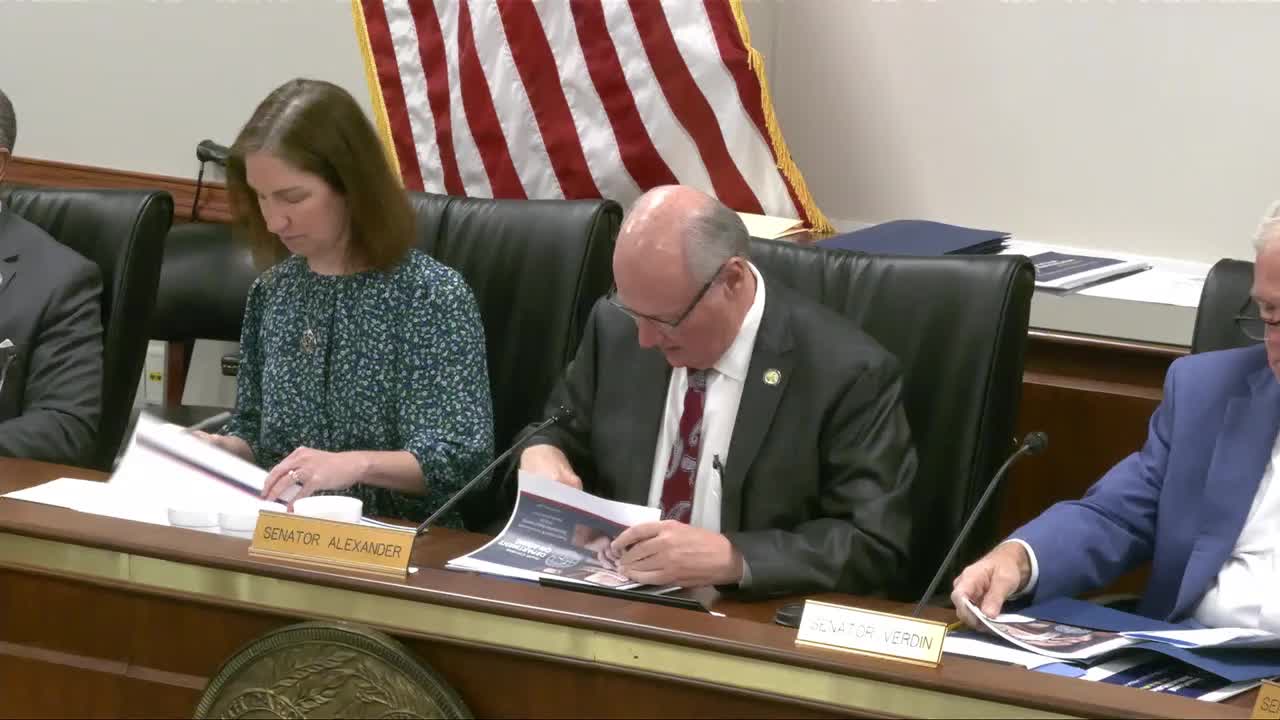
CONNIE MUNN, director of the South Carolina Department on Aging, told the Senate Finance Committee Health and Human Services Subcommittee on March 19 that the agency is requesting $15 million for federal authorization and maintenance‑of‑effort and $19 million to expand home and community‑based services statewide.
The request, presented at the committee’s budget hearing in Columbia, seeks a $3 million state match (identified in testimony as a 25% match) to secure federal funding and to give the department authority to spend discretionary grants without returning frequently to the Legislature. “This allows us the opportunity not to have to come and ask for money,” Munn said during her presentation (first referenced 00:01:38 into the hearing). The department also asked for $527,000 to meet new Older Americans Act compliance requirements and several other staffing and program allocations.
The request comes as South Carolina’s older population grows and the state approaches the deadline for spending prior American Rescue Plan Act (ARPA) awards. Munn said the aging network intentionally spent ARPA funding on innovative, flexible services—examples included weekend meals, food boxes, Uber partnerships for medical transportation and pest control services—and that roughly $4 million of ARPA funding remains under a no‑cost extension through September 2025.
Most of the $19 million home and community‑based services ask was explained as a response to area agencies on aging (AAAs) reporting service needs and waiting lists. Senators asked whether the request would eliminate waiting lists for home‑delivered meals and group dining; Munn said the funding would “attack” the waiting lists and reduce them substantially but would not fully eliminate waiting lists because the older population continues to grow. A senator referenced figures suggesting about $11 million for home‑delivered meals and another portion for group dining; Munn said the request numbers came directly from the 10 AAAs and that the department can provide a county‑by‑county breakdown on request.
Munn also described the department’s home stabilization program, which began as a HUD pilot and was expanded statewide through state administration. She said minor home modifications completed in 130 homes cost the state about $604,000 and likely avoided roughly $14.49 million in costs associated with institutional care—an estimated gross savings of about $13 million, according to the slide presented to the committee.
Other items in the agency’s priority list included $550,000 for ombudsman allocations to AAAs to expand long‑term care and behavioral health ombudsman coverage statewide, a requested guardian ad litem position to represent vulnerable adults in court proceedings, a $154,000 per‑year request for shared services and data warehouse support, an e‑learning/learning management position, marketing and communications funding, and a small FTE realignment across funding sources.
Committee members asked for additional detail on meal composition, procurement standards and contract requirements; Munn said meals provided under the Older Americans Act must meet one‑third of the recommended daily allowance and that AAAs follow dietary procurement requirements when contracting meal providers. She offered to provide a tutorial and a breakdown of current waiting‑list numbers by county.
Munn said the Older Americans Act final rule—updated in 2024 for the first time in 37 years—drives some of the staffing and compliance requests, including positions to develop legal assistance and veterans outreach. She also thanked staff and the AAAs for coordination in spending ARPA funds and implementing flexible services.
The department provided slides showing the priority list and impact metrics; Munn said the department can supply the committee with the detailed breakout and waiting‑list information that senators requested. The presentation concluded with an offer to provide additional data and follow‑up materials to the subcommittee.