Get Full Government Meeting Transcripts, Videos, & Alerts Forever!
Get email alerts on the Utility Regulation topic
No spam. Unsubscribe anytime.
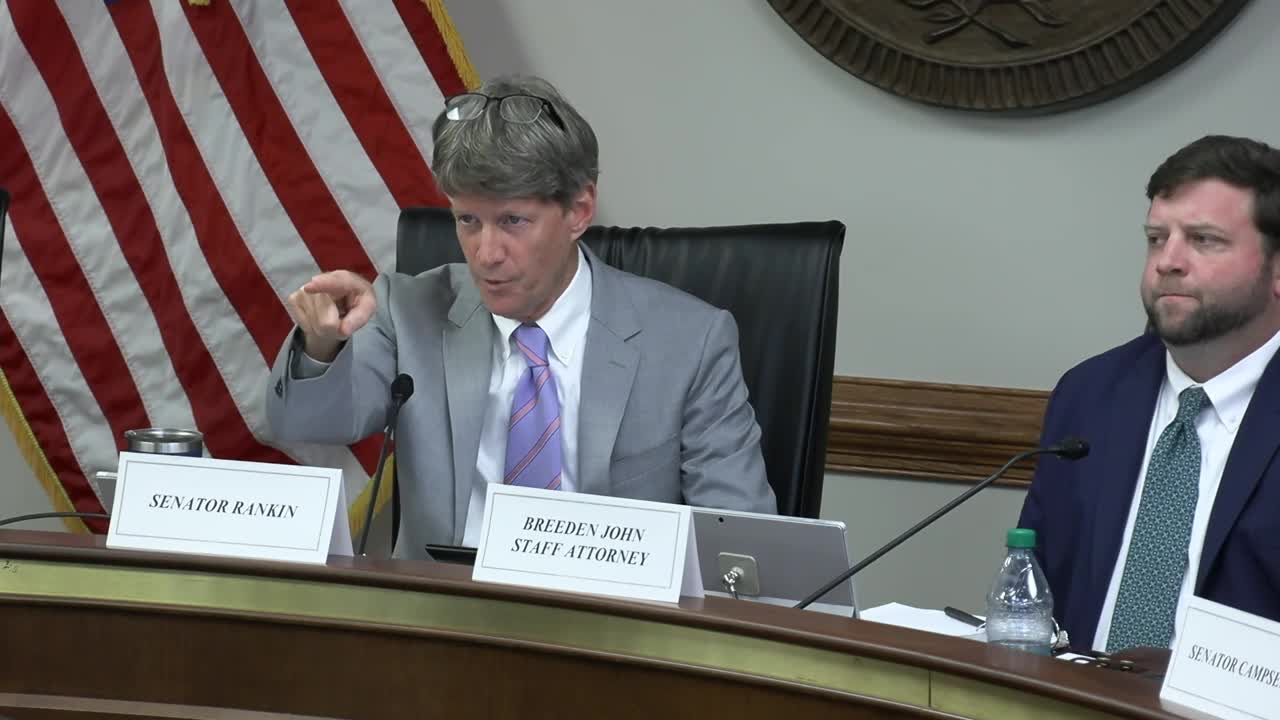
Senate subcommittee advances electric rate-stabilization bill after sharp debate on consumer protections
Summary
Senators voted to move S.446 — an electric-rate stabilization mechanism modeled on natural-gas RSA — out of subcommittee after witnesses and consumer groups urged clearer safeguards, discovery rights and limits on project pass-throughs.
The Senate Judiciary subcommittee voted to advance S.446, a proposal to create an electric Rate Stabilization Act (RSA) that would permit annual “true-ups” of certain utility investments, alongside quarterly and monthly reporting to regulators.
Supporters said the mechanism addresses regulatory lag and enables quicker cost recovery for prudently incurred investments; opponents and consumer advocates warned it could ease the route to more frequent rate increases without sufficiently robust interparty review and safeguards.
Why it mattered: backers framed the bill as an administrative-efficiency measure patterned in part on the existing natural-gas RSA. They said annual adjustments smooth rate changes over time and lower the immediate financing costs for large capital projects. Utilities and ORS witnesses described additional reporting features and a requirement to file a full rate case every five years to reset key parameters (depreciation, return on equity) as built-in safeguards.
What witnesses told the panel: Andrew Bateman of the Office of Regulatory Staff said the proposed electric RSA would include monitoring reports similar to the gas RSA while adding public notice and the ability for parties to file documentary comments — steps he described as consumer protections beyond the gas model. He also noted an ORS recommendation to require a full rate proceeding every five years. Utilities’ witnesses said the tool reduces regulatory lag that can deter needed investment.
Consumer groups and business representatives strongly urged amendments. Conservation Voters’ John Brooker called the bill “a fundamental shift” and warned it would prioritize utility profits over accountability and cost-effective clean-energy choices. The South Carolina Small Business Chamber warned such a mechanism would limit their ability to influence outcomes in a single, comprehensive rate case and urged that the public and intervenors be given meaningful discovery and review rights.
A recurring concern: several witnesses and committee members cited the 2000s-era Baseload Review Act (BLRA) lessons — large pre-construction cost recovery with limited post-construction checks — as a cautionary example. Critics asked for explicit, enforceable language requiring post-construction prudency reviews for any project placed into rates and for limits on forward recovery for speculative technologies.
Votes and action: the subcommittee voted to move S.446 forward; members recorded unanimous voice approval with no opposition reported. Leaders said the subcommittee’s action does not preclude amendments and staff work before the bill reaches the full committee.
Next steps: committee staff and ORS were asked to clarify discovery rights and the mechanics of intervention and documentary evidence in the RSA process, and to draft explicit prudency procedures and any caps or guardrails legislators want to require for particular project classes before the bill reaches the full Senate.