Get Full Government Meeting Transcripts, Videos, & Alerts Forever!
Get email alerts on the Energy Generation topic
No spam. Unsubscribe anytime.
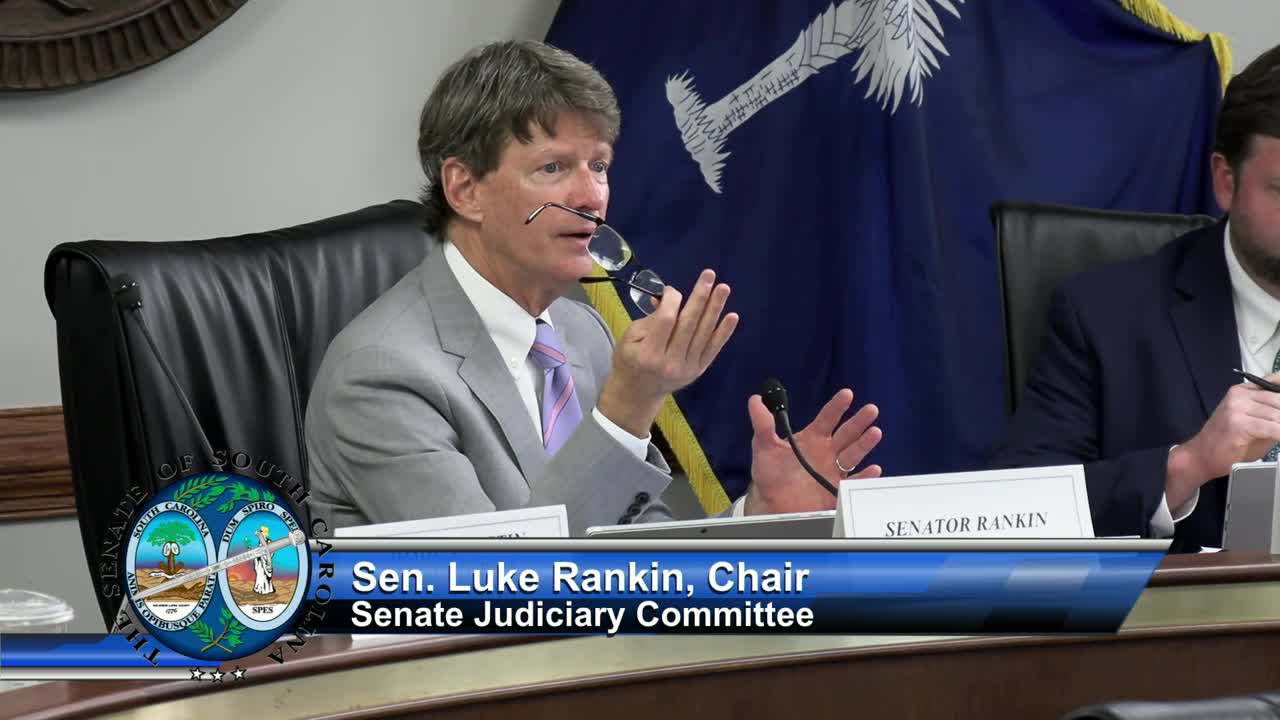
Senate subcommittee advances joint authorization for Kennedy natural-gas plant amid timeline concerns
Summary
The Senate Judiciary subcommittee voted to adopt an amendment and forward S.3309 — authorizing a joint build of large combined-cycle gas generation at the Kennedy site — after testimony from Santee Cooper, utilities and reliability experts about turbine lead times, site readiness and regulatory checks.
A Senate Judiciary subcommittee on Thursday adopted an amendment to Senate Bill 3309 and gave the measure a favorable report, advancing legislation that would authorize a joint natural-gas combined-cycle build at the Kennedy site in Colleton County.
Supporters told the panel the project needs a clear legislative answer soon so utilities can secure long lead-time combustion turbines and capture cost savings by building jointly. Opponents and intervenors urged continued regulatory safeguards and cautioned against shifting too much risk to ratepayers.
The question before the subcommittee mattered because manufacturers’ production queues for large combustion turbines are constrained and delivery windows run multiple years. “If you sign up today, you’ve got about four years to get a turbine,” said a utility witness who described work to line up gas supply and equipment. He added the joint approach could “reduce the cost by about 30%” compared with single-utility builds.
Why it matters: witnesses for Santee Cooper and other utilities said South Carolina faces substantial load growth and aging fleet issues — Santee Cooper’s system was described as roughly 5,400 megawatts of capacity with a majority coming from coal-fired units and at least one large coal unit more than 50 years old. Committee members heard the Kennedy site has existing transmission and environmental remediation and that pipeline projects will follow federal permitting. Proponents argued the state must act to secure construction slots and to avoid higher costs or lost economies of scale.
What the subcommittee heard: Santee Cooper representatives summarized preparatory work at the Kennedy site and said they have access to natural gas supply but need legal authorization to move from planning to contracting and procurement. One Santee Cooper speaker said the utility was “ready to move forward” and that if the joint authorization is not available the utility will pursue other options, but without the same economies of scale.
Duke Energy South Carolina’s president, Tim Pearson, told the subcommittee he and other utilities support the bill, calling it a response to regionwide needs for quicker generation deployment and pointing to prior work by the legislature on related tools such as securitization. Former FERC Commissioner Bernard L. McNamee, testifying as an independent consultant, said federal reliability requirements (FERC/NERC) mean transmission providers and balancing authorities cannot abandon the obligation to keep the grid in balance, and that any state-level changes must preserve those obligations.
Opponents and third-party witnesses, including the Electric Cooperatives of South Carolina and consumer advocates, urged caution. John Frick of the cooperatives warned that large industrial or retail “choice” reforms that allow major customers to procure power outside their local utility could produce stranded-cost and competitiveness issues for utilities that invest in local infrastructure. Environmental and consumer groups pressed the committee for guardrails on oversight, transparency, and protections for captive retail customers.
Formal action: the subcommittee voted to adopt an amendment (which restores language similar to the Senate Judiciary version from the prior year and narrows some House changes) and then gave S.3309 a favorable report out of committee. The committee’s voice votes were recorded as “aye” with no opposition reported.
What the amendment does: according to staff, the amendment largely returns the bill to the version the Senate Judiciary Committee approved last year, retains an ORS reporting regime and IRP and permitting requirements, and narrows the joint-authorization text so it applies to the Kennedy project as outlined in a separate earlier measure. Staff said the amendment also removes nonbinding whereas clauses that the House had added.
Next steps and outstanding questions: committee members and witnesses said any approval should preserve prudency review, monthly and quarterly reporting to the Office of Regulatory Staff (ORS), and the commission’s authority to exclude imprudently incurred costs. Questions remain about the precise prudency review process for very large projects, whether construction work-in-progress and certain project costs can be recovered through the electric rate tool proposed elsewhere in the session, and the timetable for turbine delivery — witnesses said earliest deliveries for turbines ordered now would not be before 2029.
Ending note: supporters told the committee they have line-of-sight on pipeline and supply and that the Kennedy site offers transmission advantages; opponents urged stronger, explicit protections for customers and recommended additional clarifications in legislation before final floor consideration.