Get Full Government Meeting Transcripts, Videos, & Alerts Forever!
Get email alerts on the Bioenergy Forest Biomass topic
No spam. Unsubscribe anytime.
Subcommittee advances bill recognizing forest biomass as carbon‑neutral to support bioenergy; H.3967 moves 4-0
Summary
The panel advanced H.3967 by a 4-0 vote to the full committee after forestry representatives argued the state should recognize sustainably sourced forest biomass as carbon neutral to help replace lost markets after recent mill closures.
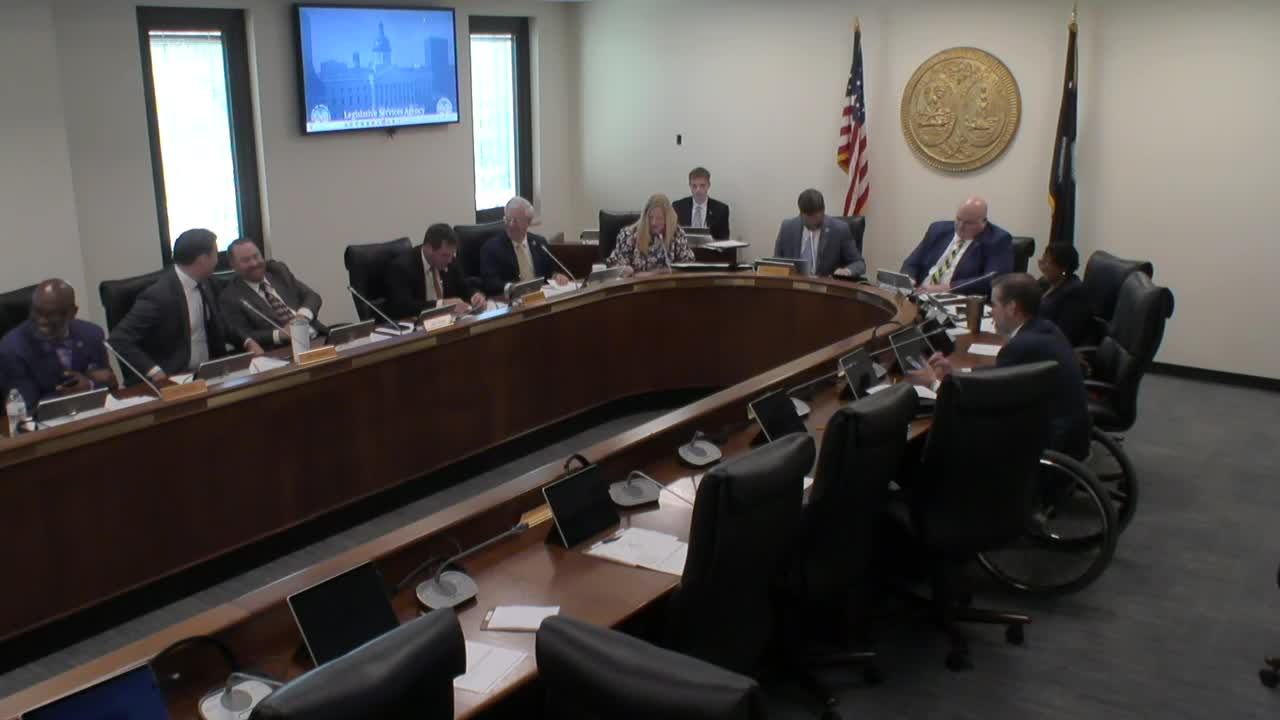
The House Agriculture, Natural Resources and Environmental Affairs Subcommittee voted 4-0 to advance H.3967, legislation that would recognize certain forest biomass uses as carbon neutral and encourage bioenergy development in South Carolina.
Cam Crawford, president of the Forestry Association of South Carolina, told the subcommittee the state’s forest products sector has been a major economic contributor—he cited an industry contribution figure of about $23,200,000,000 and employment of more than 100,000—and that recent mill closures have removed significant wood markets. Crawford said a combination of mill curtailments and closures led to a projected loss of about 8,200,000 tons of wood fiber in the state, representing roughly a 25% reduction in market demand compared with prior levels.
Crawford read a passage from the American Forest and Paper Association on the forest carbon cycle to explain why proponents consider sustainably managed forest biomass carbon neutral: "As forest grows, carbon dioxide, CO2 is renewed from the atmosphere via photosynthesis. This CO2 is converted into organic carbon and stored in woody biomass ... The net impact of these processes is that CO2 flows in and out of the forest and through the forest products industry ... the carbon neutrality of sustainable managed forest biomass is a scientifically supported fact," the excerpt said.
Speakers from across the forestry sector described the resource base and markets. Dr. Tim Adams of the South Carolina Forestry Commission provided agency data: the state has roughly 12,650,000 acres of commercial timberland; about 88% of that land is privately owned; the state is planting roughly 80,000,000 seedlings a year; and the Commission’s inventory shows the state is growing substantially more wood than it harvests. Adams also described emerging technologies, including biomass energy with carbon capture and storage (BECCS), and said he recently spoke with a subsidiary of Drax interested in BECCS projects.
Joey Ferguson, Robert Bridal and William Bowers also testified in support, describing how paper mills and wood‑products facilities already use biomass to generate power and arguing that state recognition of biomass as carbon neutral would help attract clean‑energy investment and new markets for landowners and loggers.
Representative McDaniel moved the measure; the subcommittee approved it 4-0 and sent it to the full committee. Supporters said the bill aims to create regulatory certainty and new markets for South Carolina timber owners after multiple mill curtailments and closures; opponents were not recorded at the hearing.