Get Full Government Meeting Transcripts, Videos, & Alerts Forever!
Get email alerts on the Septic Permitting Soil Classification topic
No spam. Unsubscribe anytime.
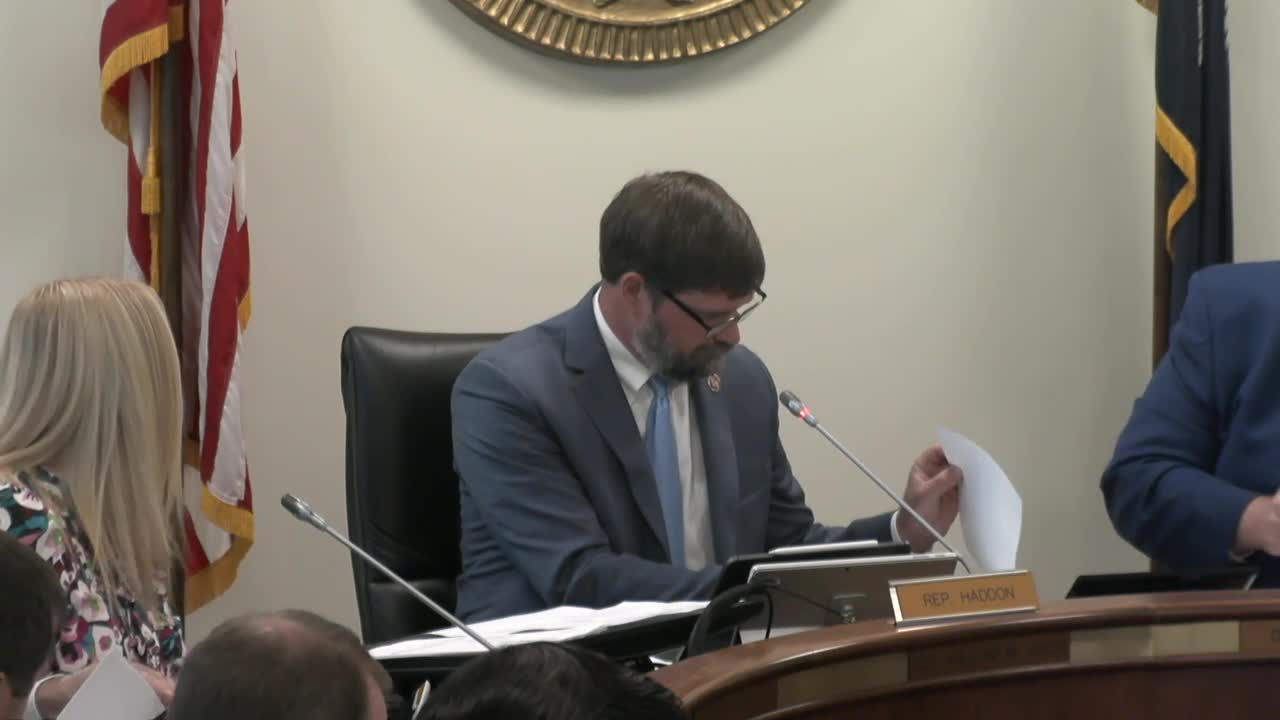
Panel backs allowing engineers to perform septic soil evaluations after short DES/Clemson training; H.3950 advances 6-0
Summary
The subcommittee voted 6-0 to send H.3950 to the full committee. The bill would allow professional engineers who complete a DES‑approved online and field course to perform on‑site soil evaluations for traditional septic permits to reduce backlog and housing delays.
The House Agriculture, Natural Resources and Environmental Affairs Subcommittee voted 6-0 to advance H.3950 to the full committee after testimony that the measure would expand the pool of qualified professionals who can evaluate soils for septic permits and help reduce permitting backlogs.
Chairman Hixson and supporters said the bill is intended to speed housing projects in rural areas where long waits for soil evaluations delay construction. Alex James of the Home Builders Association of South Carolina described a proposed training program that he said would be "roughly 2 days" of hands‑on instruction coupled with an online Clemson University module. "I believe the class would take 2 days. It'd be, well, it'd be 1 day of in person and, an online class through Clemson that, DES has worked with Clemson on," James said.
David Vaughn, director of the Division of On‑Site Wastewater at the Department of Environmental Services, provided permitting data and said the department has worked with stakeholders to design an abbreviated training. He described historic backlog levels and current metrics: at the worst point the department faced about 3,500 applications with turnaround times up to 27 weeks; as of the morning of the hearing the department had about 507 applications in its queue, an average turnaround of 2.9 weeks, and localized worst‑case turnaround near nine weeks in the Upstate. Vaughn said third‑party submissions from licensed soil classifiers and engineers are now being turned around in less than a week once submitted.
Industry and professional groups raised implementation questions. Adam Jones of the American Council of Engineering Companies of South Carolina said his members are not opposing the bill but asked for clarity that engineers who take the course will not face licensure discipline for performing this work; he said the board of registration previously determined soil classification is not engineering and asked safeguards so engineers are not penalized for these tasks.
Representative Atkinson offered an amendment allowing the Department of Environmental Services to revoke or suspend certifications on evidence of incompetence, incorrect soil classification, falsification or improper documentation and to deposit civil penalties into the state general fund; the amendment passed on a 6‑0 voice vote. After discussion the subcommittee approved H.3950, which includes the DES/Clemson hybrid training requirement and a two‑day field component, by voice vote and sent it to the full committee.
Supporters said the measure aims to expand options (engineers initially, with possible later expansion to other qualified professions) to reduce permit wait times and housing carrying costs. DES officials said applicants will be required to complete the online coursework before attending the abbreviated in‑person field module and that certified third‑party submissions are processed more quickly when they reach the department.