Get Full Government Meeting Transcripts, Videos, & Alerts Forever!
Get email alerts on the Banking Policy Glass Steagall topic
No spam. Unsubscribe anytime.
Senate memorial asks Congress to reinstate Glass-Steagall banking separation
Summary
Senate Joint Memorial 8005 requests Congress to reinstate the Glass-Steagall Act's separation of commercial and investment banking. Sponsor emphasized historical reasons tied to the Great Depression and taxpayer bailouts during the 2008 financial crisis; staff summarized the memorial's text.
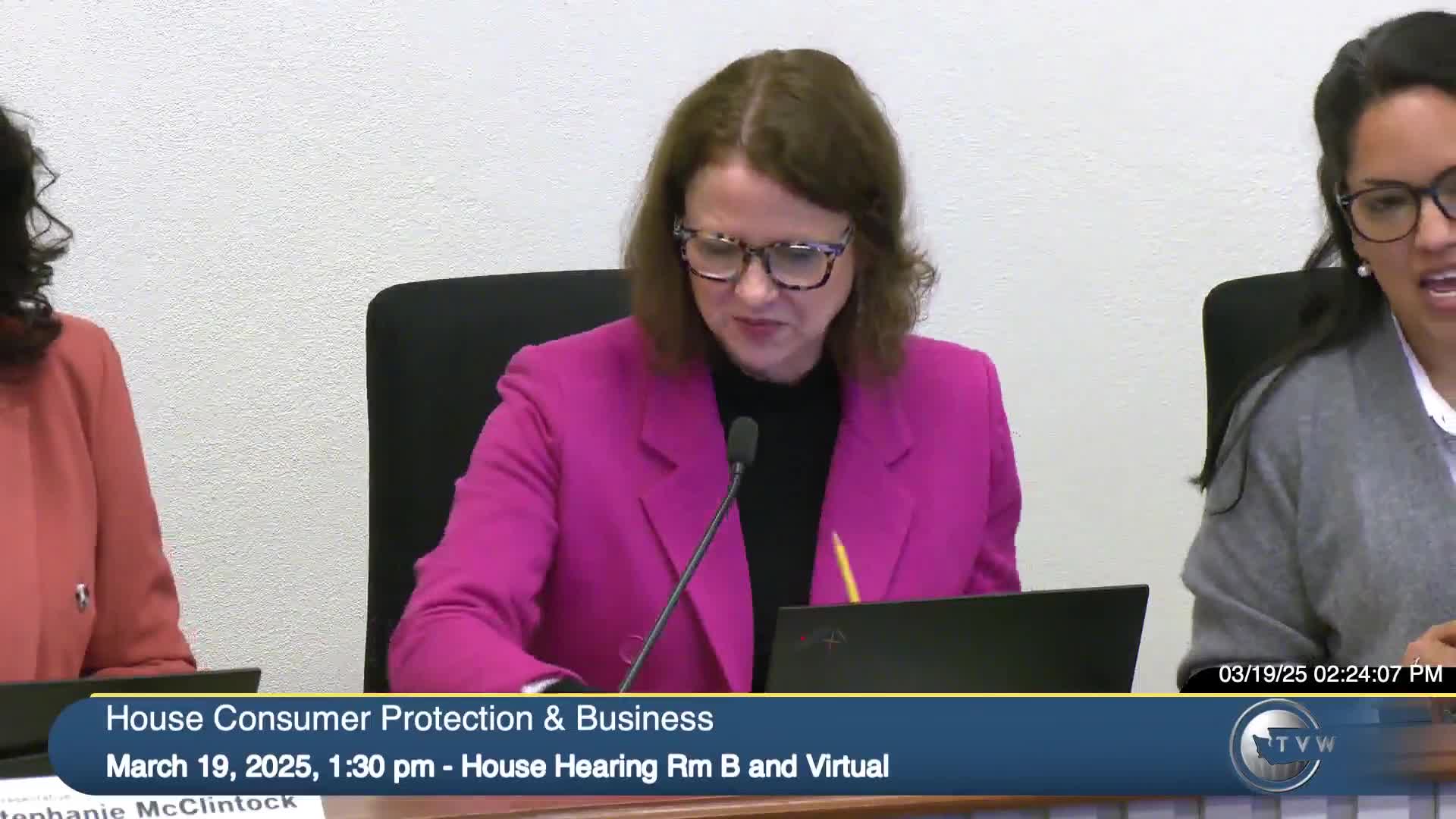
Senate Joint Memorial 8005, introduced to request that the U.S. Congress reinstate the separation of commercial and investment banking reflected in the Glass-Steagall Act of 1933, was presented to the Consumer Protection & Business Committee in a staff briefing and sponsor remarks on March 19.
Megan Mulvihill, staff to the committee, described the memorial in a short briefing: the memorial "requests that the U.S. Congress reinstate the separation of commercial and investment banking functions that were in effect under the Glass Steagall Act of 1933," and it noted that the Gramm-Leach-Bliley Act of 1999 repealed those provisions.
Senator Bob Poso (for the record identified as Bob Posagawa in the hearing) framed the memorial as partly educational and partly a state-level policy signal to Washington’s congressional delegation. He recounted Glass-Steagall's historical purpose: to prevent banks from using depositors' savings for speculative investments and to protect depositors after the 1929 crash. "What they were trying to do was protect depositors from potential losses through stock speculation," the sponsor said, and he argued the repeal set the stage in later decades for institutions that became "too big to fail." The memorial asks Congress to consider reinstating those separations.
Staff noted the memorial is a request to Congress rather than a law that would change Washington state banking rules. No formal committee action was taken at the briefing; the public hearing record for this item closed with no additional testimony.
The item’s proponents positioned the memorial as an educational tool for the public and an organizing device for advocacy in Washington, D.C. Critics or alternate viewpoints were not represented in the committee’s public hearing record for this item during the session.
Because a joint memorial requests federal action rather than imposing state regulatory changes, the committee’s role was to receive testimony and register the memorial in the hearing record. No committee vote or final action was recorded during the March 19 session.