Get Full Government Meeting Transcripts, Videos, & Alerts Forever!
Get email alerts on the Home Stabilization topic
No spam. Unsubscribe anytime.
State expands senior home‑modification program, cites cost savings from preventing nursing‑home placements
Summary
Department on Aging staff described a statewide home‑stabilization program previously run with HUD funding; the agency reported modifying 30 homes at a cost of $604,000 and said those repairs likely prevented higher downstream costs.
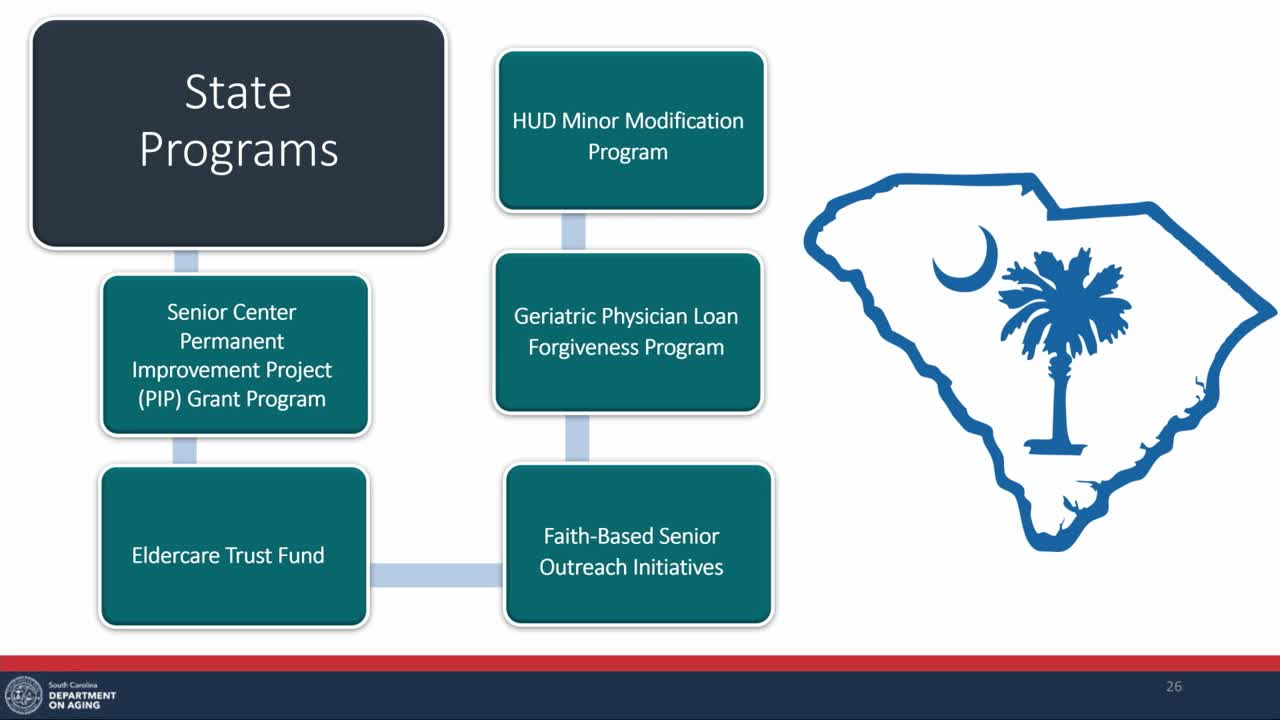
Director Munn, director of the South Carolina Department on Aging, told the oversight committee the agency has taken a HUD demonstration (minor modification) program in‑house so it can serve all 46 counties and broaden eligibility.
The department said the HUD grant (a three‑year award that began in October 2021) funded a pilot of low‑cost home modifications intended to reduce falls and other hazards for older adults. Director Munn told the committee the department completed modifications on 30 homes at a total cost of $604,000, with typical repairs often under a $5,000 cap per household. She said occupational therapists assess each home and recommended changes such as improved hallway lighting, removal of tripping hazards, and bathroom grab bars.
The department estimated that avoiding even a few nursing‑home placements or hospitalizations produced meaningful state savings. In its presentation Munn characterized the initiative as “a huge cost savings,” and the department offered an estimated aggregate savings figure of about $13 million compared with the likely costs had those residents experienced major health events and required institutional care.
Under the state‑run model, the department said it can serve residents ages 60 and older (the HUD grant had used a 62‑plus threshold and included ownership restrictions and geographic limits). Director Munn said transitioning the program to state administration allowed the department to assist homeowners who did not meet HUD’s original ownership or flood‑zone restrictions.
Senators asked whether the program can be sustained without federal discretionary grants; Director Munn said the department has requested positions funding in the current budget cycle to continue the statewide initiative. The committee requested documentation of the home assessments and the department’s estimates of long‑term savings for review at a future meeting.
The department emphasized that the program’s modifications are low‑impact, targeted repairs intended to prevent falls and other events that often precipitate costly institutional care.