Get Full Government Meeting Transcripts, Videos, & Alerts Forever!
Get email alerts on the Aeronautics Funding topic
No spam. Unsubscribe anytime.
Aeronautics Commission seeks $100M recurring for airports and warns SB 436 could cut agency revenue
Summary
Director Siegfried of the South Carolina Aeronautics Commission asked the Senate subcommittee for recurring capital funding of $100 million to support statewide airport development and warned that proposed changes to airline property tax (Senate Bill 436/House Bill 5310) could reduce agency revenue by roughly 42 percent based on prior estimates.
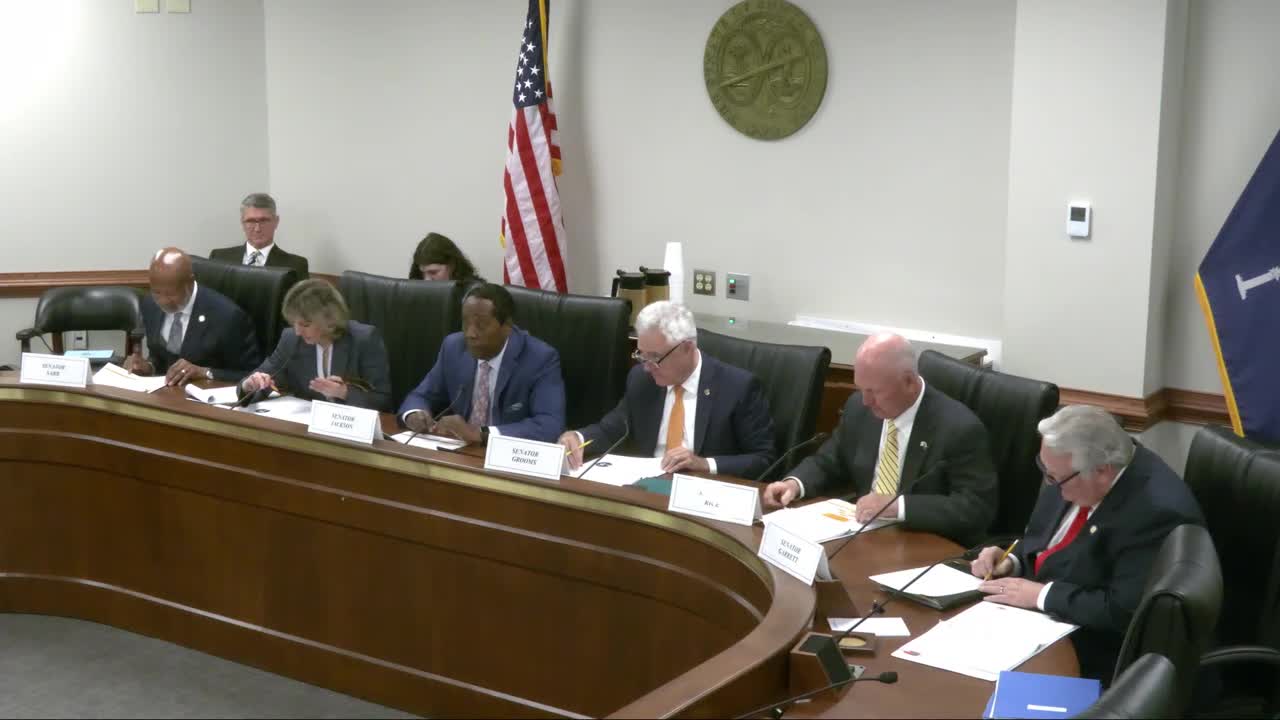
Director Siegfried, director of the South Carolina Aeronautics Commission, presented the agency’s fiscal and policy priorities to the Senate Finance transportation subcommittee on May 20 and sought a large, recurring capital appropriation to support airports statewide.
Siegfried outlined two priorities: a $100 million recurring capital-investment program for statewide airport development and a smaller recurring general-fund increase for agency operations and personnel. "Priority 1, capital investing for statewide airport system, a hundred million dollars recurring funding for state wide airport development," he told the committee, saying recurring, predictable funding would allow airports to plan projects and encourage private investment such as hangar and fuel-farm construction.
The nut graf: Siegfried said predictable, recurring capital funding would be "transformative" for small and medium airports and help reduce the agency's reliance on irregular revenue streams. He also warned that a proposed bill altering airline property-tax treatment (discussed as Senate Bill 436/House Bill 5310 in testimony) could sharply reduce Aeronautics Commission receipts; he cited a prior economic-impact estimate that a similar House proposal would have reduced airline property-tax revenue by about 74% and overall agency revenue by 42%.
Siegfried gave data points to frame the ask: the commission processed a record 60 grants last year totaling $33.2 million in state grants; the Federal Aviation Administration added roughly $70.7 million in federal grants. He said statewide enplanements are up about 26% since 2019 and 10% in the last year, and he described construction-cost pressures—particularly asphalt prices, which he said have roughly doubled in two years—that are stretching aviation grants.
Siegfried also analyzed airline property tax at passenger level and described modest per-passenger impact based on department and seat data: "For the top 5 airlines, that number is 77¢...taking into account all of the top 10 airlines...it becomes a dollar 52 per round trip ticket," he said, arguing the per-ticket cost is small compared with other taxes and charges on tickets. He asked the committee for planning and preliminary discussion before lawmakers move forward on any structural tax change.
Ending: The Aeronautics Commission asked the committee to consider the recurring capital proposal and to clarify the formula for airline property-tax assessment with the Department of Revenue; Siegfried said he would follow up with requested information. No vote was taken during the hearing.