Get Full Government Meeting Transcripts, Videos, & Alerts Forever!
Get email alerts on the H4100 Captive Wildlife topic
No spam. Unsubscribe anytime.
Rehabbers and rescuers split over captive-wildlife bill H4100; key concerns are vagueness, seizures and nonreleasable animals
Summary
The House Wildlife Subcommittee heard competing testimony on House Bill 4,100, with rehabilitators and veterinarians divided over whether the draft sets needed standards for animal care or contains vague language that could enable overbroad seizures and forced euthanasia of nonreleasable animals.
The House Agriculture, Natural Resources and Environmental Affairs wildlife subcommittee heard more testimony on House Bill 4,100, a proposed statute to regulate captive wildlife, rehabilitation permits and the care of nonreleasable animals.
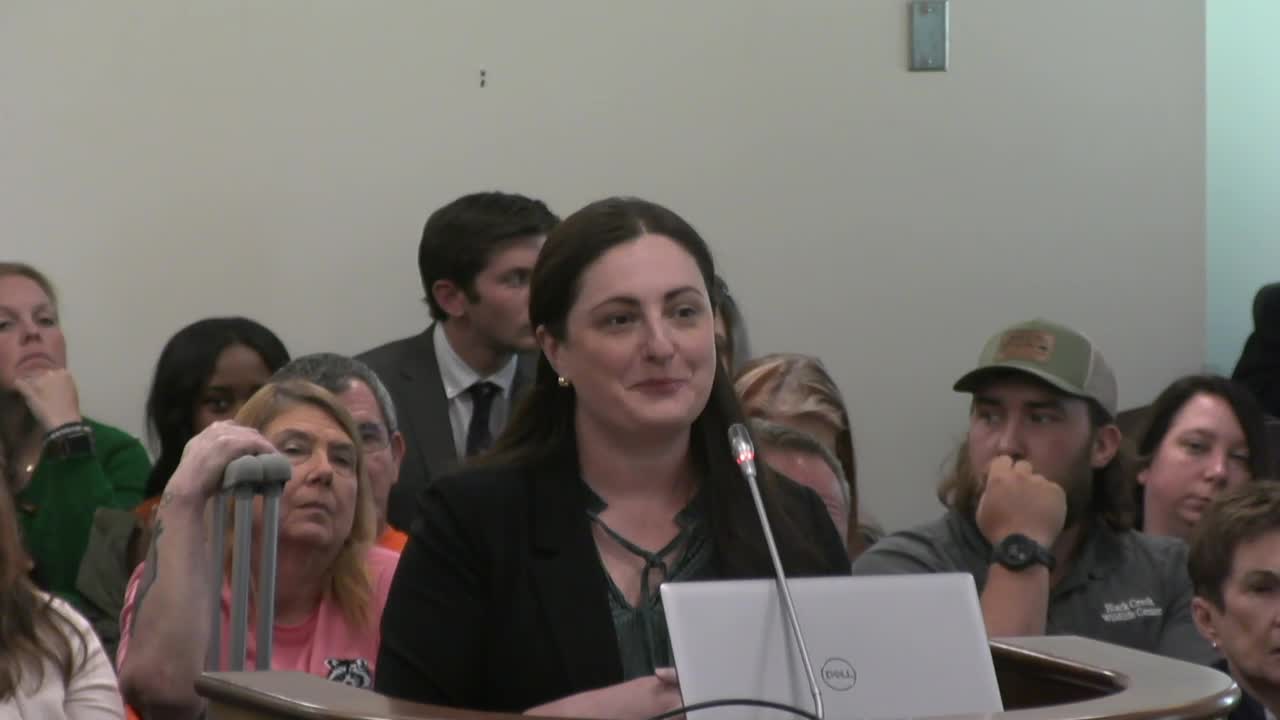
A large turnout of licensed rehabilitators, sanctuary directors and veterinarians offered competing recommendations: many said the state needs a clear permitting framework and more enforcement tools to deter untrained people from keeping wild animals; others said the bill as drafted is too vague, risks unconstitutional searches, and would force unlawful euthanasia of animals that cannot be returned to the wild.
"This bill is crucial for our native wildlife and communities," said Erica Shuff, owner of Hickory Haven Fawn Rescue, who described repeated instances of fawns kept as pets that later suffer or die. "Our officers need this bill to be able to deter this activity and keep our wildlife safe." Shuff urged mandatory recordkeeping, inspection authority for violations and penalties to deter repeat offenders.
At the same time, Christine Hunt, a raccoon rehabilitator from Edgefield, accused DNR of presenting isolated, extreme photos as evidence of a systemic crisis and warned the draft bill contains vague provisions that would allow inspections without probable cause. "They cherry-picked rare, extreme, spread-out cases over a decade," Hunt said, and "it is untrue that South Carolina is only one of three states that lacks wildlife rehab law."
Veterinarians and wildlife organizations stressed public-health implications. Dr. Patricia Hill, representing the South Carolina Association of Veterinarians, said rabies risks and the potentially high costs of human post-exposure prophylaxis require careful statutory language on handling rabies-vector species and exposures. "The consequences of rabies are still very real," Hill said, noting the limited circumstances in which a definitive rabies diagnosis can be made.
Key points of contention
- Vagueness and discretion: Multiple rehabbers and attorneys objected to open-ended phrases in the bill (for example, "may require" and other delegation to DNR), saying such language could be subject to inconsistent enforcement. Attorney Courtney Gruber flagged seizure and inspection language that she said lacks probable-cause safeguards.
- Nonreleasable animals: Several rehabbers urged that the bill not require euthanasia or forced transfer of nonreleasable animals. Keepers said they bear long-term financial and labor costs to care for those animals and that humane sanctuary placement is an established practice.
- Accreditation and standards: Some sanctuary operators suggested recognition of existing accreditation processes and of USDA exhibitor permits as enforceable standards. Others argued for a workable permit system tied to training and recordkeeping rather than punitive criminal penalties.
- Public-health and enforcement: Veterinarians emphasized that rabies exposure remains a public-health issue with substantial human-health consequences. Several speakers said DNR lacks sufficient staffing and funding to implement sweeping new enforcement without additional resources.
Committee remarks and next steps
Chairman Hixson repeatedly told the room that the meeting was informational and that the subcommittee would not vote that day. He encouraged stakeholders to return to later rulemaking and committee sessions, and reminded the room that DNR-promulgated regulations would themselves be subject to committee and public review.
Several rehabilitators proposed a collaborative drafting process: inside the hearing, multiple groups said they would supply model permit language, and veterinarians and legal advocates offered to work with DNR to tighten seizure and inspection language, clarify timelines for corrective actions and define standards for nonreleasables.
Ending: The subcommittee adjourned without action; stakeholders on both sides said they expected further meetings and called for changes to clarify process, probable‑cause protections and how nonreleasable animals would be handled.