Get Full Government Meeting Transcripts, Videos, & Alerts Forever!
Get email alerts on the Dmv Modernization topic
No spam. Unsubscribe anytime.
DMV director urges proviso change or $42.7M to fund IT modernization
Summary
South Carolina Department of Motor Vehicles Director Shwedo told the Senate Finance transportation subcommittee the DMV needs either authority to raise certain fees under a change to proviso 82.2 or $42.73 million in nonrecurring funds plus $7 million recurring to complete a five-year modernization and sustainment program.
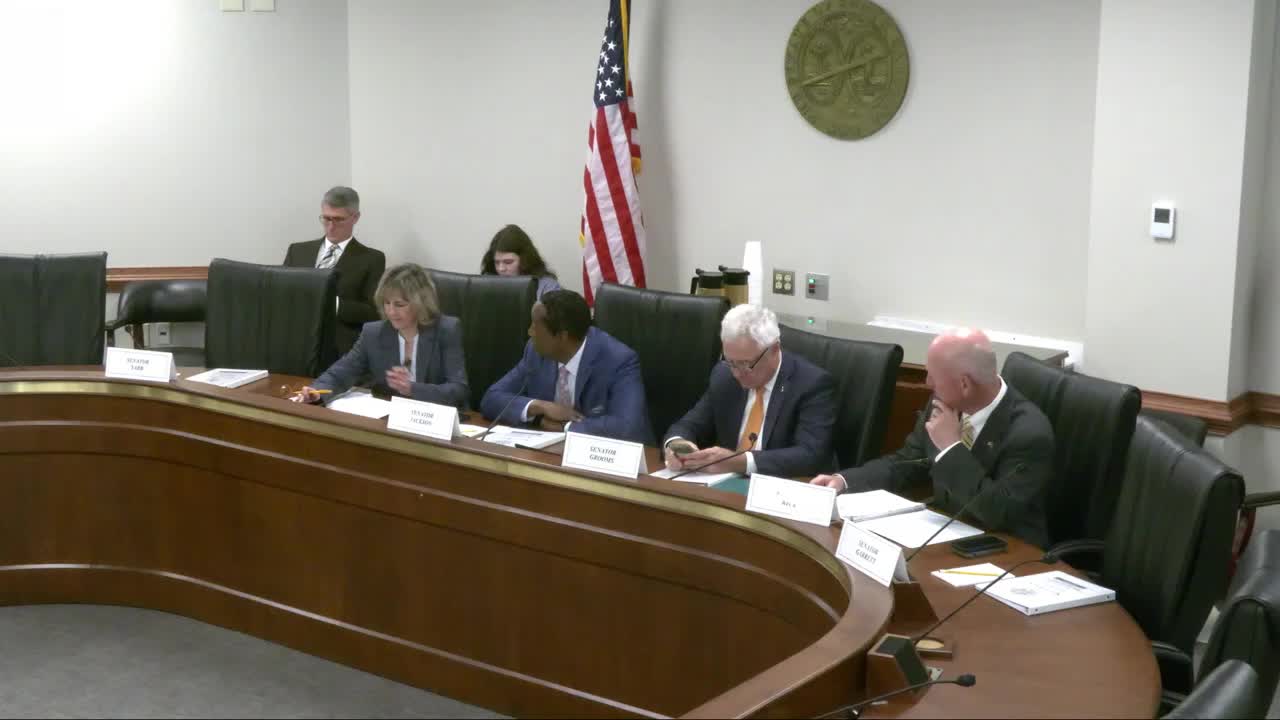
Director Shwedo, director of the South Carolina Department of Motor Vehicles, told the Senate Finance Committee’s Transportation Regulatory Subcommittee on May 20 that the DMV needs a funding path to replace aging IT systems and improve security.
Shwedo said the department is proposing three funding options but recommended changing proviso 82.2 so the DMV could collect higher fees for specific products to pay for modernization. "This proviso...may not exceed the rate that the department charged in 02/2001," he told senators, saying the proviso keeps many DMV fees frozen at levels set more than two decades ago.
The nut graf: Shwedo said the DMV can fund a comprehensive five-year modernization if lawmakers either (a) amend the proviso to permit higher fees for a narrow set of products, letting the DMV keep revenue above the $6 baseline that currently flows to the Department of Transportation, or (b) provide $42.73 million in additional nonrecurring funds now and a later recurring appropriation. He framed the change as a way to avoid tapping other state funds and to cover increasing contract and security costs.
Shwedo told the committee the DMV already has about $44 million in appropriated carryforward but cannot use partial amounts to award a comprehensive IT contract because of anti-deficiency rules; the department needs the full contract amount committed up front. "We need 42.73 additional million of nonrecurring dollars, and then to sustain the system over time, it would require $7,000,000 recurring once it was up and operating," he said. He outlined a five-year timeline: roughly one year to complete procurement and two years to upgrade driver services followed by two years to modernize vehicle services.
Committee members pressed for more detail. A senator asked why the department had not already spent the carryforward; Shwedo replied that anti-deficiency rules and procurement sequencing require having full contract funding committed before awarding the RFP. Another senator asked for a list of affected fees and a projection of revenue under the proviso change; Shwedo said he did not have the list in the hearing but "can get it to you."
Shwedo provided examples of the fee changes under discussion: certain products such as driver history records, vehicle history records and accident reports currently cost $6 and have not changed in decades. He said moving to a $10 model would keep the first $6 routed to the Department of Transportation while allowing the DMV to use the additional $4 for modernization; a $12 model would cover modernization plus increased contract and security costs. "The $10 model would...leave the initial $6 for DOT to continue to pay for roads...but it would allow me to pay for the modernization effort," he said.
Shwedo also emphasized identity-mitigation and cybersecurity needs, saying a portion of recurring funding would be directed to identity-theft mitigation and data security. He described an internal analysis and vendor work to create a strong RFP and said the DMV is trying to avoid pitfalls other states have faced by contracting with vendors that lack experience on large IT implementations.
Ending: Committee members asked the DMV to provide a chart showing current fees and revenue projections under the proviso change. No formal vote or committee action was taken during the hearing; legislators indicated they would consider the proviso language and alternative funding in upcoming budget deliberations.