Get Full Government Meeting Transcripts, Videos, & Alerts Forever!
Get email alerts on the Venomous Snake Ownership topic
No spam. Unsubscribe anytime.
Hundreds urge subcommittee to reject blanket ban on venomous snakes, call for permit system instead
Summary
At a lengthy Wildlife Subcommittee hearing, private keepers, educators and zoos told lawmakers that House Bill 3,937's proposed statewide ban on venomous reptile ownership is overly broad and would harm businesses, research and conservation; many urged a regulated permitting approach and clearer exemptions than the draft bill provides.
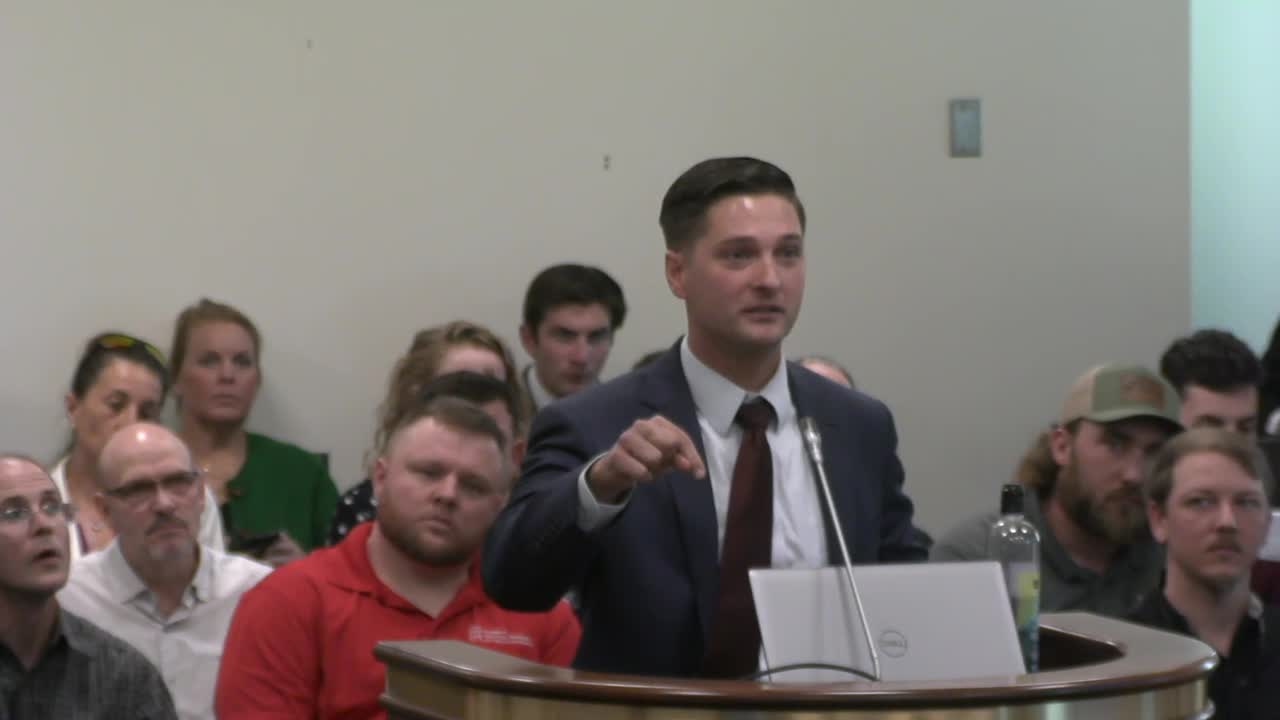
Members of the South Carolina House Agriculture, Natural Resources and Environmental Affairs wildlife subcommittee heard nearly four hours of public comment opposing a proposed statewide ban on venomous reptile ownership contained in House Bill 3,937.
The opposition drew professional herpetologists, private keepers, licensed exhibitors and nonprofit advocates who said the bill, as drafted, would punish responsible owners and small businesses while creating exemptions that favor private accreditation over federal licensing.
The proposed ban “seems to be a knee-jerk reaction born from a single incident,” said Ryan Lapierre, a Myrtle Beach–area conservationist and USDA Class C licensed exhibitor. “Banning all venomous snake ownership because of one misguided act is as extreme as banning all dog ownership after an attack.”
Why it matters: Testimony warned the ban could reduce the statewide supply of venom for medical research, cripple breeders and private educators, and eliminate long-standing training and mentorship pathways that produce wildlife professionals. Speakers repeatedly urged legislators to adopt a targeted permit and inspection system like those used in other states instead of an across-the-board prohibition.
Most speakers described narrow changes they would accept: mandatory secure enclosures, proof of training and a commercial or exhibitor permit rather than an absolute ban. Tyler Wright, co‑director of Black Creek Wildlife Center, said parts of the bill contain “good stuff” — transport and caging requirements — but that the ban portion is driving the opposition: “If somebody were to follow all of these regulations…there’s no reason to ban it.”
Several witnesses raised fairness concerns about the bill’s exemption for institutions accredited by the Association of Zoos and Aquariums (AZA). “That’s a private organization, not a government agency,” Lapierre said. “By granting exemption to AZA-accredited facilities, the bill essentially allows a private club to dictate who has to follow state law and who doesn’t.” Multiple speakers recommended federal USDA exhibitor licenses as a clearer, enforceable standard.
Economic and research impacts were cited repeatedly. Lapierre described national and state-level economic figures for context — noting that the U.S. pet industry is large and that the reptile sector supports businesses and jobs — and Jessica Clamp of Edisto Island emphasized medical uses of venom, listing FDA-approved drugs and ongoing research she said depend on venom extraction.
Public-safety trade-offs: Witnesses did not dispute that venomous reptiles can be dangerous if handled carelessly. Several speakers invoked a recent high-profile incident as a reason for tighter enforcement of unsafe keepers, but argued that the response should target bad actors rather than ban a broad class of owners. “You can’t stop stupidity,” Phil Goss of the United States Association of Reptile Keepers said. “If you ban these reptiles, it makes it harder for people to get them legally and can push the market underground.”
What lawmakers said: Chairman Hixson repeatedly emphasized the hearing was informational and that no votes would be taken this day. He told speakers the subcommittee would consider additional meetings and that any rules promulgated by the Department of Natural Resources (DNR) after passage would itself be subject to a separate committee review and public comment.
Next steps: Committee staff and several witnesses said they will try to draft compromise language that preserves public safety while allowing regulated possession for licensed exhibitors, accredited facilities and permitted private keepers. For now, the subcommittee took no formal action on HB 3,937.
Ending: Speakers urged lawmakers to consult herpetology and conservation experts while drafting standards to ensure precise definitions — of “medically significant” species, permitted exhibition and acceptable enclosures — and to avoid exemptions that are enforceable only by membership in private groups.