Get Full Government Meeting Transcripts, Videos, & Alerts Forever!
Get email alerts on the Charter Authorizing topic
No spam. Unsubscribe anytime.
Limestone Charter Association reports rapid growth, highlights awards and facility expansion
Summary
Limestone Charter Association told the Senate K‑12 Finance Subcommittee it has expanded student enrollment and schools, highlighted a national teaching award and a large building project, and described its review process for transferring campuses.
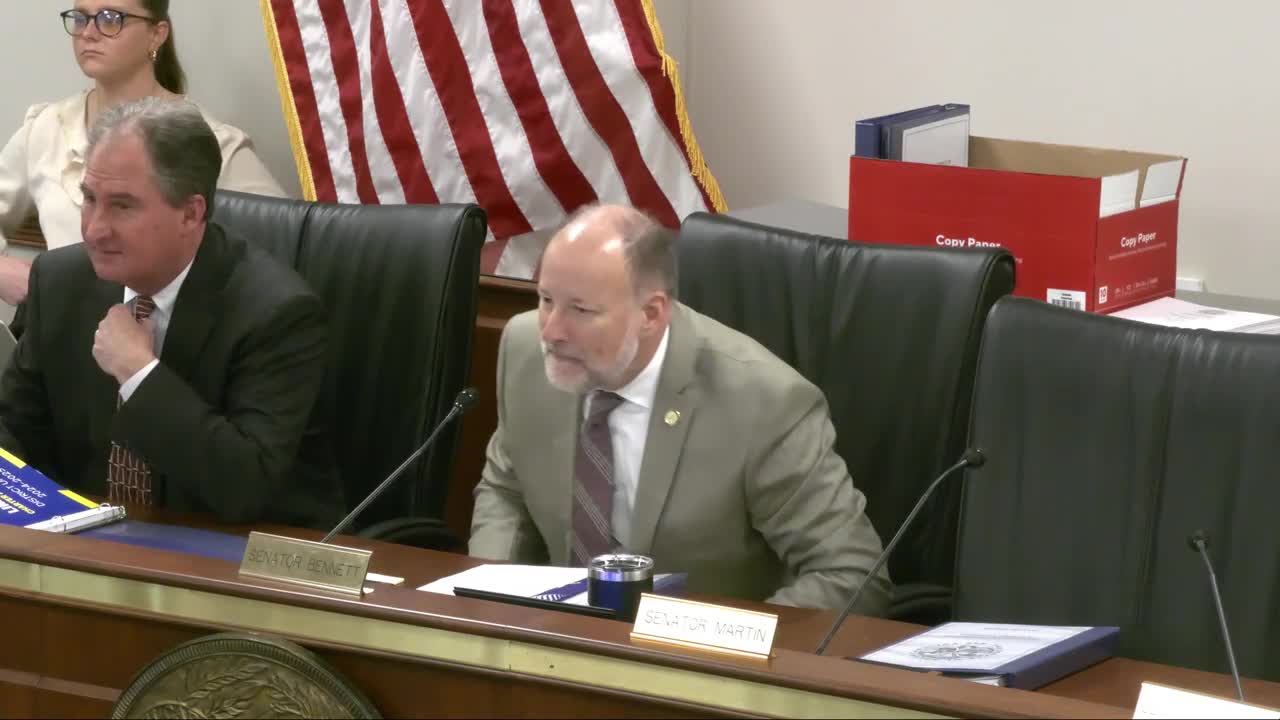
Limestone Charter Association told the Senate K‑12 Finance Subcommittee on the record that it has grown rapidly since it began authorizing schools in 2022, now serving nearly 8,000 students across 13 schools with six more expected to open next year.
The brief presented to Chairman Bennett emphasized the authorizer’s growth and oversight work and singled out recent recognitions: a teacher at Coastal High School won a Milken Family Foundation educator award, and Orangeburg High School for Health Professions is undertaking a roughly $14,000,000 building expansion.
Why it matters: the association’s membership growth and expansion plans affect seats available to families and carry implications for oversight of schools that transfer from other authorizers. Committee members asked about persistently low-performing campuses and how Limestone handles transfers from authorizers with troubled schools.
Limestone’s representative said the association began operating schools in 2022 and has seen “tremendous growth” in that time. She noted the association started with three schools and has been recognized by the National Association of Charter School Authorizers; she also said the association sits on the advisory panel for the National Career Clusters framework for CTE.
On school performance and transfers, Limestone said it has accepted several schools that transferred after addressing corrective actions. The association said it vets potential transfers with a third party, examines operations, governance and any EMO/CMO contracts, and requires disclosure of notices of noncompliance, corrective actions or litigation before recommending board approval. The representative said the authorizer reviews management contracts annually and requires schools to post budgets showing transactions between management organizations and the schools.
Committee members pressed Limestone on the number of unsatisfactory schools in its portfolio and on the risk of “charter shopping” — schools transferring between authorizers to avoid accountability. Limestone said two schools in its portfolio were rated unsatisfactory (one in its first year; another in its second year while trending upward), that the association provides targeted support for improvement, and that it will follow state law governing closure if a school hits three consecutive years of unsatisfactory performance.
The presentation also covered educator supports: Limestone said it offers member‑school teachers free master’s degree programs in project‑based learning, teacher leadership or STEM in exchange for a three‑year retention agreement.
Looking ahead, the association said it will continue targeted oversight of transfers and ongoing monitoring of schools that have been identified for academic improvement. Chairman Bennett and other senators asked clarifying questions about trends and oversight practices during the exchange.
Limestone’s representatives left the committee with a commitment to continue providing documentation of vetting and oversight practices and to work with the legislature on any statutory requirements related to authorizer responsibilities.