Get Full Government Meeting Transcripts, Videos, & Alerts Forever!
Get email alerts on the Environment topic
No spam. Unsubscribe anytime.
Residents urge changes to Wakulla County tree-survey rules, warn incentives favor clear-cutters
Summary
Two residents urged the commission to revise the county's draft commercial tree and landscape ordinance, arguing a two-tier tree-survey structure provides a financial incentive to developers who clear-cut. Speakers offered three remedies and proposed adding certain 6–10 inch diameter 'signature' trees to the required survey list.
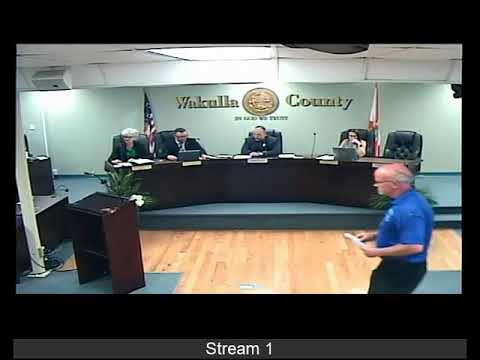
During the public-comment portion of the March 17 meeting, two residents urged commissioners to change Wakulla County’s revised tree and landscape ordinance to remove what they described as a perverse incentive that favors developers likely to clear-cut.
Elaine Marks said staff had strengthened incentives in the draft ordinance but that a two-tiered tree-survey structure would reward developers who clear land with a cheaper survey tier. Marks said developers who want tree credits for preserving signature trees in the 6–10 inch diameter range must voluntarily pay for a more expensive, multi‑tree survey; as a result, she argued, the ordinance disincentivizes preservation. Marks offered three remedy options she said would level the playing field; she said her preferred option (option 2) would add 6–10 inch diameter signature trees to the required survey.
David Roddenberry expanded on Marks’ remarks, commending the county for strengthening the ordinance but urging broader protection of signature trees beyond live oaks. Roddenberry suggested a narrowed list of five species to be treated as signature trees at smaller diameters: live oak, southern red oak, post oak, mockernut hickory and longleaf pine. He explained those species’ local historical presence and said individuals of those species at the 6–10 inch diameter range can be 25–70 years old and merit consideration.
No formal board action on the ordinance was recorded during public comment. Staff and commissioners thanked the speakers and noted the comments would be part of continuing consideration of the ordinance revision.