Get Full Government Meeting Transcripts, Videos, & Alerts Forever!
Get email alerts on the K12 Budget Requests topic
No spam. Unsubscribe anytime.
State superintendent details education gains and lays out budget requests including tutoring, materials and school safety funds
Summary
State Superintendent Ellen Weaver updated the K-12 finance subcommittee on NAEP and state assessment trends, described literacy and math initiatives, and requested recurring and one-time funds for instructional materials, teacher pay, tutoring and infrastructure.
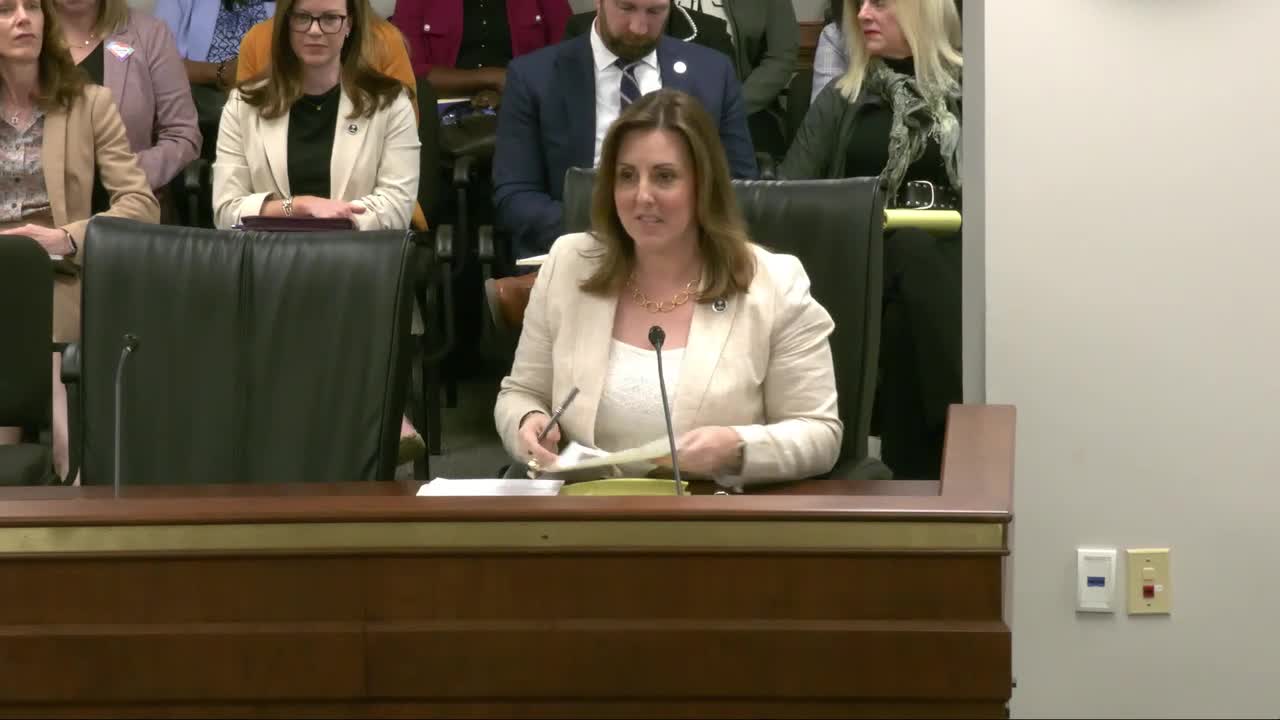
State Superintendent Ellen Weaver told the K-12 finance subcommittee that South Carolina has shown encouraging direction on national and state assessments and outlined a package of budget requests aimed at sustaining that progress. Weaver said recent NAEP (national) data showed South Carolina among states that did not lose ground and that the state’s SC Ready assessments showed a 7-percentage-point gain in reading for grades 3–8 and a 2-point gain in math. She said nearly 20,000 K–3 educators have completed or are completing literacy training funded by the state’s Palmetto Literacy project.
Weaver described several funding requests. For instructional materials she requested $20 million in recurring funds for consumable materials (cursive handbooks and other materials) and a one-time non-recurring appropriation to adopt math instructional materials aligned with new standards. She outlined the Palmetto Math project (10 pilot sites, state-level instructional coaches and high-intensity tutoring funded to catch students up several grades in math) and said $3.78 million in grants had been deployed for high-intensity tutoring; remaining tutoring funds will target Palmetto Math schools. Weaver also asked for recurring increases to support teacher pay, including a $200 million state-aid-to-classroom request intended to fund a $3,000 across-the-board increase in pay scales; she said the House had funded half that ask.
On targeted compensation, Weaver reviewed a strategic compensation pilot: the state initially provided $5 million, which attracted about $22 million in requests; the department funded 36 schools that applied and will monitor implementation across three deployment models to compare outcomes. On workforce development, she outlined teacher leadership and school-leadership initiatives including a school leadership accelerator and principal pipeline work intended to increase instructional leadership capacity in high-poverty schools.
Weaver also described requests to support rural career and technical education, an education scholarship trust fund allocation (she cited a request of $30 million under existing law) and an education infrastructure bank concept to provide a recurring funding stream for school construction and facilities in districts with limited tax capacity. For safety and operations she asked for recurring funds for facility safety upgrades, $35 million for bus lease purchases to maintain a 15-year replacement cycle, and funding to cover higher operating costs in the department’s new building.
Ending: Weaver said the department’s “North Star” is at least 75% of students at or on grade level by 2030 and said the requested investments align to that goal. She asked the committee to consider the mix of recurring and nonrecurring funds needed to sustain curriculum, tutoring, teacher compensation, school safety and facility investments.