Get Full Government Meeting Transcripts, Videos, & Alerts Forever!
Get email alerts on the Charter Authorizing topic
No spam. Unsubscribe anytime.
Limestone Charter Association reports rapid growth, outlines oversight practices
Summary
A Limestone Charter Association representative told the K-12 finance subcommittee the authorizer has grown to serve nearly 8,000 students across 13 schools, described awards and school expansions, and explained its vetting and oversight approach for transfers and management contracts.
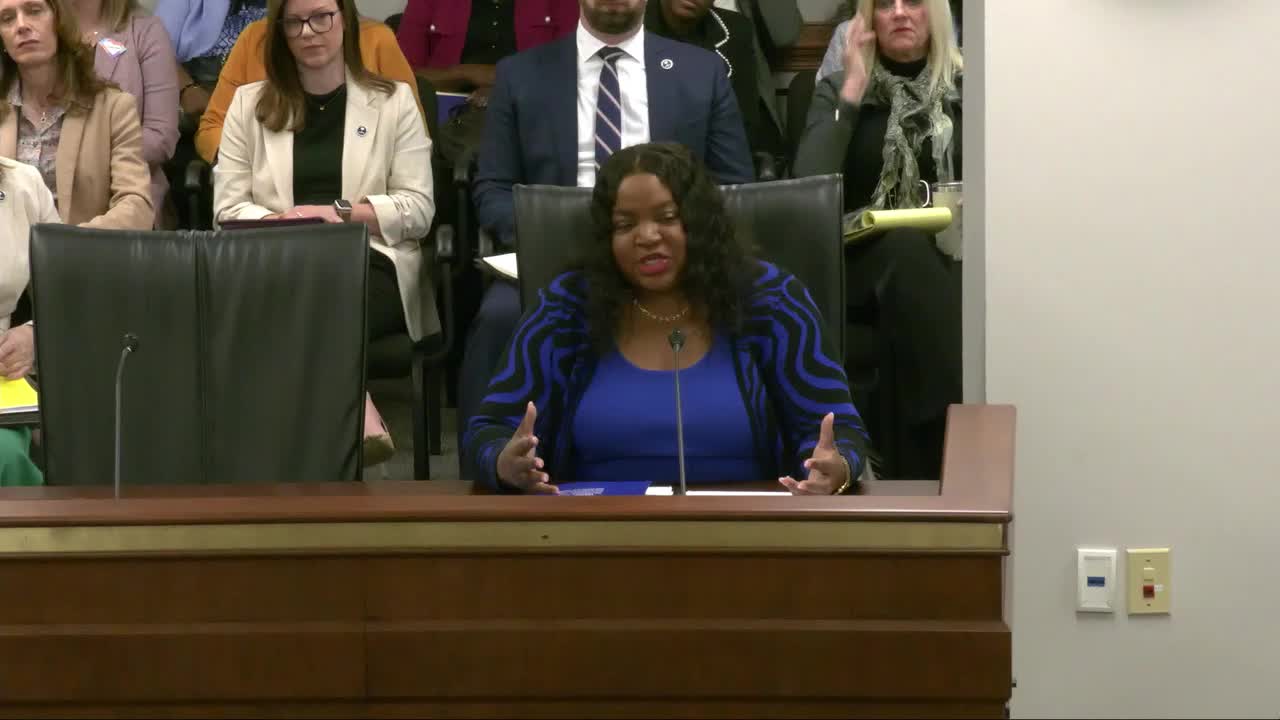
Miss Malone, representing Limestone Charter Association, told the K-12 finance subcommittee that the authorizer has expanded rapidly since its 2021 founding and now serves nearly 8,000 students across 13 schools with six more projected to open next year. She highlighted local and national recognition for member schools, including a Milken Family Foundation educator award at Coastal High School and a 98% graduation rate cited at Orangeburg High School for Health Professions. She said Horse Creek Academy has launched educator conferences and the association offers tuition-free master’s programs in project-based learning, teacher leadership or STEM for member-school educators who commit to stay three years.
Malone described the association’s transfer and oversight process for schools coming from other authorizers: third-party vetting of operations, academics and governance; review of EMO/CMO (education/charter management organization) contracts; annual monitoring of performance; and requests for any notices of noncompliance, corrective actions or litigation prior to recommending transfers. She said transfers she described as “amicable” included several schools that met corrective-action terms before joining Limestone. Malone added the association requires schools to post budgets and transactions showing financial flows between schools and management organizations and to update management contracts when material changes occur.
Regarding schools rated unsatisfactory, Malone said two member schools were unsatisfactory at the time of questioning: one was in its first year at the authorizer and another, South Carolina Prep Academy, had been rated unsatisfactory for a second consecutive year before receiving targeted support. She said the association views closure policy as situational and that state law dictates automatic closure in some circumstances. Malone said the association notifies the legislative body if it considers keeping a school open despite a targeted closure timeline and that decisions consider whether underperforming middle schools show trends that predict future high-school performance.
Malone answered questions about “charter shopping” (the practice of moving low-performing schools between authorizers), saying Limestone has not seen a surge of unsatisfactory schools seeking transfer and that the association vets applicants thoroughly before board approval. She emphasized a combination of accountability and support: “we do all of that ahead of time, and we ask for any notices of noncompliance, any notices of corrective action, any litigation, anything that we can get our hands on, and we make a holistic decision,” Malone said.
Ending: Malone closed by reiterating the association’s priorities: targeted oversight, transparent budgets, and capacity-building for educators through degree programs and professional development.