Get Full Government Meeting Transcripts, Videos, & Alerts Forever!
Get email alerts on the Diversity Equity Inclusion topic
No spam. Unsubscribe anytime.
House Education and Public Works committee adopts amendment limiting DEI offices, sends bill to the floor
Summary
The House Education and Public Works Committee on Wednesday adopted a strike‑all amendment to H.3927 that replaces the bill’s original language with a measure limiting state and quasi‑state agencies and public institutions of higher education from creating DEI offices, requiring diversity statements, or giving preferential treatment on the basis of race, color, ethnicity, gender or sexual orientation.
The House Education and Public Works Committee on Wednesday adopted a strike‑all amendment to H.3927 that replaces the bill’s original language with a measure limiting state and quasi‑state agencies and public institutions of higher education from creating DEI offices, requiring diversity statements, or giving preferential treatment on the basis of race, color, ethnicity, gender or sexual orientation.
The amendment, summarized in detail by committee legal counsel Macy Webb, passed the committee by recorded votes and was reported favorably as amended to the full House. Committee members then debated the scope of the amendment, possible unintended consequences for grants and accreditation and protections for free speech before the committee voted to move the bill forward.
Webb told the committee that the amendment is “a strike all and insert amendment” and walked members through section by section. She said the measure defines public institutions of higher learning and “quasi‑state agency” and then bars state and quasi‑state entities from creating or supporting units that promote diversity, equity and inclusion unless required by state or federal law. Webb said the amendment “prevents each entity from having a DEI specific office” and that it also “prevents requiring mandatory diversity statements.”
The higher education section, Webb said, is modeled in part on language from last year’s H.4289 and includes carve‑outs intended to preserve compliance with federal and accrediting requirements. Webb told members the attorney general would have enforcement authority and that agencies must report complaints annually to the South Carolina Department of Administration, which will summarize reports for legislative leadership. She said the act would take effect July 1, 2025.
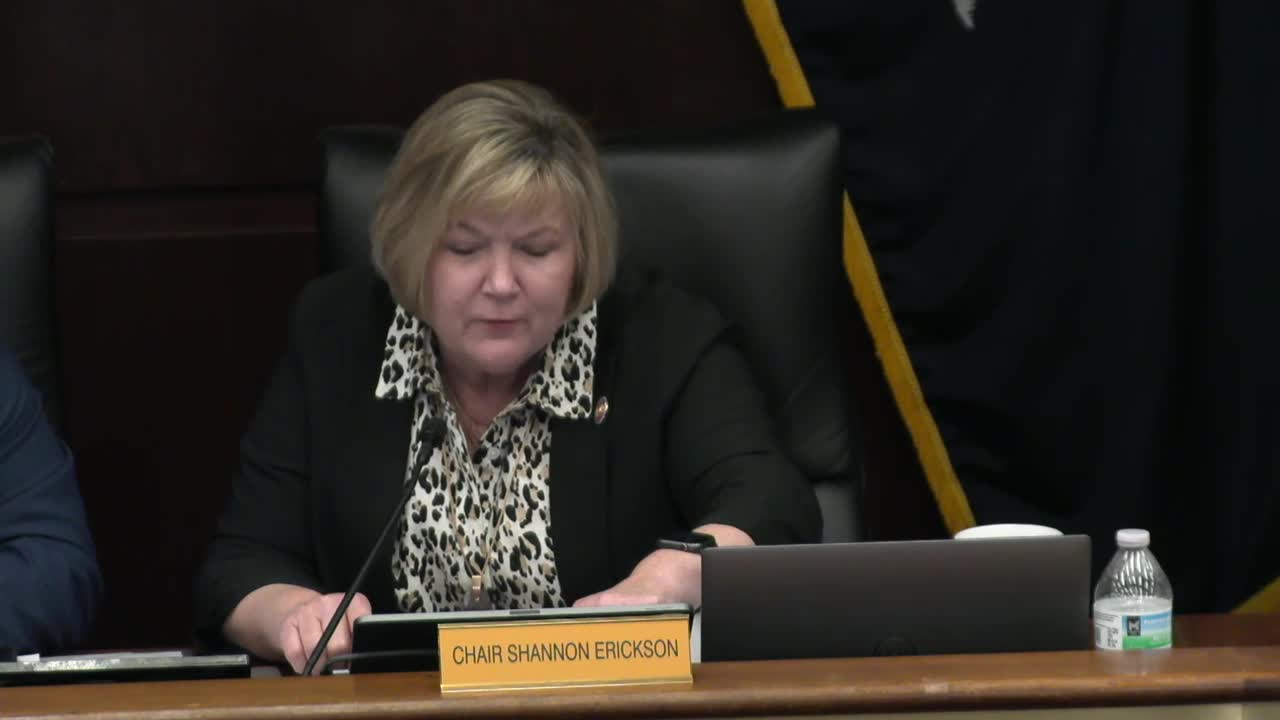
Committee Chair Shannon Erickson opened debate by asking members to consider the amendment section by section. Representative Tim McGinnis, who described the amendment as replacing the original bill, said sponsors reworked the measure after public testimony to reduce potential fiscal and legal exposure and to “restrict the role of state agencies, educational institutions, and political subdivisions in promoting DEI offices, mandatory diversity statements, giving preferential or differential treatment in their hiring practices.”
Opponents said the measure risks collateral consequences. Representative Hamilton Grant said he was “conflicted” because while many members support the goals of diversity, equity and inclusion, he worried the bill’s impact would be harmful and that the committee lacked definitive evidence that the practices targeted by the amendment are widespread in state agencies or colleges now. Representative Cam Garvin asked whether data collection, affinity groups, cultural events and programs such as Call Me Mister would be affected; Macy Webb responded that the amendment does not prohibit those activities and that some language was intentionally narrowed to avoid unintended effects on grants or accreditation.
Representative Tim Alexander and others framed the debate as a broader values discussion. Alexander asked rhetorically, “What's the opposite of diversity? What's the opposite of equity? Inequity,” and urged the committee to consider the social consequences of scaling back institutional DEI activity. Representative Steven Frank argued the amendment’s removal of mandates could broaden ideological diversity by preventing applicants from feeling compelled to write statements tailored to institutional expectations.
On the question of enforcement and oversight, Webb said complaints first go through existing institutional or agency processes; agencies then must report complaint counts and statuses annually to the Department of Administration, which will summarize the information for the House speaker and Senate president. Webb said the attorney general would be authorized to seek legal remedies when violations are identified.
After discussion the committee adopted the amendment and then voted to report the bill favorably as amended. The committee record shows the amendment was adopted by a vote of 12‑4 with one abstention and one member absent; the final committee vote to report the amended bill was 13‑4 with one absent.
The measure includes: a definition of “quasi‑state agency” (examples cited to the committee included the State Housing Finance and Development Authority, Lottery Commission, Ports Authority and others), a ban on mandatory DEI statements and mandatory DEI training at public institutions, protections for First Amendment rights, an annual reporting requirement to the Department of Administration, whistleblower protections for complainants and a severability clause. Webb said the higher education carve‑outs were written to avoid jeopardizing SACS accreditation or federal grants that currently include eligibility or reporting components tied to DEI work.
Chair Erickson closed the session by thanking members and the public for civil debate, saying she “appreciate[d] the decorum in the audience today and your time.” The bill will move next to floor consideration under the House process.
Votes at a glance
- Amendment (strike‑all insert to H.3927): Adopted by committee, reported as adopted. Committee summary: 12 yes, 4 no, 1 abstaining, 1 absent. (Recorded roll calls were taken; the committee chair announced the tally.)
- Final committee action (report the bill favorably as amended to the House): Reported favorably. Committee tally announced as 13 yes, 4 no, 1 absent.
What remains open
Committee members asked staff to compile information the bill references — including which state or quasi‑state agencies currently maintain DEI offices or require DEI statements and an updated fiscal impact reflecting the amendment’s language. Several members said they want continuing conversation on the house floor and in subcommittees about the amended measure and any technical fixes before final passage.
(Reporting in this article is based entirely on the committee’s public proceeding and the section‑by‑section summary delivered in the hearing.)