Get Full Government Meeting Transcripts, Videos, & Alerts Forever!
Get email alerts on the Curriculum Ap Courses topic
No spam. Unsubscribe anytime.
Upper Darby committee advances proposal to offer AP African American Studies at high school
Summary
The Education and Pupil Services Committee voted to move a proposed AP African American Studies course forward for board action; staff said the course would be an elective for grades 10–12, estimate two sections and $14,000 in textbook materials, and rely on College Board resources and summer professional development.
The Upper Darby School District Education and Pupil Services Committee voted on Oct. 22 to move forward a proposed planned instruction for an AP African American Studies course at Upper Darby High School for consideration by the full board.
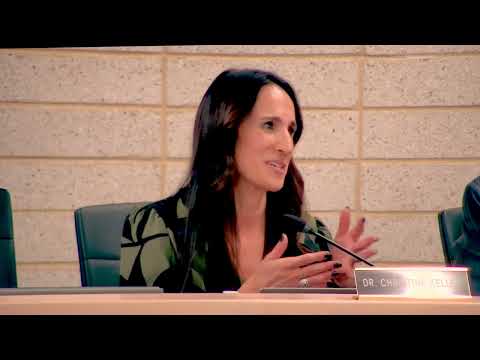
Dr. Kelly, who presented the proposal, said the College Board developed the AP course through a design phase beginning in 2021 and piloted it in 2022–23 before making it available nationally for the 2024–25 school year. "This course, the College Board went through a rigorous research and ... design phase in 2021 to introduce the AP African American studies to high schools," Dr. Kelly said. She told the committee the district would offer the course as a social studies elective to students in grades 10 through 12, beginning in the 2025–26 school year if adopted.
The committee was told the district expects to run two sections initially and estimates about $14,000 for textbooks and teacher resources. Dr. Kelly said the College Board provides a course framework, online teacher resources and summer professional development and mentoring for teachers delivering the AP curriculum. "The professional development usually occurs during the summer ... they are virtual so it gives a little bit of flexibility for the teacher," she said.
Committee members asked about staffing and prerequisites. Dr. Kelly said the district would not need to hire additional staff; the course would draw students from an existing race-and-ethnicity elective as a feeder. She described the race-and-ethnicity course as a "placeholder" that the AP offering could grow from, and said the existing class would remain in the course catalog.
Public commenter Ebony Darden, who identified herself as African American, told the committee she supported the course and asked whether the race-and-ethnicity course would remain available and whether the AP course required the lower-level course as a prerequisite. Dr. Kelly replied the race-and-ethnicity course is not a prerequisite and that both courses would be available to students.
The committee discussed outreach and course promotion: if the course is approved in November, the district plans to present a textbook adoption and to advertise the elective through guidance counselors, department chairs and student outreach beginning in December and January to meet enrollment thresholds.
The committee reached a consensus to move agenda item 1 (the planned-instruction proposal for the AP course) to the Board for action at a later meeting. No formal board adoption of the course occurred at the committee meeting; the proposal will return to the full board for approval.
The committee discussion and public comments recorded steps the district will take if the board approves the course, including final textbook selection and teacher assignment. The district also flagged that whether the course runs in any given year will depend on student demand and teacher availability, per the district's course-catalog procedures.
Looking ahead, the full Board will receive the planned-instruction proposal and the recommended textbook for action at a future meeting; committee members said they expect advertising and counseling outreach to follow board approval so the district can meet its minimum enrollment thresholds.