Get Full Government Meeting Transcripts, Videos, & Alerts Forever!
Get email alerts on the Whitnall School Board Election topic
No spam. Unsubscribe anytime.
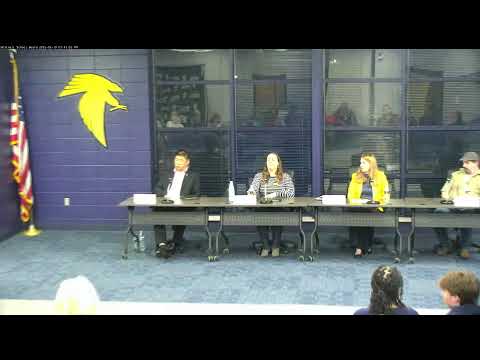
Whitnall school board candidates focus on student achievement, $79.1 million referendum, teacher pay at League forum
Summary
Four candidates for two Whitnall School District board seats discussed student achievement, implementation of a $79.1 million facilities referendum, teacher compensation and safety at a League of Women Voters–moderated forum; open enrollment, special education and local transparency also drew sustained attention.
Four candidates seeking two seats on the Whitnall School District school board emphasized student achievement, implementation of a recently approved $79,100,000 referendum, teacher compensation and school safety during a candidates forum moderated by Kay Vance of the League of Women Voters of Milwaukee County.
The forum, organized by the Whitnall High School Student Council and the League of Women Voters, drew sustained questioning on issues voters are likely to weigh before the April 1 election, including how referendum construction will be managed while school is in session, how the district budgets for teacher pay and professional development, and how the district addresses bullying and student safety.
“Student achievement has been and will always be our number one thing,” said Jason Craig, incumbent Whitnall School Board member and board clerk, calling student outcomes the district’s “North Star.” Craig said the board is supporting steps to increase teacher compensation and to clarify professional-development goals for educators.
Alicia Shaw, a candidate and mother of three who works as a hospital performance-improvement coordinator, urged the board to be “honest, open, and transparent” in outreach and suggested additional listening sessions beyond existing channels such as the district newsletter known as the Whitnall Window. Shaw also said open enrollment has been a net fiscal plus for the district: “Open enrollment brought almost $4,000,000 into our school district,” she said, adding that the inflow supports electives and staffing stability.
Karen McElhinus, incumbent board treasurer and chair of the finance and facilities committee, highlighted the newly approved referendum and the need to balance a major construction program with continuing focus on academics. “It’s going to be very important that we don’t lose sight of our core responsibility of educating students while the referendum is underway,” McElhinus said, referencing the district’s $79,100,000 capital plan to upgrade classrooms, science facilities and build a new pool.
Joseph Bergman, a candidate and Hills Corners resident with experience in facilities management, said fiscal stewardship during the referendum work and protecting learning environments during construction are top priorities. He encouraged root-cause analysis when schools encounter student-behavior problems and said district leaders should listen to teachers’ concerns about retention and workplace culture.
Candidates described teacher pay and professional development as high priorities. Jason Craig noted that more than half of the district’s operating budget is directed to salaries and benefits, and urged clearer career-pathing so teachers can see how professional development ties to long-term compensation. Karen McElhinus emphasized culture and respect for staff as part of attracting and retaining educators; Alicia Shaw pointed to recently increased social-worker and counselor staffing and to the district’s employee engagement survey as sources of guidance for board decisions.
Panelists also discussed bullying and school safety. McElhinus said the district files an annual report on bullying to the state and that building-level administrators are “very vigilant” in responding to incidents. Bergman and Shaw both called for addressing root causes and ensuring students know how to report concerns; Shaw noted the district had recently added counseling and support positions.
Open enrollment and special education were recurring themes. Shaw argued open enrollment enables the district to offer more electives and helps maintain class sizes; she said the district has not approached its allowable open-enrollment limits. McElhinus cautioned against treating students as “dollar figures” and said the district should manage class size and ensure open-enrolled students and families are fully welcomed. Jason Craig raised a specific concern about students with IEPs: he said children who require services may be assigned back to their home district in some cases and called for careful review of who uses open enrollment and why.
On governance questions, candidates responded to concerns about political polarization and policy disputes. Bergman described his candidacy as an attempt to add a “nonpartisan voice” and said boards should “step back” from politics to focus on children; McElhinus said the current board’s range of viewpoints enables better discussion when members remain focused on students. Candidates offered several specific policy items they would revisit if elected, including the board’s public-comment rules and cell-phone use in schools. McElhinus said the board had previously considered tightening its board-election procedures and suggested community discussion on student cell-phone policies.
Candidates were also asked how they would respond if the U.S. Department of Education were eliminated. None could say what specific federal line items might be cut; Shaw and McElhinus said the board would need to review budget details and advocate to elected representatives if federal carryover funding were reduced. Bergman noted that congressional action would determine which programs continued and called for plans that could adapt to changing funding.
In closing remarks, McElhinus described the district’s strategic plan and recent hiring of Superintendent Dr. Brady Reinke as reasons for optimism; Bergman, Craig and Shaw reiterated themes of student-centered decision-making, fiscal responsibility and community engagement.
The forum provided voters a direct comparison of candidate priorities on issues that will shape operations and classrooms in the coming years: implementation of the referendum, teacher compensation and retention, student safety and the district’s approach to open enrollment and special education.
Two items to watch before the April 1 election: how the board plans to sequence the referendum construction work to limit disruption to students, and whether candidates elected in April will propose changes to public-comment procedures or district cell-phone rules.