Get Full Government Meeting Transcripts, Videos, & Alerts Forever!
Get email alerts on the Facilities Capital Projects topic
No spam. Unsubscribe anytime.
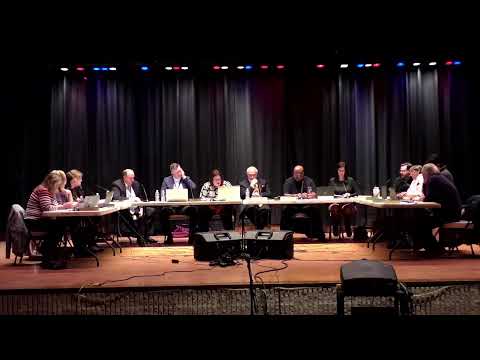
Scranton School District outlines large auditorium, lighting and repair plans; CHA study ordered for Armstrong floor
Summary
The Scranton School District board heard extended briefings on proposed capital work—auditoriums, lighting and school-floor remediation—that staff said will require design work and likely competitive bids.
The Scranton School District board heard extended briefings on proposed capital and facilities work that district staff said would likely require competitive bids and design work before any contract awards.
District staff presented options and rough cost estimates for auditorium and lighting upgrades at Scranton High and West Scranton High, repair and flooring work at West Intermediate and other maintenance projects across multiple schools. Staff also asked the board to authorize a time-and-materials study for slab remediation at Neil Armstrong Elementary and flagged a planned second phase of the district-wide Verkada camera installation.
The discussion matters because several items carry six-figure or higher cost estimates and involve safety or usability issues — including auditorium systems that staff said were removed where unsafe and need full reinstallation before scheduled spring performances.
In the presentation, staff said removing a drop ceiling at West Intermediate would be an extensive project involving HVAC, lighting and electrical work and warned the full scope could increase costs substantially. For Scranton High auditorium lighting, staff shared two preliminary estimates: one earlier assessment in the packet put an LED upgrade between roughly $600,000 and $1,000,000; a later “on-stage” estimate included in the board packet reduced that to roughly $560,000 as a working figure for budgeting and potential bidding.
For West Scranton High School the district presented a broader renovation outline with a base construction bid estimate of about $1,280,000 and expanded “soft-costs” scenarios reaching roughly $1,600,000; an alternative, more expansive option was discussed that would raise the total higher. Staff recommended focusing initial work on both high schools so they have functioning auditoriums.
On Neil Armstrong Elementary, the board reviewed a proposed CHA (owner’s representative) contract to “proceed with the required investigations, study, and design for the required slab repair” on a time-and-materials basis not to exceed $20,000 until a geotechnical scope is defined. Staff told the board investigators had identified possible underlying causes and that the not-to-exceed study would define a final scope for repairs. Board members indicated they were comfortable placing that motion on the agenda for a future meeting; no final contract award for the repair was recorded in the transcript.
District staff also reported the West Intermediate epoxy flooring bid opened that day and that only one proposal had been received; that bid package was being reviewed by counsel to confirm sufficient competition before any award. Interior painting bids for several sites were due Feb. 26, and fire-door bids for a stairwell project were scheduled to be opened Feb. 27.
Security camera upgrades were noted as a standing procurement item: staff said the Verkada phase 2 installation — an update to cameras across district buildings — would be brought to the board as a motion for approval in a subsequent packet.
Throughout the discussion directors and staff weighed whether to use CHA as the owner’s representative and designer for larger capital projects or to put projects directly out to bid to seek competitive pricing. Staff cautioned that owner’s-rep design fees and associated soft costs would add to project totals but that use of CHA could streamline design and coordination for complex HVAC, lighting and stage systems.
The board did not record votes on these capital items during the transcripted discussion; staff said several related motions would be placed on an upcoming meeting agenda with formal action to follow.
Less-critical maintenance items were scheduled for standard procurement timelines and small repairs, while higher-cost auditorium and lighting projects will return with formal cost proposals and recommended procurement routes.