Get Full Government Meeting Transcripts, Videos, & Alerts Forever!
Get email alerts on the Budget And Finance topic
No spam. Unsubscribe anytime.
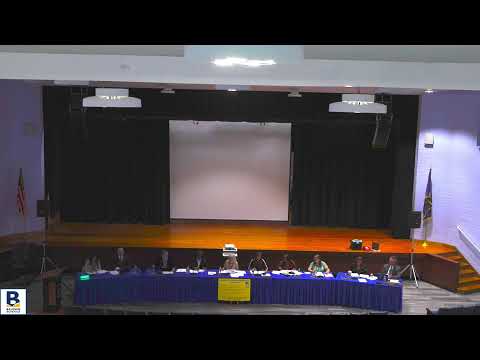
Baldwin proposes $172.88 million budget for 2025–26; tax levy to rise 2.87% as transportation and special-education costs climb
Summary
Baldwin Union Free School District Superintendent Dr. Sherry Cammy on March 19 presented a proposed $172,880,888 budget for 2025–26 that would raise the district tax levy by 2.87% — inside New York State’s tax cap — and asks voters to approve use of existing reserves for capital work.
Baldwin Union Free School District Superintendent Dr. Sherry Cammy on March 19 presented a proposed $172,880,888 budget for 2025–26 that would raise the district tax levy by 2.87% — inside New York State’s tax cap — while asking voters to approve use of existing reserves for capital work.
The proposal, which district officials said will be finalized after the state’s budget is set, is a 5.47% budget-to-budget increase (a $8,964,983 delta) from the adopted 2024–25 plan and reflects several rising cost drivers that the district called “mandated and unpredictable.”
Why this matters: the budget funds daily operations, state-mandated services and major capital projects the district plans to complete over the next two years. If state aid is lower than expected, district officials said the plan relies in part on reserves and fund balance to avoid sudden spikes in taxes.
Dr. Cammy said the district had factored three major cost drivers into the plan. “BOCES has announced that they are increasing the cost of transportation by 30%,” she said, and added that “the cost of special education over the last few years is an additional $4,500,000.” She gave a concrete illustration of how individual cases can drive costs: an out-of-district special-education placement with tuition and transportation could cost roughly $200,000 for a single student, she said.
The budget preview shows the library bond is carried through both expenditures and revenues — an accounting convention that raises the apparent budget delta but, according to the presentation, does not increase net district spending. The presentation also lists $2,100,000 of reserves and $800,000 of fund balance applied to the 2025–26 plan, and notes a pilot (payment-in-lieu-of-taxes) on the Grand Avenue revitalization project that is costing taxpayers just under $50,000 this year.
Capital work and timing: the proposed plan packages bond proceeds with transfers to capital and capital reserves to fund a slate of projects at Baldwin High School and other buildings, including: an extension to the 600 Wing that will house a performance-based learning center; renovation of the 300 Wing into apprenticeship/life-skills/work-based-learning space; upgrades to the high school performing-arts and career-technical-education wing; new turf at the middle school; and electrical upgrades at Lenox and Meadow. Dr. Cammy said the district is already working with architects and that most projects require state plan approval and roughly a two-year turnaround from voter approval to construction completion. She said a high-school wellness center is expected to have a grand opening in May.
State aid and timeline: state aid figures remain pending until the governor and Legislature finalize the state budget; district officials said they expect a final state aid number by April 1. In the interim the district is preparing the public-facing materials and the ballot language for the May 20 budget vote.
What voters will see: the district will ask voters to (1) adopt the annual budget for 2025–26, (2) permit creation of a new capital reserve (the district said the reserve currently has no funds and requires voter authorization to open and later spend), and (3) approve the use of $18,000,000 already saved in an existing reserve for specified capital projects. Dr. Cammy emphasized that the money in the technology reserve would fund new Chromebooks for third graders (and related accessories) and medical mannequins for the high-school medical academy.
Board questions and next steps: a board member asked for ballpark figures for the transportation increase; Dr. Cammy reiterated the 30% rise in BOCES transportation and the district’s recent $4.5 million increase in special-education costs, noting that single-student out-of-district placements can be costly and unpredictable. The district will finalize its budget materials after the state’s April 1 aid announcement and will publicly post board and voter notices required by law.
Votes at the meeting related to the budget: the board adopted the annual school-election and budget-vote ballot notice that sets the May 20, 2025 vote date and authorized the district clerk to publicize that notice. The board also authorized administration to prepare and file the 2025–26 property tax report card, the administrative-salary disclosure and other budget documents required by law.
If approved by voters, the capital-reserve spending the board included in the ballot language is intended to accelerate planned high-school renovations and other building improvements; those actions still require voter approval and subsequent state approvals where applicable.