Get Full Government Meeting Transcripts, Videos, & Alerts Forever!
Get email alerts on the Natural Resources Carbon topic
No spam. Unsubscribe anytime.
Beltrami County hears details, cautions about 40-year carbon-credit marketing deal
Summary
County staff presented a follow-up on a proposed carbon-credit marketing program for county forestlands. Commissioners asked for contracts, hard numbers, buffer details and options to enroll partial acreage; no binding decision was made but staff was asked to pursue more proposals.
Shane, county staff presenting a follow-up on a proposed carbon-credit marketing opportunity, told commissioners the program would monetize currently unused forest carbon, involve a 40-year commitment and be managed by a consultant for the first 20 years before the county assumes monitoring responsibilities.
The nut graf: commissioners heard potential financial upside but also risks — long contract terms, market volatility, large-scale disasters and limits on future land transactions — and asked staff to return with detailed proposals, contract language and comparative numbers from multiple vendors before taking action.
Shane summarized key points and risks: much county forest carbon is in stands that are unmerchantable or in wetlands and riparian zones, so the market value would be for carbon that is not otherwise harvested; "this is a 40 year commitment," he said, adding the first 20 years are managed by the consultant and the second 20 years require county monitoring. He said the contractor estimates roughly $200,000 in upfront costs to develop credits and place them on the market, and that the arrangement the presenter favored could produce a multi‑decade revenue stream: "If you look at it just from a strictly business standpoint, it is revenue at very little risk and very little cost to the county...it'd be a 30% increase [in revenue]...and a 50% increase in our profit," Shane said.
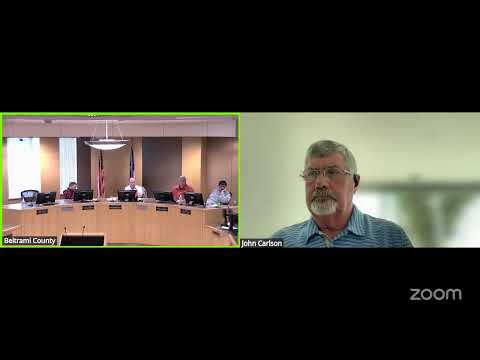
Commissioners probed risks and constraints. Commissioner Winger and Commissioner Carlson said they worried about tying up county lands for four decades, the possibility of wind, fire or pests that could reduce carbon stocks, and whether the county could still complete land sales or transfers while enrolled. "If they don't pay us, we're still stuck on not being able to do anything with any of the county lands, correct?" Commissioner Winger asked; Shane replied that the management commitments would carry through the term and that contract language can allocate risk.
Commissioner Gold and Commissioner Sumner supported further study. Gold said, "I would certainly be interested in...a proposal, contract language, and such," and Sumner urged vetting multiple proposals and getting hard numbers. Commissioners asked staff to explore whether partial-enrollment options exist (for example, only enrolling tax-forfeited or specific categories of land), to obtain sample contracts and to compare at least two to three vendors, and to return with projected revenue and buffer details that show how much acreage would be effectively restricted or held as a buffer.
Ending: Commissioners did not vote; they asked staff to pursue proposals and come back with contract language, buffer-size examples and numerical scenarios from multiple firms so the board could weigh benefits against long-term constraints.