Get Full Government Meeting Transcripts, Videos, & Alerts Forever!
Get email alerts on the Religious Expression Schools topic
No spam. Unsubscribe anytime.
House passes bill requiring public schools to inform students and staff of religious‑expression rights
Summary
Senate Bill 2-23, described by its sponsor as a clarification of existing First Amendment protections, passed the House 79–17. The bill requires public schools to inform students and staff at the start of the year how the law protects religious expression, while giving districts flexibility in how they provide that information.
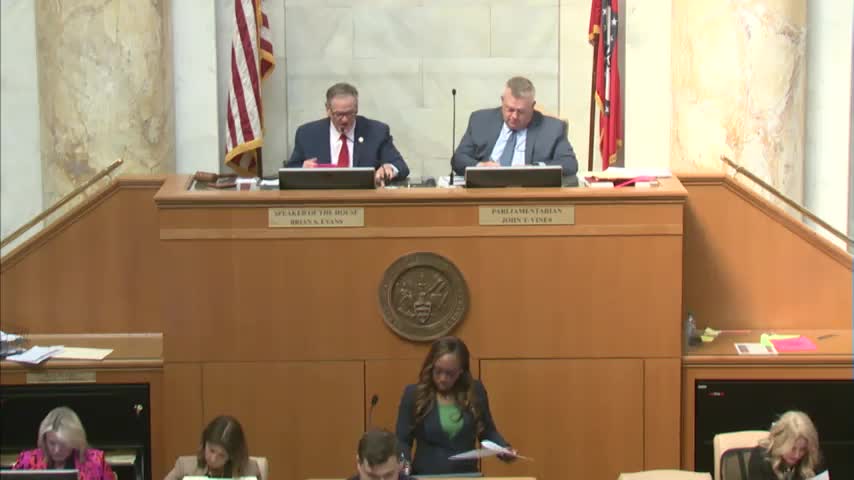
The Arkansas House on March 18 approved Senate Bill 2-23, the Religious Rights at Public Schools Act of 2025, by a vote of 79 yays and 17 nays. Representative Brown presented the bill on the House floor and said it ‘‘does not create new rights, and it does not limit rights to these just listed,’’ describing the measure as an effort to clarify existing protections under the First Amendment.
Why it matters: The bill requires each public school to educate students and staff about religious‑expression freedoms they already possess. Supporters said the requirement provides clarity and prevents uncertainty or perceived silencing of students and teachers. The bill gives local districts flexibility to inform constituents via handbooks, online postings or policy manuals, and sponsors said it should not impose significant costs.
Floor exchange: Representative Brown said he received questions from students and teachers and that the bill simply clarifies existing law. Representative Richardson asked on the floor whether adding the requirement would impose costs on schools; Brown replied districts could post the information online or include it in existing handbooks to avoid expense.
Opponents raised broader questions about whether the bill should extend to private schools; Brown replied the bill applies to publicly funded schools. The Senate amendment adopted on the floor gave districts discretion in how to provide the information.
Outcome and next steps: With passage 79–17, the measure will return to the Senate as required or move forward in the enactment process. Sponsors said the Department of Education had no implementation objections and that the requirement should be administratively feasible.
Ending: The vote advances a bill intended to increase awareness of religious‑expression rights in public schools while leaving implementation choices to local districts.