Get Full Government Meeting Transcripts, Videos, & Alerts Forever!
Get email alerts on the Education Curriculum topic
No spam. Unsubscribe anytime.
House approves bill to embed founding fathers’ religious and moral beliefs in secondary standards
Summary
The House passed House Bill 17-05 requiring sixth through twelfth grade standards to include study of founding fathers’ religious and moral beliefs and how those beliefs related to their decisions. Supporters said it encourages document literacy; opponents warned of subjective curriculum and potential church‑state concerns.
The Arkansas House on March 18 passed House Bill 17-05, which requires that existing academic standards for grades six through twelve include study and discussion of the religious beliefs and moral values of the founding fathers and how those beliefs related to the decisions they made. Representative Duke sponsored the bill; the final floor tally was 76 yays and 19 nays.
Why it matters: The measure directs the Arkansas Department of Education and local districts to embed material about the founders’ beliefs into standards and curriculum choices. Supporters said the change would improve historical document literacy and classroom reading practice; critics said mandating such study risks producing a subjective or skewed curriculum and could raise separation‑of‑church‑and‑state concerns.
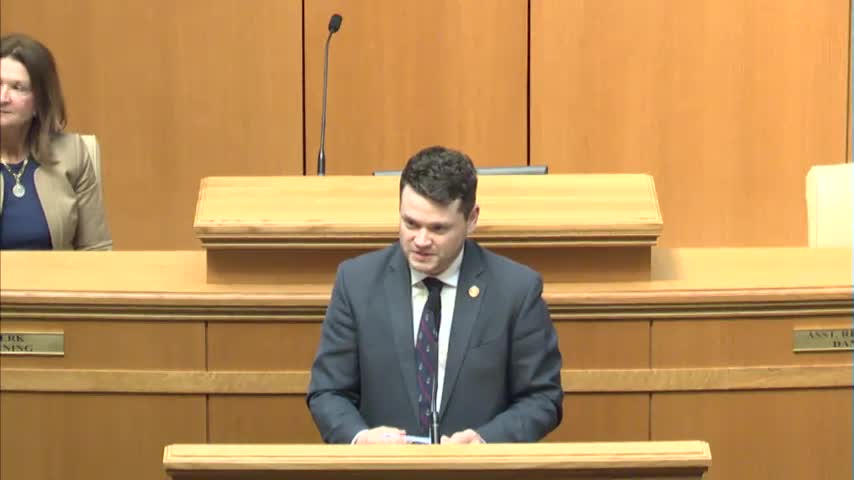
Floor discussion: Representative Duke explained that the bill ‘‘embed[s] in [standards] from sixth through twelfth grade the teachers and the students will study, discuss, and the religious beliefs and moral values of our founding fathers and how related to the decisions they made.’’ He told the chamber the Department of Education (DESE) indicated it could incorporate the language and vet materials.
Representative McGruder, an educator, asked how the bill would affect test scores; Duke said more classroom reading and document study would support literacy. Representative Barnett spoke in opposition, saying the law could lead to subjective emphasis, might suppress full teaching of historical harms such as the Three‑Fifths Compromise, and risked ‘‘indoctrination.’’ Representative McKenzie and others said proponents do not seek to avoid difficult historical facts and urged teachers to engage students in deliberative discussion.
Outcome and next steps: The House passed the bill by 76–19. Representative Duke closed the debate asking for a ‘‘good vote.’’ The measure will proceed according to legislative process (sent to Senate for further action or concurrence as required).
Ending: The vote enacted a statutory direction for DESE and local districts to ensure the founders’ beliefs are part of secondary standards, prompting debate about objectivity and classroom implementation.