Get Full Government Meeting Transcripts, Videos, & Alerts Forever!
Get email alerts on the Pregnancy Parking topic
No spam. Unsubscribe anytime.
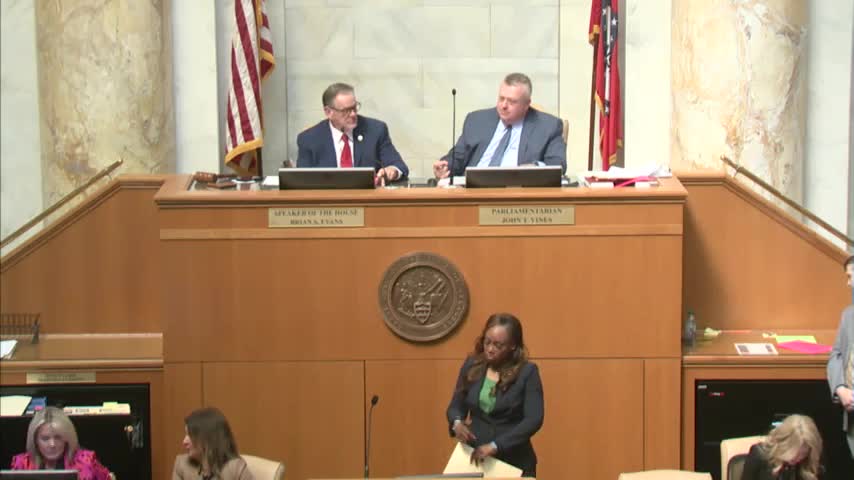
Pregnancy Parking Act fails in House after extended floor debate
Summary
Lawmakers rejected House Bill 17-70, which would have allowed temporary handicap parking permits during pregnancy and up to one year postpartum. The measure failed 35–39 with 10 present after sponsors and opponents debated administration, scope and potential effects on existing handicap parking spaces.
Representative Filkinson's proposal to create a temporary parking permit for pregnant and postpartum people — House Bill 17-70 — failed on the House floor on March 18, 2025, by a vote of 35 yeas, 39 nays and 10 present.
Why it mattered: The bill would have allowed a temporary handicap parking placard, administered by the Department of Finance and Administration, for people during pregnancy and up to one year postpartum. Sponsor Representative Filkinson framed the measure as a ‘‘simple pro‑family, pro‑woman policy’’ intended to reduce mobility burdens after childbirth and during complicated pregnancies.
Floor debate and key points: Representative Filkinson said the proposal ‘‘is rooted in compassion, common sense, and commitment to supporting mothers in Arkansas’’ and emphasized postpartum recovery, including after C‑section. She said the Department of Finance and Administration would handle temporary permits.
Opponents raised practical and equity questions on the floor. Representative Steimel asked whether physicians already can provide temporary disability notes that produce similar access; Filkinson acknowledged that in ‘‘very severe cases’’ physicians can write notes but said the bill would expand eligibility and explicitly include postpartum needs. Representative Wooten asked how law enforcement would verify a placard; Filkinson said the department would issue a temporary placard as with existing handicap permits. Representative McClure pressed on whether the bill would require businesses to add parking spaces; Filkinson said no new spots would be required and that the bill uses existing parking.
Representative Torres questioned whether a person could obtain a permit soon after a positive pregnancy test; Filkinson said in practice most women do not seek the permit that early. Representative Long asked whether the measure duplicated accommodations already provided for some surgeries; Filkinson said issuing and duration would be at provider discretion but stressed the 12‑month postpartum coverage written into the bill. Representative Henley asked whether multiple permits could be issued for multiple births; Filkinson said no, only a single temporary permit per person.
Outcome and next steps: The clerk recorded the final tally as 35 yays, 39 nays and 10 present; the bill therefore failed on the floor and will not move forward from this session under the House’s action.
Ending: The failing vote concluded a longer-than-average floor exchange on a social‑policy measure that prompted questions about administrative mechanics, overlap with existing medical accommodations and effects on handicap parking availability.