Get Full Government Meeting Transcripts, Videos, & Alerts Forever!
Get email alerts on the Long Term Care topic
No spam. Unsubscribe anytime.
Committee rejects bill directing DHS to redesign home‑and‑community waiver to favor aging in place
Summary
Senate Bill 306 sought to direct DHS to redesign long‑term care waivers to narrow the cost gap between home‑and‑community‑based services and skilled nursing facilities and to prioritize aging in place while requiring budget neutrality; the committee voted the bill down after fiscal uncertainty and opposition from nursing‑facility groups.
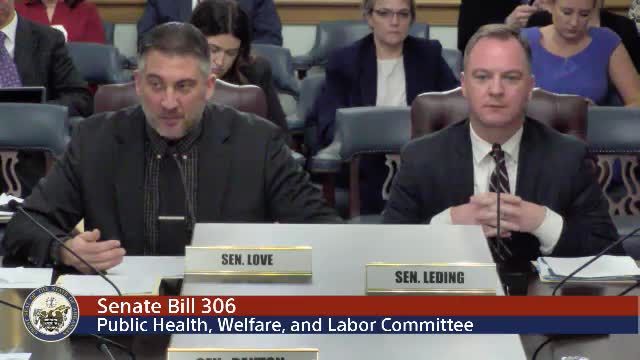
Senate Bill 306, which would have directed the Arkansas Department of Human Services to redesign Medicaid home‑and‑community‑based services (HCBS) waivers to enable more people to age in place subject to budget neutrality, failed in committee after a lengthy debate over fiscal impacts and program comparability.
Sponsor testimony framed SB306 as implementing recommendations from the consultant GoodHouse (Guidehouse) Medicaid sustainability report, which found Arkansas relies more on institutional care than the national average and recommended narrowing the gap between home‑based services and skilled nursing costs. Sponsor John Burris, representing the Home Care Association, told the committee the bill’s intent is to set “bumper rails” — policy goals — and let DHS, CMS and stakeholders design the operational details; he emphasized a statutory requirement that any waiver redesign be budget neutral.
Opponents, including Rachel Bunch, executive director of the Arkansas Health Care Association (representing nursing facilities), said the bill compares non‑skilled HCBS services to skilled nursing inaccurately. Bunch noted nursing facilities provide 24/7 skilled medical and regulatory services (medical director, nursing staff, pharmacy consultants) and that HCBS provides nonmedical supports such as personal care, meals and transportation. She presented a high‑end estimate — included in materials distributed at the hearing — that converting waiver recipients to facility‑level spending could require large increases in state general revenue (her handout calculated up to $223 million GR in a worst‑case scenario depending on design). DHS staff told the committee they could not produce a reliable fiscal impact for the bill because design choices substantially affect cost and because waiver renewal work is ongoing.
After debate and a roll call, the clerk announced the bill failed. The transcript records a close vote with multiple recorded yes and no votes and the clerk announcing "3 eyes, 3 nos... Bill fails."