Get Full Government Meeting Transcripts, Videos, & Alerts Forever!
Get email alerts on the Housing Tenant Rights topic
No spam. Unsubscribe anytime.
Johnson County hears pitch to fund landlord-tenant ombudsman from attorney Christopher Warnock
Summary
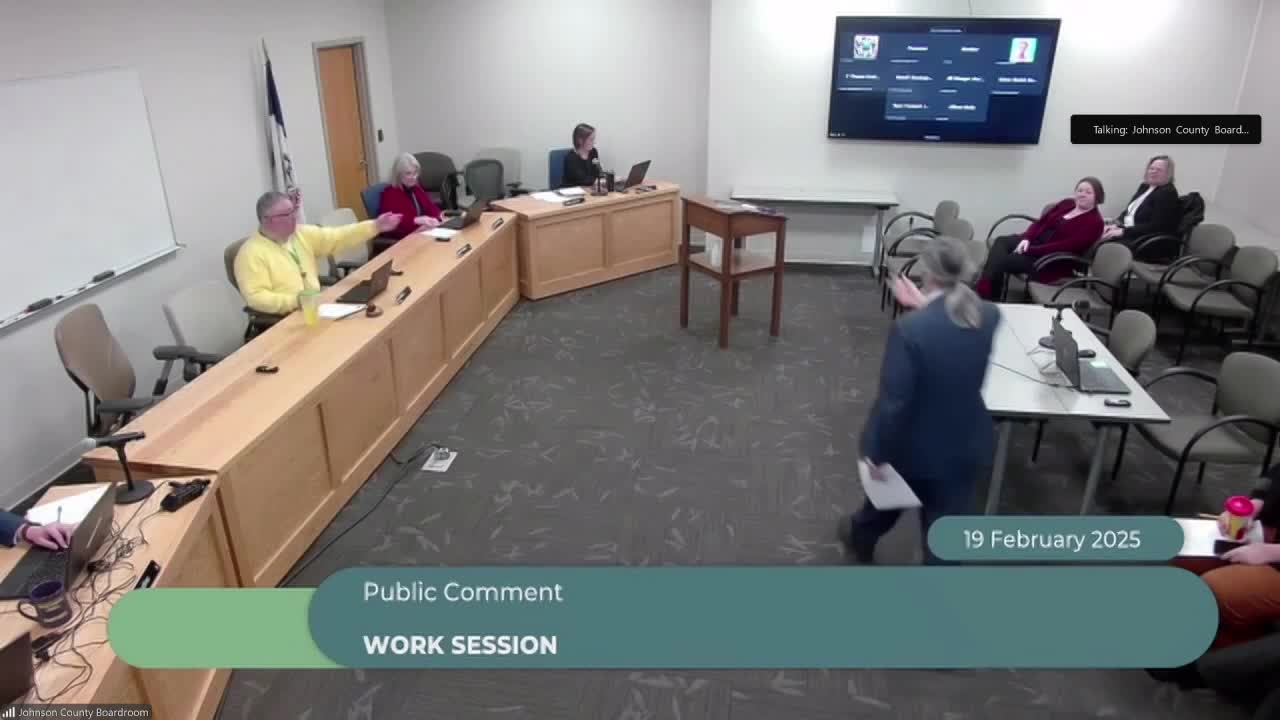
Christopher Warnock, Johnson County Attorney and founder of the Iowa Landlord Tenant Project, asked the Board of Supervisors on Feb. 19 to contract with his project to provide landlord-tenant ombudsman services for a proposed $2,000 a month on a trial basis.
Christopher Warnock, Johnson County Attorney and founder of the Iowa Landlord Tenant Project, asked the Board of Supervisors on Feb. 19 to contract with his nonprofit-style project to serve as a county landlord-tenant ombudsman that would provide short legal consultations, referrals and educations to tenants and small “tiny” landlords.
Warnock said the role would not be a prosecutor or investigator and would not provide free representation for every case. Instead, he described it as an advisory, education and triage service that would give callers templates and steps they can use themselves — for example, how to serve a seven-day notice for habitability problems.
The county attorney framed the idea as a low-cost complement to existing programs: “I would say a reasonable cost would be $2,000 a month,” Warnock said, adding he would revisit the scope after an initial six-month period and expand or reduce compensation based on demand. He described his practice as roughly half tenants and half landlords and said he already provides much of the work pro bono.
Supervisors asked about procurement and nonprofit alternatives. One supervisor asked whether the county should first solicit proposals from nonprofits such as Shelter House or Legal Aid, noting those organizations already receive public money and provide housing-related services. Warnock said he was open to a competitive process and that much of his current work is pro bono, but that county funding would be needed if the county wanted him to expand beyond informal assistance.
Board members also raised a second concern: directing people toward other supports when those programs are full. “Telling people to go, apply for Shelter House or apply for rental assistance does not particularly create a lot of actual practical help when rental assistance wait lists are stopped and our shelters are full,” a supervisor said. Warnock responded that the ombudsman’s primary focus would be empowering tenants to act where possible, not to replace rental assistance.
Supervisors requested staff follow-up with county social services to determine how an outside contractor would coordinate with existing programs and whether a competitive solicitation should be posted. The board did not approve any contract at the meeting; members asked Warnock and county staff to exchange contact information and continue discussions.
Ending
County staff said they would follow up with the presenters and report back to the board about next steps, including whether a competitive request for proposals should be issued and how the role would be funded if the board chose to proceed.