Get Full Government Meeting Transcripts, Videos, & Alerts Forever!
Get email alerts on the Human Resources Compensation topic
No spam. Unsubscribe anytime.
Board reviews compensation philosophy for nonbargaining staff; discusses lump-sum payments at pay range maximums
Summary
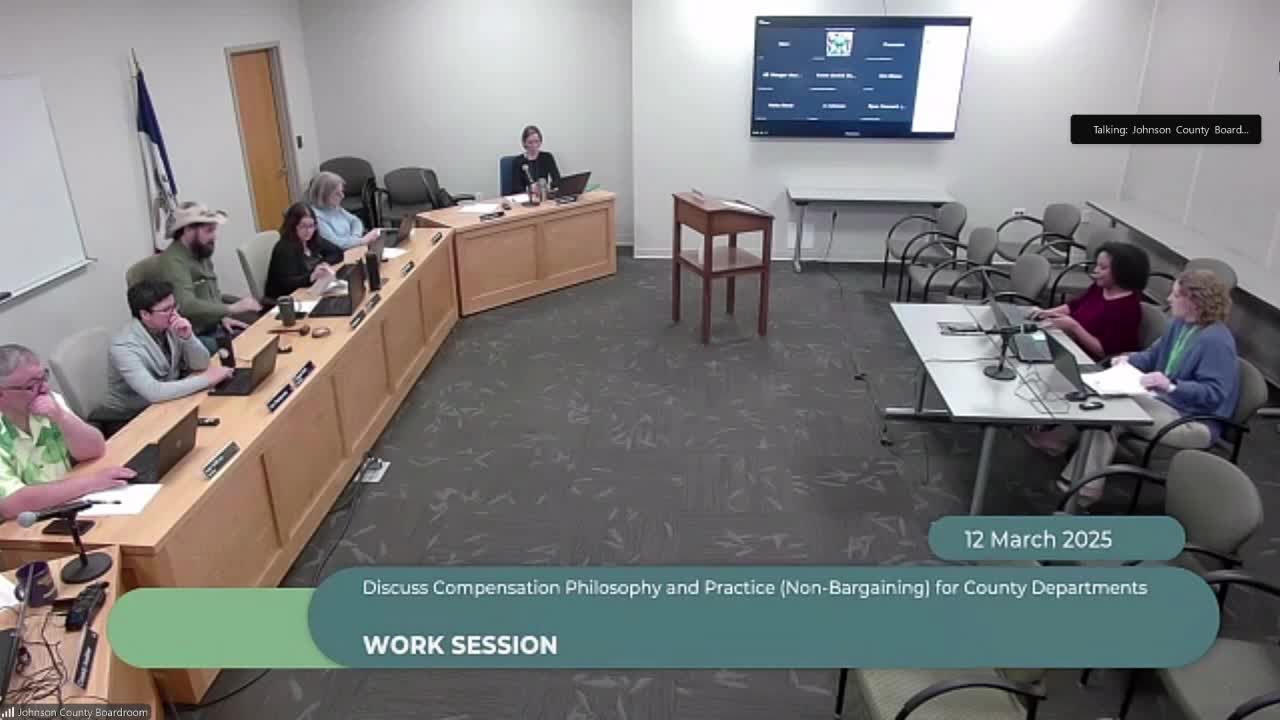
Human Resources presented a revised compensation philosophy that would formalize current practice and add an optional lump-sum payment for nonbargaining employees who are at the top of their pay range; supervisors asked for a clear statement about total compensation including benefits and agreed to further edits before formal adoption.
Human-resources staff presented a revised compensation philosophy and recommended it be maintained as a working document guiding pay practices for nonbargaining employees. The document removes a previous six-month increase practice and includes an optional lump-sum merit payment for employees who have reached the maximum of their pay range but whose performance continues to meet or exceed expectations.
The lump-sum concept would pay eligible employees a one-time, non-base-building payment equal to the percentage merit the county adopts in a given year (for example, 3% of pay for a hypothetical employee). Human-resources staff said the payment would be at the board’s discretion and would not increase the employee’s base pay; the lump sum could be applied annually if the employee remained eligible.
Supervisors asked for clarifications. One supervisor asked how many employees currently earn the top of their range; HR said nine employees were at the top end in the last calculation. Supervisors also asked staff to add a clear paragraph near the top of the document that explains the value of nonwage benefits (retirement, health insurance) as a component of total compensation and to include an example statement.
Board members did not object to keeping the lump-sum language in the working draft and directed staff to incorporate clarifying edits. If edits from the county attorney are de minimis, staff may place the revised document on a formal agenda for adoption.