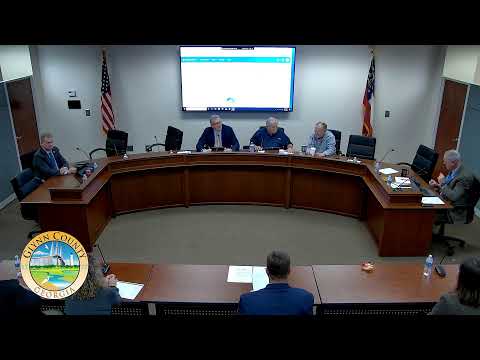
Glynn County building-permit work shifts online; county weighs wiping decades of expired permits

2703311 · February 13, 2025

Loading...

AI-Generated Content: All content on this page was generated by AI to highlight key points from the meeting. For complete details and context, we recommend watching the full video. so we can fix them.

Summary

The county’s Building Permits & Inspections office reported a rise in online permit submissions and outlined a multi-year backlog of open/expired permits that officials say may be cleared by wiping older unpaid fees from the records up to 2020.

Glynn County’s Building Permits & Inspections division told commissioners it has increased online permit intake and is actively addressing a long-standing backlog of open and expired permits that accumulated amid system migrations.

Dave Carver, Glynn County building official, said online submissions rose from a baseline of 52% to 73% after staff encouraged builders and homeowners to file electronically. “We have several departments ... and the OpenGov system is a more streamlined process,” Carver said, explaining the 21% increase and the department’s goal to convert as many customers as possible to the online portal.

Carver and county leaders also outlined a large legacy backlog of open permits carried through multiple software migrations dating to 2007. County staff said about 8,900 permits remain open across various categories because permits can expire or be abandoned when applicants fail to pick up or complete them. After a November 10 migration to OpenGov, the county found roughly 1,500–1,600 records flagged as abandoned and is working to separate true abandoned permits from other open records.

Commissioners discussed a staff proposal to clear the oldest outstanding records — potentially wiping fees and closing files issued before 2020 — to reduce workload and improve data quality. Commissioner discussion said some reinspection and permit fees accumulated over many years and may be uncollectible when contractors or owners are no longer available; one commissioner suggested “just wipe out those fees” through a board directive to reduce the backlog.

Carver also described a new “combination” review process for dangerous or dilapidated structures: in fiscal 2023 staff identified 27 cases (22 residential, five mobile homes) and issued 14 building permits and nine demolition permits; in fiscal 2024 staff opened 48 cases and issued nine building and 23 demolition permits (13 completed to date). Kathleen Light, condemnation coordinator, described the administrative and legal steps required when property ownership is unclear or estate issues delay condemnation and demolition timelines.

Why it matters: higher online submission rates speed administrative review and reduce counter traffic; clearing expired and abandoned permits would remove thousands of stale records and let staff focus on active cases, but commissioners must weigh revenue recovery vs. administrative burden and statutory limits.

Carver said staff have begun closing out older permits manually and are requesting OpenGov to add an explicit “expired/abandoned” flag to ease tracking; commissioners and staff agreed to explore a board-level decision to clear very old balances as part of overall cleanup work.