Get Full Government Meeting Transcripts, Videos, & Alerts Forever!
Get email alerts on the Planning And Code Performance topic
No spam. Unsubscribe anytime.
Glynn County planning and code teams report faster reviews, ongoing mobile-home and nuisance enforcement
Summary
Glynn County’s new Planning and Zoning department told commissioners it has reduced initial plan-review times, begun inspection sweeps of mobile home parks and is maintaining high rates of clean-community enforcement while addressing repeat offenders and short-term rental complaints.
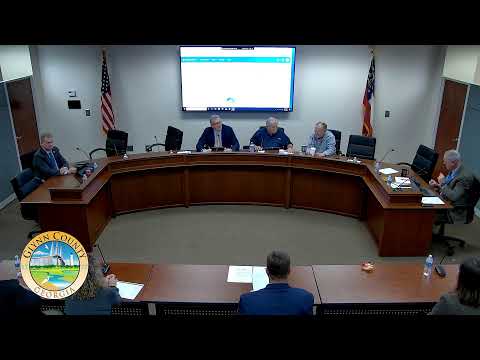
The newly formed Glynn County Planning and Zoning Department reported improved turnaround on planning reviews, progress on a multi-year mobile-home park inspection program and steady rates of clean-community code enforcement at a County quarterly execution review.
The department’s director, Stephanie Lee, said the Development Review Team’s average time for initial application reviews is 5.78 days, under the department goal of seven calendar days. Lee told the board that resubmittal reviews averaged 5.72 days. “We are at 5.78 for the initial review,” Lee said, attributing the improvement to an intake checklist and a dedicated development review manager.
The department also described a multi-year effort to inspect mobile homes in county parks. Franklin Graves, Glynn County code enforcement division manager, said code enforcement and partners began the current sweep in February 2023 and have inspected roughly 36% of known mobile-home parks. “My objective here and goal will be to complete an inspection of all the mobile home parks before the end of the year,” Graves said.
On nuisance enforcement, Graves said the department had exceeded its baseline target of 75% resolution for clean-community violations and was tracking about 79–80% compliance; between February 2023 and February 2024 code enforcement handled 968 cases and completed 823 (an 85% completion rate). He told commissioners that repeat offenders, differences between state and county law, and court timelines are the chief barriers to faster compliance. “Sometimes they even see code enforcement as equivalent to law enforcement,” Graves said, describing outreach and education the division offers to property owners.
Short-term rental complaints remain a distinct focus: Graves said officers now work extended weekend schedules so at least one code-enforcement officer can respond to after-hours complaints, and that the division “has not failed to respond to a single complaint.” He said the department is working to align incident notification and follow-up with the county police department and that the county ordinance allows enforcement actions — including escalating review of property accommodation certificates — after repeated violations.
Why it matters: faster application reviews can shorten private development timelines and help builders and homeowners begin work sooner; mobile-home park inspections address health and safety risks in a defined set of properties; and higher completion rates on nuisance cases indicate ongoing enforcement and outreach. The department emphasized that remaining delays are often caused by resubmittal quality, holidays and court proceedings.
Department officials said they will continue to publish checklists in OpenGov, hold occasional training for the development community, and track metrics quarterly. Commissioners asked staff to consider median-review metrics alongside averages to surface outliers that skew means.
An implementation note: the department’s intake and review metrics reflect calendar-day goals because the county’s public portal records weekends and holidays in timestamps. The team is also coordinating to show the applicant or property owner additional notification options in the portal so owners can be looped into review correspondence.