Get Full Government Meeting Transcripts, Videos, & Alerts Forever!
Get email alerts on the Disability Rights Dra Oversight topic
No spam. Unsubscribe anytime.
Legislature Passes Bill Requiring Disability Rights Arkansas to Report to Lawmakers; DRA Says FOIA Mandate Would Harm Clients
Summary
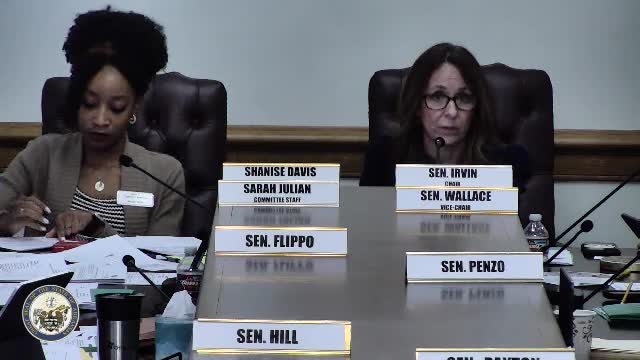
The Senate Public Health, Welfare and Labor Committee voted to pass House Bill 13‑82 as amended after extensive public testimony from parents, providers and Disability Rights Arkansas about oversight and confidentiality.
The Senate Public Health, Welfare and Labor Committee voted to pass House Bill 13‑82 as amended on a voice vote after extended public testimony for and against the measure.
Representative Lademan, the bill sponsor, told the committee the bill would require Disability Rights Arkansas (DRA), the federally designated protection and advocacy agency for people with disabilities in Arkansas, to report to the legislative hospital/Medicaid/developmental disabilities subcommittee of the Legislative Council and to appear twice a year when requested. Supporters — largely parents and guardians of human development center (HDC) residents — said the change would create state‑level oversight and a venue for families to raise concerns.
Julia Frost, a guardian who testified in favor, recounted the experience of her adult daughter Stephanie and said DRA had reviewed her case without the family’s knowledge: “I recall the shock I felt in 02/2014 when Disability Rights Arkansas … contacted us to explain that they had been reviewing Stephanie's case without our knowledge,” Frost said. Several parents said they want notice before DRA staff interview residents at HDC campuses.
Disability Rights Arkansas representatives opposed the bill as drafted. Thomas Nichols, DRA director of legal and advocacy services, said the organization would not oppose a limited requirement to provide the reports it already prepares for federal funders and to meet a legislative subcommittee twice a year, but said the bill “goes so far beyond that.” Nichols warned that subjecting DRA to the state’s Freedom of Information Act would undermine attorney‑client confidentiality and work product protections in individual cases and could force the nonprofit to spend scarce grant dollars on FOIA compliance rather than on representing clients. “Because we represent people sometimes who are going through very, very difficult things in their lives, that privilege of our communications … is very important,” Nichols said.
Reagan Stanford, DRA’s abuse and neglect managing attorney, told the committee abuse and neglect records include highly sensitive material and said litigation could be required to determine whether particular DRA documents are exempt — a costly process for a nonprofit with limited personnel. She said some of DRA’s federal funders had expressed concern about whether grant dollars could be used to respond to broad FOIA demands.
Multiple community providers and parents countered that DRA’s access to HDC residents and its public advocacy had, in their view, sometimes bypassed guardians and harmed families. Carol Sherman, a parent and guardian, said she supported HB 13‑82 to require the federally funded nonprofit to report to the legislature’s subcommittee.
Committee members discussed the FOIA provision at length. Some senators said they supported the bill’s requirement for reporting and meetings but were uneasy about imposing FOIA without further amendment; others said they would support the bill to give families a formal forum. After discussion, the committee passed the bill as amended to require periodic reports and to allow the subcommittee to request DRA appearances; the record shows a voice vote with the chair concluding, “Ayes have it. Congratulations. You've passed your bill.”
Ending: The bill will proceed with the committee’s recommendation; DRA said it will seek clarification from federal funders and explore legal options to protect privileged communications if the FOIA language remains part of future drafts.