
Bill to create juvenile vaping violation in schools fails after committee debate
Get AI-powered insights, summaries, and transcripts
Subscribe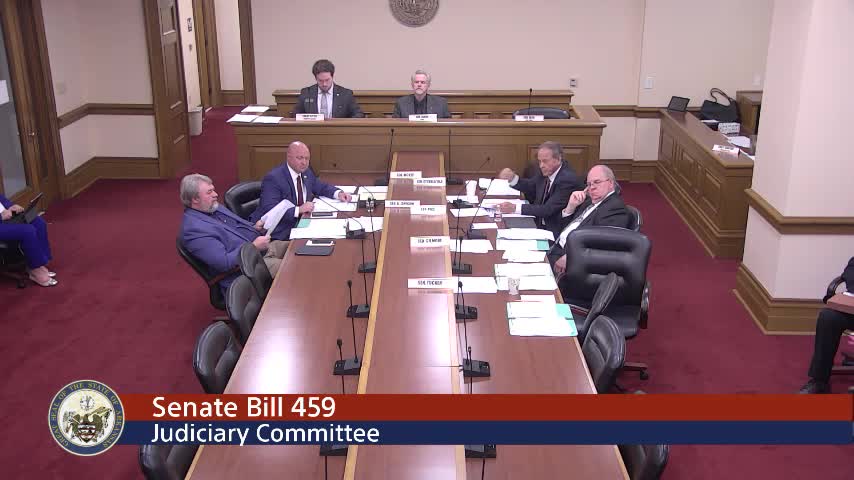
Summary
Senate Bill 472 would have created a juvenile violation for vaping at school and allowed up to 20 hours of community service. The Judiciary Committee rejected the measure after members questioned enforceability and overlap with existing laws governing tobacco products.
Senate Bill 472, introduced by State Senator Josh O'Brien, proposed a new juvenile offense for minors who use vaping devices at school and authorized up to 20 hours of community service for convicted juveniles.
O'Brien said the bill was modeled on existing penalties for cigarettes and was intended to give juvenile judges a tool to address what sponsors called an "epidemic" of vaping in schools: "The circuit judge felt this would help push the issue of the of the vape epidemic in our schools, to get students to act right," he told the committee.
Committee members asked whether the new offense mirrored existing cigarette laws and whether it would be difficult to police. Senator Johnson asked whether the measure was "mirrored exactly like cigarettes," and O'Brien replied that it was placed in a different section of the code but designed to mirror cigarette violations.
Proponents argued the bill created a judicial sanction comparable to existing penalties for underage tobacco use. Opponents and some committee members voiced concerns about practical enforcement in schools and whether juvenile courts already had other tools.
Action: The committee considered a motion to pass Senate Bill 472. Members recorded opposing voices during the vote and the motion failed; the bill did not pass out of committee.
Why it matters: Supporters framed the measure as a targeted response to student vaping and a way to align penalties for vaping with penalties for cigarette possession by minors. Opponents questioned enforceability and whether the juvenile court system should expand sanctions for school‑based vaping.
What’s next: The sponsor may pursue other avenues; the bill failed to pass in committee and will not advance from this hearing.