Get Full Government Meeting Transcripts, Videos, & Alerts Forever!
Get email alerts on the Open Meetings Foia topic
No spam. Unsubscribe anytime.
Committee advances bill to define ‘deliberation’ and clarify Arkansas open‑meetings law
Summary
Sen. Clark Tucker’s FOIA working‑group bill (Senate Bill 227) would define deliberation, clarify what governing‑body members may discuss outside meetings and add administrative notice changes; proponents said the law brings clarity and fairness, and major local government associations backed the measure.
Senator Clark Tucker presented a working‑group bill drafted with the Attorney General’s office, press association and local government groups that would add a statutory definition of “deliberation” and clarify what governing‑body members may discuss outside a public meeting.
Tucker told the committee the proposal is intended to make public‑meeting rules transparent for both the public and elected officials. The bill defines “deliberation” to include decisions, support or opposition, and inquiries about how members will vote on an item on which official action “will foreseeably be taken.” The bill specifies that background or non‑decisional information may be shared outside a public meeting but that any discussion that qualifies as deliberation must occur publicly so the public can see the reasons behind official decisions.
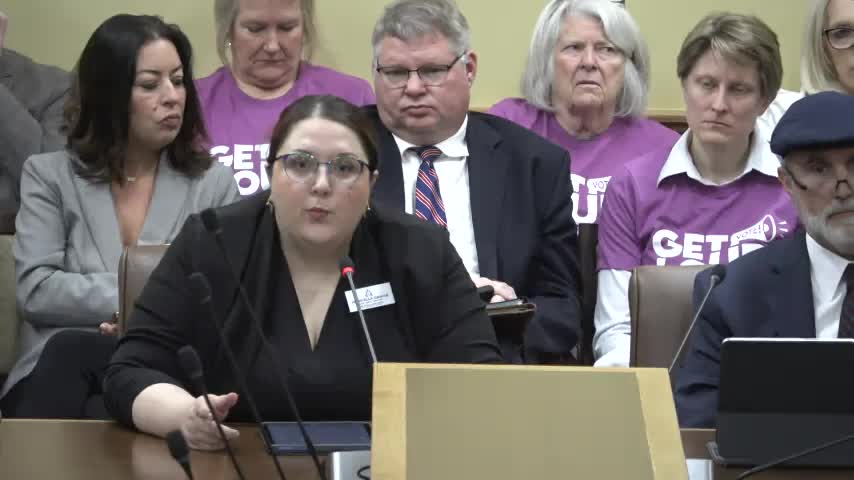
Supporters included representatives of the Arkansas Municipal League, the Association of Counties, the Press Association and public‑interest witnesses. Jimmy Caven and Joey McCutchen told the committee the measure reflects extensive stakeholder work and town‑hall feedback showing officials and the public want clear “guardrails” to prevent secret or serial deliberations outside public meetings. Members of the attorney general’s working group, including FOIA expert Ryan Owsley, helped craft the definition and procedural language, Tucker said.
Committee members tested hypotheticals; sponsor and supporters said the bill does not criminalize ordinary social interactions (attending sporting events, casual comments) but bars coordinated, pre‑decision conversations in which members seek or disclose how they will vote. The bill retains a court remedy (a court may invalidate action taken after an illicit deliberation) and does not materially expand criminal penalties beyond existing law.
Supporters said counties, municipalities and school boards participated in drafting the bill and that the measure passed the Senate by a wide margin. After discussion the committee voted to pass the bill.