Get Full Government Meeting Transcripts, Videos, & Alerts Forever!
Get email alerts on the Elections Transparency topic
No spam. Unsubscribe anytime.
Committee approves bill to centralize local campaign reports on Secretary of State portal
Summary
Representative Hawk brought House Bill 1707 to the committee to require that locally elected officials file election reports using the Secretary of State’s online portal, joining how state officials currently file.
Representative Hawk brought House Bill 1707 to the committee to require that locally elected officials file election reports using the Secretary of State’s online portal, joining how state officials currently file.
The measure’s sponsor said the change would create “a centralized transparency location” so any Arkansan, the Ethics Commission or other oversight bodies could access campaign finance reports without traveling to county clerks’ offices or submitting formal public‑records requests.
Supporters told the committee the Secretary of State’s office can add titles for local posts (city council, quorum court, school board, sheriff) so candidates select the proper title when filing. Josh Bridges, assistant director of elections for the Secretary of State, told the panel the office can make the technical change but estimated a one‑time system upgrade cost of $50,000 that the office says it can absorb in its budget.
County election officials said the portal would ease public requests. Lisonbee Kane, election coordinator for Saline County, said her office fields many requests during election season and that a single portal would make reports available “in a very timely and efficient manner.” Kane told the committee Saline County scans and stores reports now and would need a designated staff person during busy seasons to manage any extra workload if clerks were asked to upload scanned documents on behalf of candidates.
Ethics and filing differences drew questions from committee members. Grama Sloane, identified in testimony as Director of the Arts and Ethics Commission, said county/municipal/school board candidates currently file a maximum of two reports per election (a 10‑day pre‑election report and a final report), while state and district candidates file more frequently (quarterly in non‑election years and monthly in election years) and also must meet reporting triggers. Committee members noted the current reporting trigger for additional filings is $500 in receipts or expenditures; Sloane confirmed a final report is always required even if the $500 threshold is not met.
Several members asked about training and customer support for local officials and candidates. Bridges and Representative Hawk said the Secretary of State’s office and county clerks would provide training and help; Representative Hawk said kiosks in local Secretary of State offices and county clerks’ assistance should make the transition manageable for small‑town candidates.
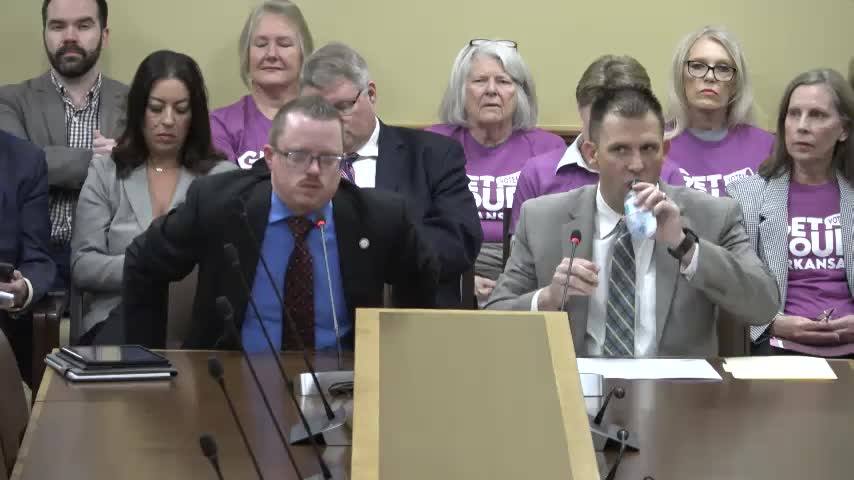
After public testimony and questions from committee members about workload and implementation, Representative Underwood moved to pass the bill. The committee approved the measure by voice vote; the chair recorded the motion as passed and closed the item.
The committee advanced HB 1707 to the next stage; proponents said the bill is meant to improve access and save time for county offices and the public while opponents had questioned implementation details and training needs.