Get Full Government Meeting Transcripts, Videos, & Alerts Forever!
Get email alerts on the Foreign Ownership Agricultural Land topic
No spam. Unsubscribe anytime.
Committee pauses bill tightening foreign ownership rules after dual-citizenship concerns
Summary
Lawmakers heard hours of testimony on House Bill 16 80, which would expand prohibitions on certain foreign-controlled entities owning or leasing Arkansas agricultural land near critical infrastructure; the sponsor pulled the bill for amendment after testimony that dual U.S. citizens could be caught by the law.
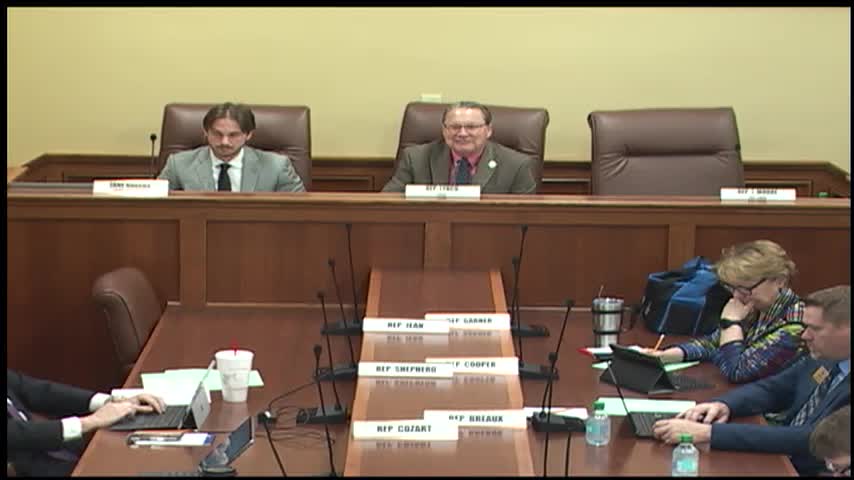
State Representative Dan Vaught, the bill sponsor, told the House Committee on Agriculture, Forestry & Economic Development that House Bill 16 80 would expand Arkansas restrictions on foreign interests owning agricultural land and shorten divestiture windows.
Vaught said the bill would ban “CCP-linked companies” from holding any interest in agricultural land within a 10-mile radius of defined critical infrastructure and would prohibit certain foreign-party-controlled businesses from leasing state land. He said the measure also would shorten the current divest period from two years to one year and expand the definition of agricultural land to include municipal limits.
The bill drew extended questioning from committee members and the Arkansas Department of Agriculture. West Ward of the Arkansas Department of Agriculture told the committee that the department’s review of federal filings shows the largest foreign owners of Arkansas agricultural acreage are Canada and the Netherlands, followed by Germany, with roughly 508,000 acres owned by a variety of other countries.
Public testimony focused on whether naturalized and dual U.S. citizens could be unintentionally restricted by the law. Russell Thomas of Hot Springs, whose wife and daughter hold dual U.S.-Russian citizenship, said the statute could subject U.S. citizens to criminal penalties or fines simply for holding property through trusts or retirement accounts. “US citizens, including dual citizens, should not be punished for embracing the American dream,” Thomas told the committee.
Ward told the committee the department did not understand the bill to be intended to deprive U.S. citizens of property rights. “We do not understand that this bill would impact a U.S. citizen’s ability to own, or do anything with, personal property rights,” Ward said on the record.
Committee members agreed the dual-citizenship issue needed clarification. Representative Matthew Shepherd noted the problem existed in earlier legislation and recommended the sponsor consider an amendment. Vaught responded that he would pull the bill down to allow a narrow amendment exempting U.S. citizens, saying on the record that exemption was not the bill’s intent and that he would work with the attorney general’s office and other members to resolve it.
Outcome: Sponsor withdrew the bill from consideration in committee to draft an amendment and return at a later date.
Why it matters: The bill would widen the state’s ability to restrict foreign control of farmland near sensitive sites; opponents said narrow drafting could sweep in U.S. citizens who hold dual nationality or whose property interests are held in trusts or retirement accounts.